
As I continue working on my self-directed project, I intend to build on the direction established in Assignment 5 rather than change it. My project will continue to explore migration, memory, identity and belonging through photography, moving image, poetry and sound. The work is evolving naturally, and I want to deepen the relationships between these different media while continuing to experiment with visual storytelling.
Throughout the next stage of the project, I will document both the creative process and the finished outcomes. This will include recording ideas, experiments, alternative edits, technical decisions and personal reflections. I have realised that documenting the journey is just as important as presenting the final work, as it reveals how ideas develop, change and mature over time.
As my project develops, I will prepare concise summaries of the work that communicate its central ideas without over-explaining them. My aim is not to direct viewers towards a single interpretation but to create space for their own experiences, memories and emotions to become part of the work. I hope that feedback from tutors and peers will help me refine how effectively my work communicates while remaining true to its personal origins.
Moment That Stayed With Me
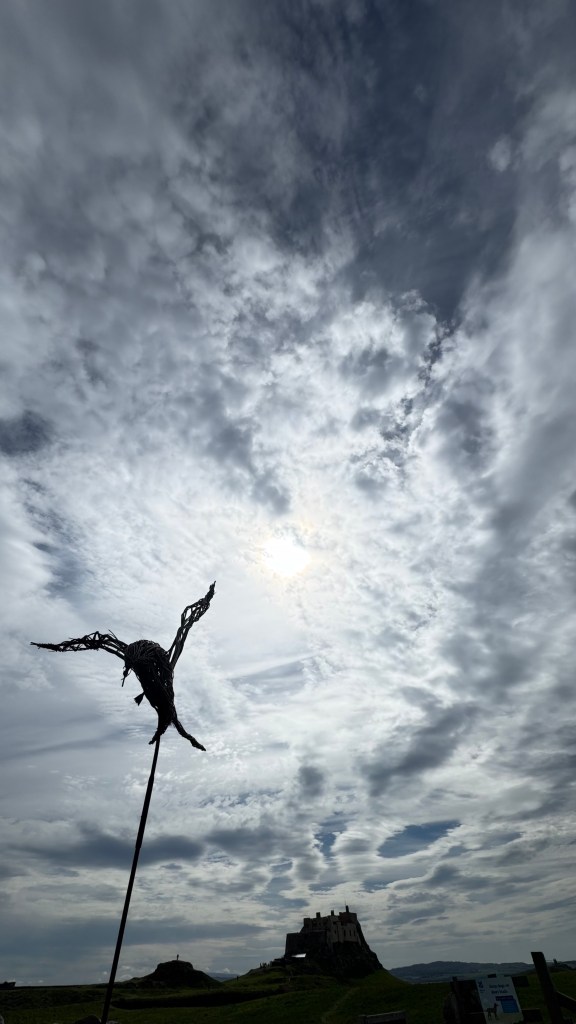
During a visit to Holy Island, I came across this small bird sculpture standing alone against the open sky. At first, it seemed like nothing more than a decorative feature placed along the path. I took several photographs and continued my walk, but the images stayed with me long after I had left.
As I found myself returning to it, I realised that what interested me was not the object itself, but the quiet contradiction it represented. From its elevated position, the bird overlooked the coastline and the changing sea beyond. It occupied a place many would envy, yet it remained fixed to a single point. That contrast lingered in my thoughts.
Over time, the photograph began to connect with moments from my own life. Looking back over the different places I have lived, the opportunities I have embraced and the choices I have made, I recognised how circumstances can often hold opposing meanings at the same time. What offers security may also demand sacrifice. What appears desirable from a distance may carry limitations that only become visible once experienced.
This photograph has therefore become more than a record of a place I visited. It has become a point of reflection: a reminder that a single encounter can continue to unfold in meaning long after the moment has passed. It also reminds me that photography, for me, is not simply about recording what I see, but about recognising when an ordinary scene quietly begins to ask deeper questions and the memories as well as the thoughts awaken along.
Breaking the Boundaries: The work
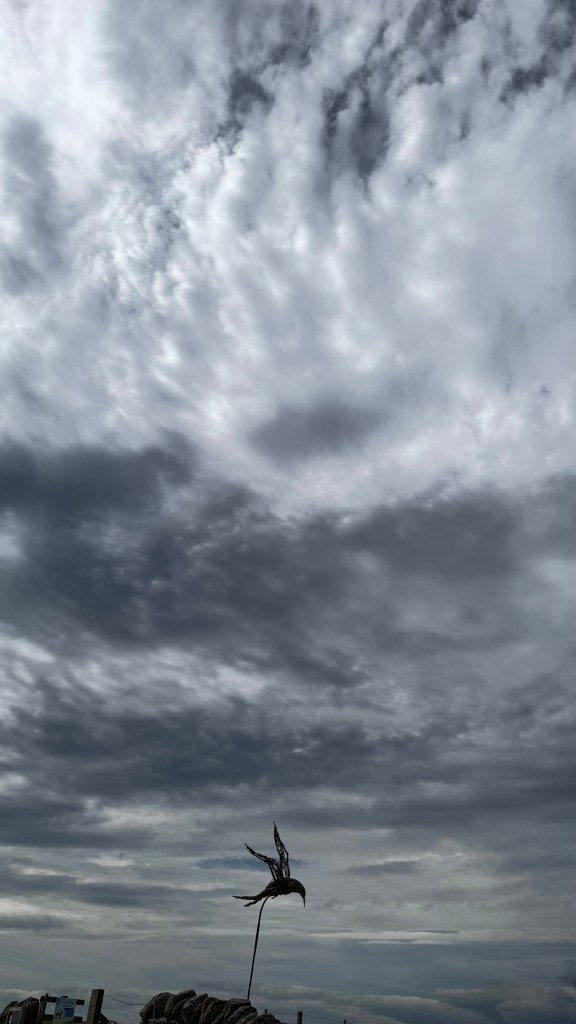
For a long time, I saw birds as a symbol of migration: a traveller moving between places, cultures and identities. Looking at this image now, I see something different. The bird is not simply preparing to fly; it is breaking the very thing that has kept it in place.
The slender stem becomes more than a support. It represents the invisible boundaries we accept without questioning: routine, fear, expectations, responsibility, security and the identities we inherit. Sometimes these structures protect us, but they can also become the limits of our imagination.
I thought: What if it tries to break free?
In this imagined sequence, the bird does not wait to be released. It breaks the support that has defined its existence and discovers that flight begins not when the world changes, but when it chooses to let go.
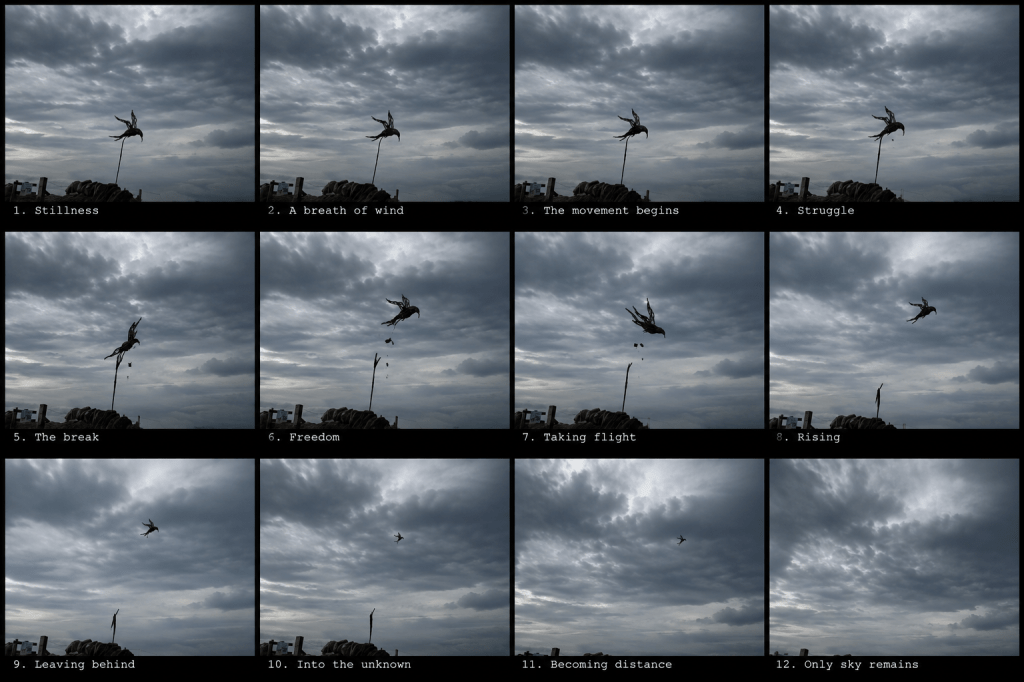
This is not an act of escape or rebellion. It is an act of transformation. The broken stem remains behind as a reminder of where the journey began, while the bird carries only what it truly needs into the open sky: a vision to discover and move beyond the horizon.
To use the words of the Sotiria Bellou’s song I used to accompany my previous photo sequence:
Ξέρω τ’ όνομα σου———I know your name
την εικόνα σου— — — your face
και πάλι από την αρχή— — — and all the way from the beginning
Ψάχνω για— — — I’m looking for
μια διέξοδο γυρεύοντας— — — a way out
μια ‘λλιωτικη ζωή…— — — longing for a different life….
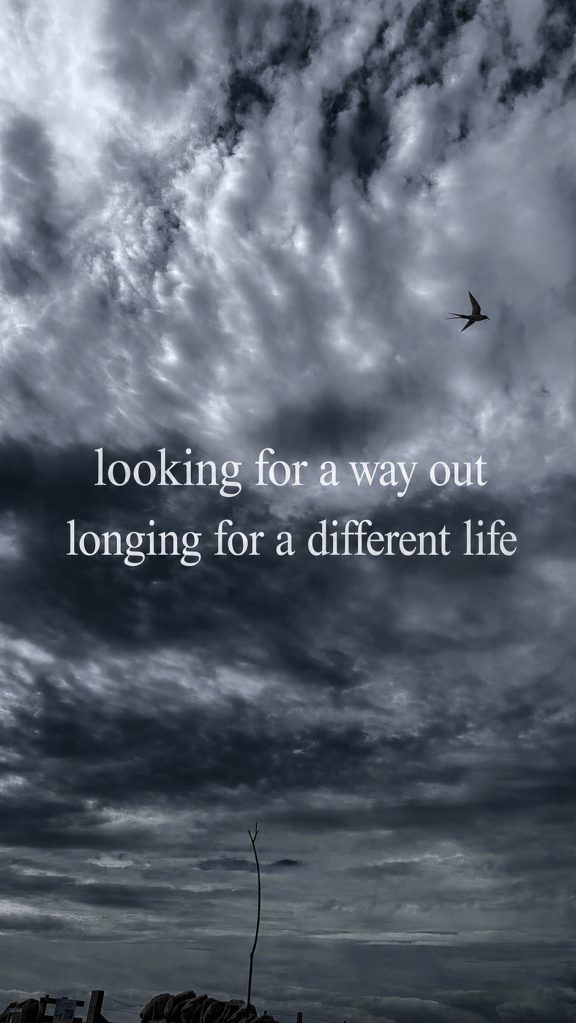
Perhaps we all spend part of our lives believing that something outside ourselves keeps us grounded. Yet the greatest boundaries are often the ones we have learned to accept. The moment we question them, we begin to discover that freedom is not simply the absence of restraint: it is the courage to imagine ourselves differently.
Experiments, Revisions and Reflections
The sequence of the bird leaving the stick did not emerge as a finished idea. It developed through a series of experiments, questions and revisions. Looking back, I realised that the creative process was as valuable as the final outcome.
My first thought was simply to remove the bird from the photograph. Although this immediately suggested absence, it did not communicate transformation. The empty space felt descriptive rather than emotionally engaging. The image seemed incomplete, as though something had been lost rather than intentionally changed.
The next experiment introduced the bird in flight. This brought movement into the sequence, but I soon realised that something important was missing. Without the original support remaining in the frame, there was little visual evidence of where the journey had begun. The image became one of flight alone, rather than a reflection on transition.
Returning the stick to the composition became a significant turning point. This small change altered the meaning of the image. The empty support became a silent witness, encouraging the viewer to imagine what had happened rather than presenting a complete explanation. The absence of the bird became more powerful because the place it once occupied remained visible.
I also experimented with the relationship between image and text. My initial instinct was to place the words beneath the photograph, treating them as a caption. However, this separated language from the visual experience. By allowing the words to occupy the sky itself, they became less like an explanation and more like an internal voice, existing within the same visual space as the landscape.
Throughout this process I repeatedly questioned whether the image needed words at all. I wondered if the text directed the viewer too strongly, or whether it simply opened another way of reading the work. I also questioned whether the sequence had become too literal, asking myself if the viewer could still discover their own meaning without being led towards a predetermined interpretation.
Not every version was successful. Some felt overly descriptive, while others became too ambiguous. Instead of seeing these as unsuccessful outcomes, I began to recognise them as necessary stages in understanding what the work itself required. Each revision revealed something that the previous version had not, allowing the sequence to develop gradually rather than arrive fully formed.
Looking back, I have come to appreciate that documenting these experiments is just as important as presenting the finished work. The abandoned ideas, the uncertainty and the continual adjustments reveal how the project has evolved through reflection, curiosity and experimentation. They demonstrate that creative practice is rarely a straight path, but an ongoing conversation between intuition, observation and critical judgement.
As my final decision, I made it the way I thought it would work better for me, and let the audience decide what to keep and what not to.
TRIALS
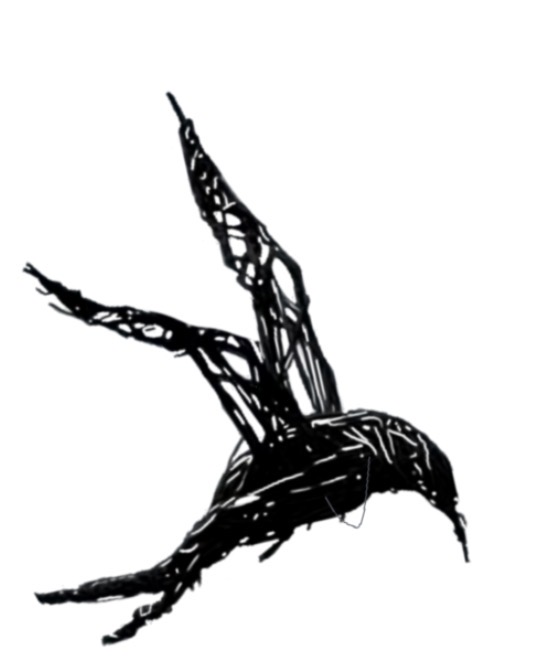
These are three frames I worked on using an app called PROCREATE.
I used the sequence in a loop to see the animated movie of the flight as well as to understand the whole process of editing and moving images.
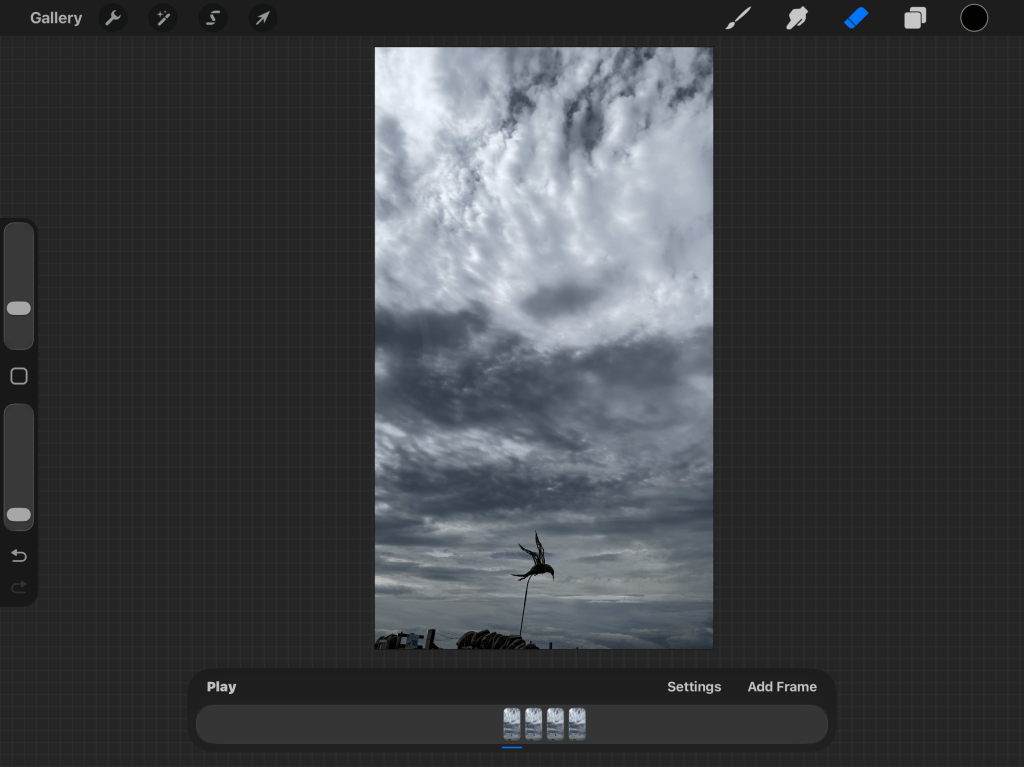
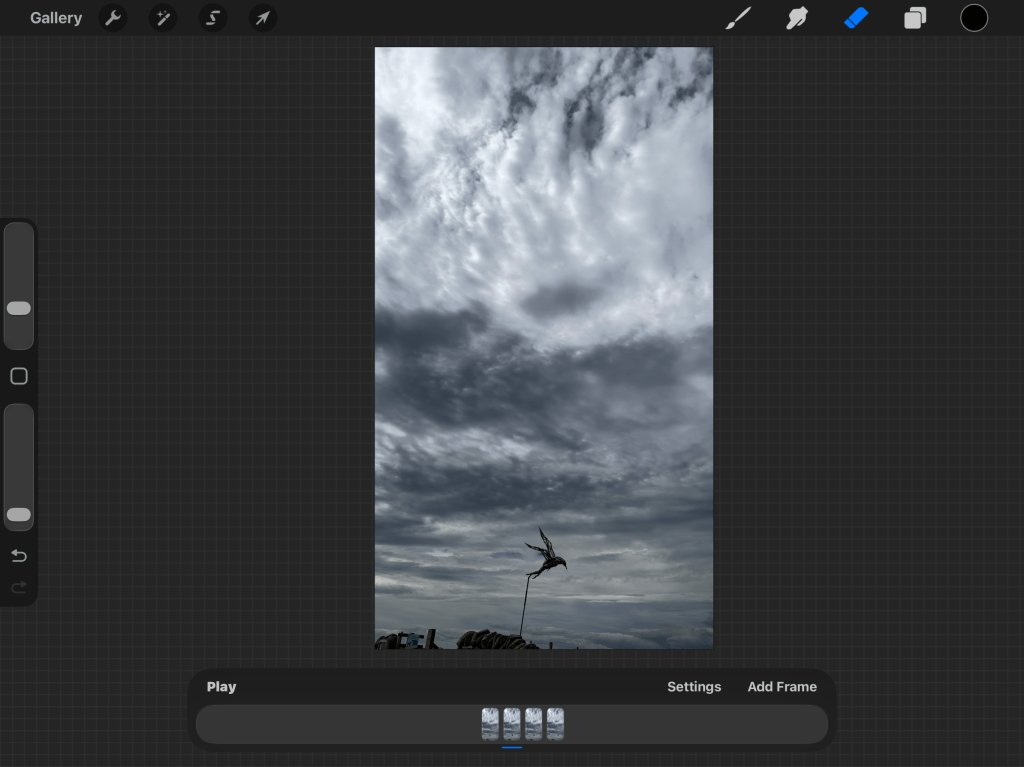
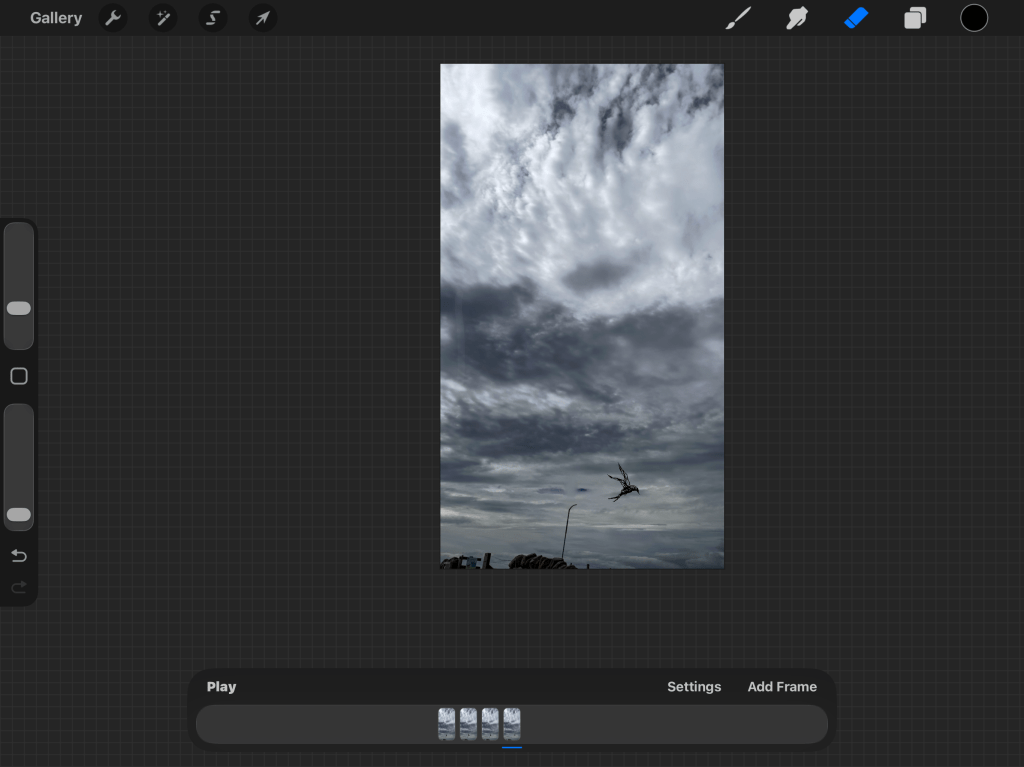
After a few frustrating trials and a lot of work on the pixel size magnifications, I managed to understand how to proceed and discover what works better for me as an aesthetic and contextual outcome.

