Research point
Research a designer/artist/maker whose work you are drawn to. It could be an artist
mentioned in Project 2 or someone else altogether. The important thing here is to consider
the nature of the craft, so if you feel strongly that you’d like to research a practitioner working
outside textiles then you’re free to do so.
• What is their craft and how do they approach it in their work?
• Do they adhere to the ideas of Slow Design? To what extent does this allow them to take
risks, experiment and innovate?
• Is their story or the story of their work important? Why?
• Do you value ‘craft’ and craftsmanship? Why or why not?
• Is there room for craft in modern society?
Make notes in response to these questions in your learning log
————————————————————————————————
Loro Piana is an Italian company specialized in clothing and textile products. It is considered the largest cashmere manufacturer and the world’s leading artisan company processing luxury fibers.
The company has three divisions, namely the textile division – producing high quality textiles using noble fibers such as cashmere and baby cashmere, vicuña wool, linen, lotus flower silk fabric and the merino wool – the fashion luxury goods division – producing and distributing menswear, women swear, shoes and accessories -, and the interior division – producing and distributing interior products.
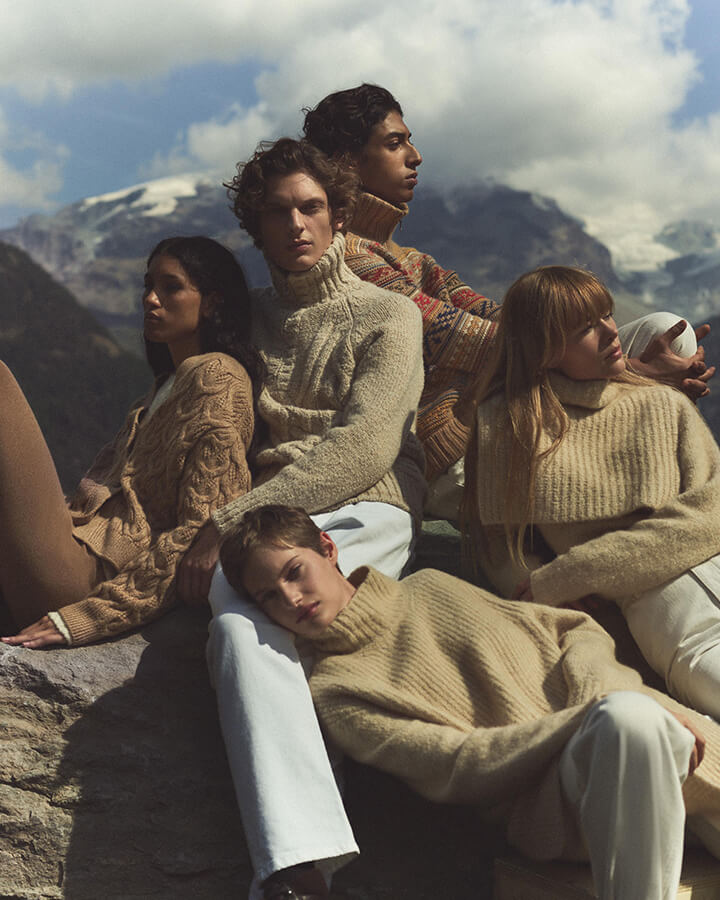
As part of Slow Design and Craftsmanship below are some examples of their slow manufacturing along with artisan creation using the finest raw materials possible.
VICUNA

Long-sleeved polo-shirt in vicuña, the finest, rarest animal fibre in the world. A very refined, exclusive piece, styled with rib-knit collar, hem and cuffs.
The vicuña animal is covered with a remarkably long, fine, soft, and lustrous coat that varies in colour from light cinnamon to a pale white, with long white fleece hanging from the lower flanks and the base of the neck. The annual yield of fleece sheared from domesticated vicuñas shows a wide range of from 85 to 550 grams (3 to 20 ounces) per animal. Vicuña fibre is strong and resilient, but it is highly sensitive to chemicals and is generally used in its natural colour. The vicuña’s dense silky fleece, once reserved for the Incan nobility, provides excellent insulation against the temperature fluctuations the animal encounters in its natural habitat: semiarid grasslands in the central Andes at altitudes of 3,600–4,800 metres (12,000–16,000 feet).
Since the waves of conquest in the 17th century, the vicuña population has steadily diminished, reaching critical levels in the 1980s, when the animal nearly became extinct. Vicuña live wild in the Andes. The species long enjoyed total protection and shearing was prohibited to guard against any abuse. In 1984 Loro Piana began working under the approval of the Peruvian government, creating a novel and exclusive partnership to protect the vicuña, while at the same time enabling vicuña fiber to again be used.
To reintroduce vicuña in international markets, Loro Piana formed a consortium with local populations and government agencies. With a focus on total respect for animals’ environment and their freedom, the vicuña benefit optimal care based on local ancestral practices, funded by revenues generated by Loro Piana’s business. The success of this initiative led the House to open a first private nature reserve in Peru in 2008. Thanks to this commitment, vicuña are now a protected species whose population has more than doubled between 1998 and today. In 2013 Loro Piana continued its work by venturing into Argentina. The company acquired shearing rights for vicuña living in an 850-square-kilometer area (85,000 hectares), where it is responsible for developing the current population of wild vicuña.
BABY CASHMERE
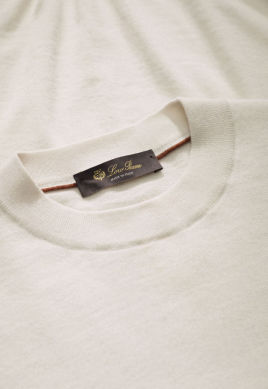
Measuring 13.5 microns in diameter, Baby Cashmere’s lightness and softness is beyond compare to the already fine Cashmere that is around 15 microns.
As the name suggests, baby cashmere is cashmere obtained from baby goats. In other words, this is fabric that comes from the first combing of a cashmere goat. So, this is the first difference between regular cashmere and baby cashmere.
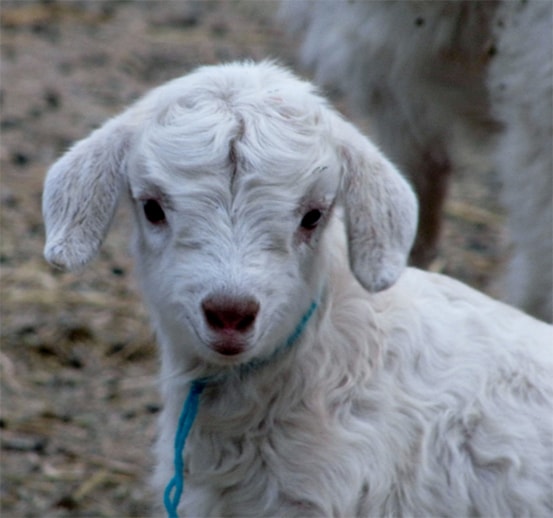
Cashmere that comes from adult goats is world known for being very smooth, but baby cashmere is even smoother.
The texture is incredibly soft and smooth which is quite natural because these animals are still growing.
Of course, there are some people who believe that baby cashmere shouldn’t be bought because it comes from animals that are still fragile and this experience can hurt them. This is still a controversial topic because some people argue that this combing doesn’t cause any physical or emotional pain.
Furthermore, another difference between regular cashmere and baby cashmere is the tapering.
It turns out that baby cashmere has one end of the fiber tapered which makes the yarn finer and the wool softer. The diameter of the fiber is lower and this is what makes baby cashmere extra soft.
The wool of a baby goat is up to 25% finer compared to regular cashmere wool obtained from adult goats. This makes the process of producing clothing and other accessories simpler too.
Obviously, the feel and touch of any product made from baby cashmere is different.
LOTUS FLOWER SILK
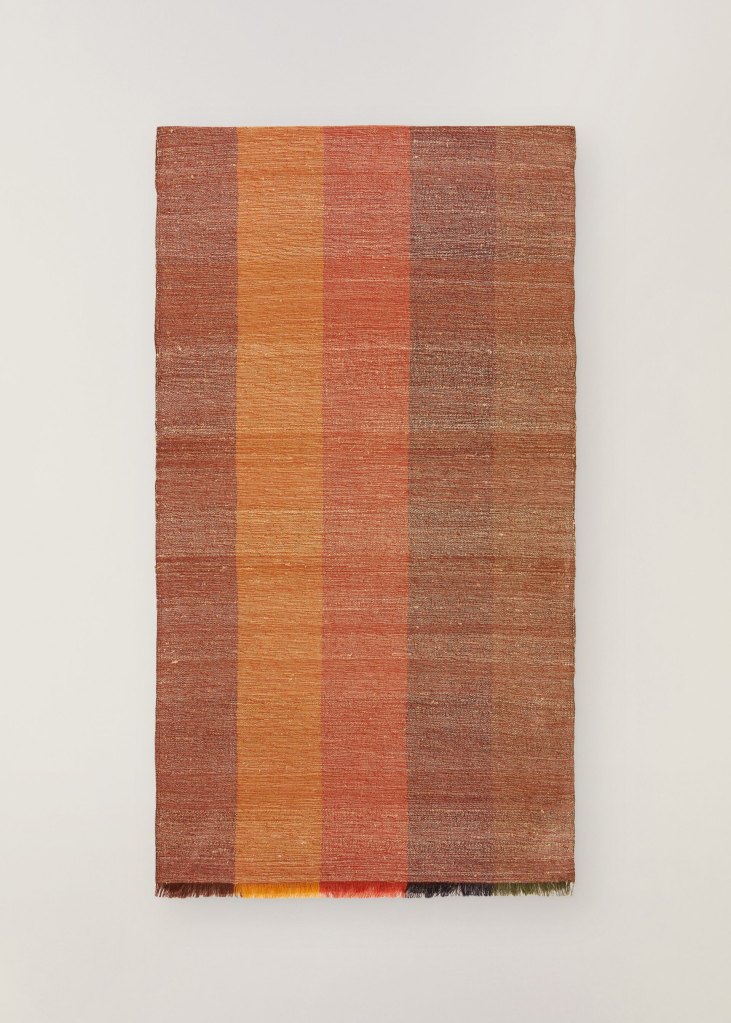
Large, flowing scarf made from extremely soft, cashmere, silk and lotus-flower yarn. Handwoven on a loom, its multi-colored, striped pattern resembles a rainbow.
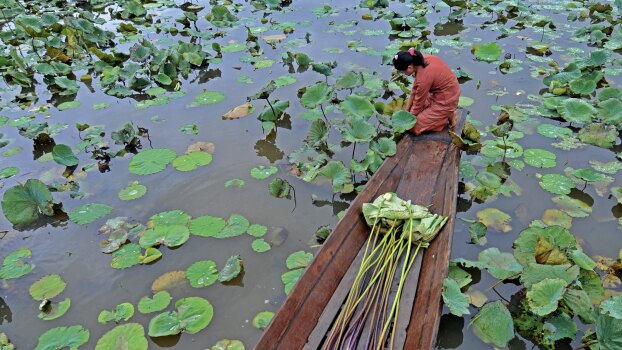
A fleeting 24 hours is all they have to guarantee the exceptional quality of the fiber, which is collected by hand according to tradition from May and October.

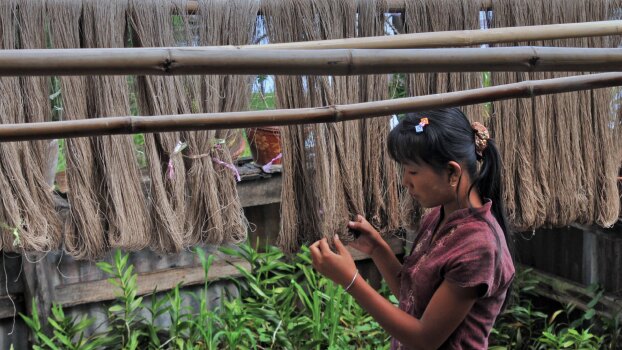
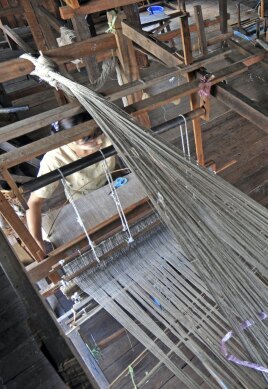
Spun and woven by hand, the honorable process that work tirelessly to preserve is orchestrated exclusively by women for a limited 50 meters of fabric each month.A fabric that retains its natural properties: breathable and crease-resistant, with a thread diameter ranging between three and five micron.
————————————————————————————————————————————————
UNESCO refers to craftsmanship as the most important manifestation of intangible cultural heritage.
Behind each raw material there is a remarkable story worth exploring. On the other side, Craftsmanship helps us build better products, with more value, bigger life span and remarkable quality. Humans have evolved to find pleasure in beauty, and craftspeople distill the beauty of the world around them into something physical. In doing so, they develop a unique relationship with their materials. Craftsmanship results in uniqueness because each product is created almost by hand, using natural materials. More than that, though, craftsmanship adds an entirely new dimension to the idea of ‘bespoke’. Artisans spend years honing their craft, so they’re experts in paying attention to detail. This allows them to tailor their creations to the specific needs of the client.
Craftsmanship maintains ancestral knowledge and skills alive; what we enjoy as a unique product has thousands of years of very hard earned knowledge through trial and error; it is a heritage that has been passed through to us. Considering the fact that the gap between the beginner and the artisan master is chaotic we can understand the time spent and the commitment of the craftsman to achieve perfection.
We would all be worse off culturally if craftsmanship disappeared so it is in our duty to preserve it and pass it on.True craftsmen are honest and care about their work in a way a machine doesn’t so in the end of the day it is to our own benefit to embrace the uniqueness of craftsmanship.
 Alexander's blog