• How would you define ‘sustainability’? Look it up if you’re not sure.
In general, sustainability is understood as a form of intergenerational ethics in which the environmental and economic actions taken by present persons do not diminish the opportunities of future persons to enjoy similar levels of wealth, utility, or welfare.
Meadowcroft, James. “sustainability”. Encyclopedia Britannica, 7 Sep. 2022, https://www.britannica.com/science/sustainability. Accessed 7 November 2022.
In business and policy contexts, sustainability seeks to prevent the depletion of natural or physical resources, so that they will remain available for the long term.
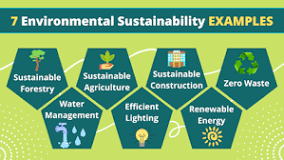
• In what contexts is sustainability an issue? Think more broadly here – not just
textiles – and write a list.
You’ll find plenty more examples online, for example this bright blue petal neckpiece by Laura
Marsden, made from unwanted plastic bags:
https://www.lauramarsdenlace.com/fashion-accessories/186285_bright-blue-petal-neckpiece.
html [accessed 08/12/18]
Following we can see some wonderful examples of projects using recyclable materials. Giving items a second life can be something that can be widely explored and practiced.


• How do you think sustainability might be addressed in relation to the production and
consumption of textiles and other manufactured products? Use the stages of the life cycle
to help you with this question.
Sustainability is about achieving a sense of balance and responsibility in the research,
development, design, production and end use of a product’s life. Many designers, artists and
makers are now including sustainability as a natural part of their creative process
As a person who served (and still serving) the textile manufacturing sector for more than 30 years, I would say that under the current global textile trade circumstances, sustainability is a utopia, a goal that is unattainable to achieve.
It is a big topic to cover, but I will try to be as brief as possible.
To back up my argument, I would first say that manufacturing technology is its best: new intelligent machines are faster, can produce zero waste (fully fashioned) garments where there is no cutting involved, and in some rare cases, not even sewing of the knitted panels (WHOLEGARMENT or Knit&Wear).
Below lies a link with further information.
What is the problem then?
The problem lies in the raw materials use.
Unfortunately, in (fast) fashion and textile manufacturing, everything moves fast as well as cheaply as possible. Those two key elements are crucial to the raw material selection. Natural fibers that humans have been using since the dawn of civilization, yarns like wool or cotton, environmentally friendly and recyclable have been abandoned as their manufacturing processes are too complicated as well as to are too expensive to use. New synthetic yarns have been invented and introduced, which have many negatives but can make the manufacturers competitive.
Sadly, today’s textile sales companies are price motivated. Big brand managers’ carriers are based on profit and sales. Fast fashion and textile brands, rarely own their factories which creates a vicious circle of price goals and competitive manufacturing between them and their source factories. Even the ”made in” brand can be lost in corridors of third-world countries where work ethics are not at their best. Ethical trade is something that needs to be looked at, as is a fiction beyond any vivid imagination: the big brands are setting their price goals to their manufacturers, who sometimes reduce their prices under their cost, with an instant effect on their employees’ wages and well-being. When an order is been placed, then the factory instantly has to finish and deliver it: the big brand can cancel it at any time without any warning. That alone adds a lot more stress as well as creates a sense of a paradox: a garment, a piece of fabric that is supposed to embrace a human body and create lovely feelings is been manufactured under harsh circumstances.
Big brands are using sustainability as a marketing tool mainly. A few measures have been taken lately, it is true, but is far away from where it is supposed to be. Few of them have started new factories using new technologies and because they sell their own product in the prices they can having their cost justified, they have managed to move a lot of steps in the right direction.
What should happen in my opinion is to raise consumer awareness. They should demand better quality, natural fibers(non-recycled plastic) which can later be recycled or disposed of without any environmental impact. From their side, they have to be ready to pay a bit more, but it would be worth it. It would be a shame for the sake of 10£ -12£ extra per garment to be facing such an irreversible impact. So, people have to be trained to look between the lines and understand when they pay a ridiculously low amount of money to buy a crafted textile item the only thing they are doing is encouraging the big companies to carry on.
 Alexander's blog