Earlier in Part Four, you considered the argument that the ‘mechanical’ nature of
photography precludes it from being considered art.
• Does this make photography a medium uniquely suited to portraying time and the passage
of time?
• Can other creative art forms deal with the concept of time to the same extent?
Note down your thoughts on this in your learning log.
Photography, in my opinion, is capturing unique moments, which when after a while are compared to current ones, can show the observer the passage of time; in other words, a photo becomes like a time capsule, a glimpse of the time and place the original picture was taken. If someone could possibly take a picture of the Parthenon in Athens when it was built, then another one 1000 years after, and then a picture of today, it would be easy to see how the years have treated this monument.

Today, with the help of technology we can show this fact and with the help of science, we can present this matter quite accurately.
Attached, there is a video of a great Greek cinematographer: Costa Gavras, who illustrates the history of the monument.
We can see he has been using a series of digital captions as well as CGI to represent the history of the temple through the centuries. To make the piece of work more dramatic and plausible, he used music and poetry: a world-famous dramatist (Lydia Koniordou) is reading lines from lord Byron’s ‘The Curse of Minerva’.
Painting as a form of art can also capture moments where when they are compared can show a time lapse.


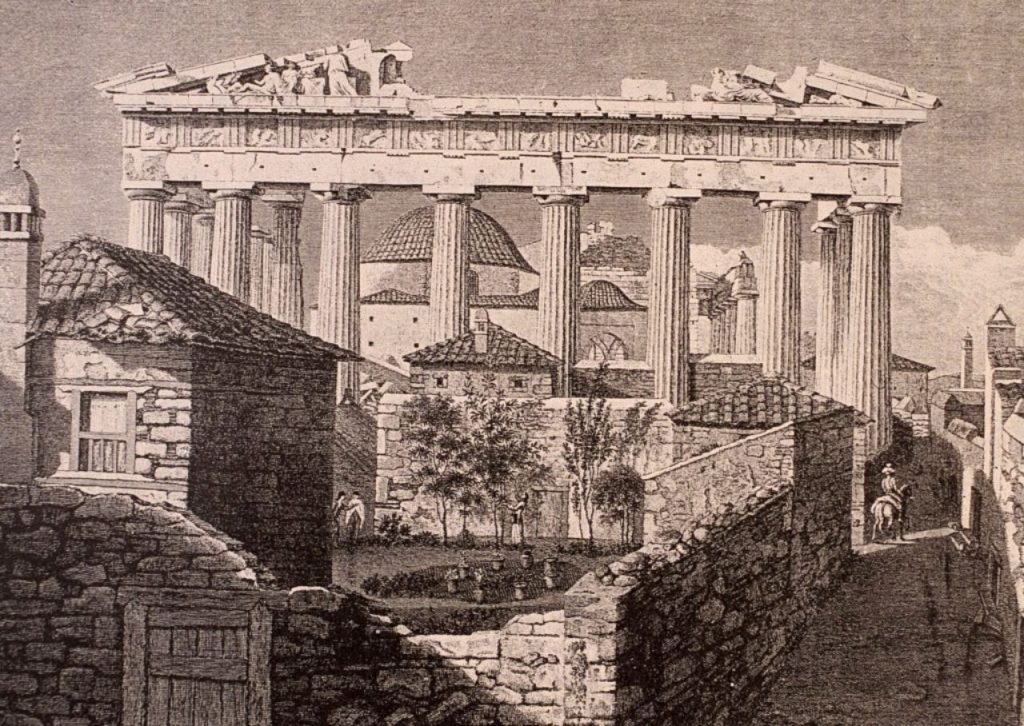
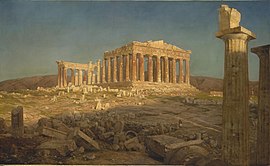

So, to answer the question; cinema, illustration, as well as painting (an art that helped photography find its own place), can very easily deal with the concept of time not only to the same extent but can surpass it providing a more holistic experience providing feature of great value and quality.
 Alexander's blog