Exercise 4: Drift
This exercise encourages you to navigate your surroundings in unconventional ways and set up creative strategies to learn from and generate further materials to work with. What is the difference between walking and drifting? Review your reflection on the Introduction to Psychogeography and refer to the project key text to explore ideas around the term dérive.
“The term dérive, used in the psychogeographical sense by the Situationist and previously the Letterist movements, refers to the literal drifting around (often urban) landscapes, allowing the aesthetics of such a place to guide and lead the walker towards more authentic experiences and ambles.”
Scovell (2015).
“To dérive is to drift, to leave without a destination in order to discover some new experience of place or landscape.”
Scovell (2015).
Undertake a dérive of your own, this is a warm-up activity to get you started, familiar and experimenting with a key method used by psychogeographers, la dérive or drift.
Experiment with one of the following strategies:
- Starting in a place you know, and then going forward for one minute, left for one minute, right for one minute; repeating this pattern until you are actually lost.
- Doing absolutely everything that each street sign tells you to do.
- If the sun is out, walk keeping your shadow on your left at all times.
- Get a tourist or Google map of your home town/village, take a ruler and draw a diagonal line right through it. Try to traverse that line.
- Using the same technique above, draw a circle, shape or letter on the map – walk that route
Document your drift any way you choose, drawing, photographs, sound, or film, there is no prescribed method of approach.
Upload your results to your Padlet, with a summary statement.
Suggestions:
- Take a notebook and a pencil or pen. You might need to draw maps, copy patterns, get strangers you meet to write things down for you, or indeed – write.
- Take a camera. This is for research and recollection. Photos can help prompt memories of what you thought at the moment when you’re back at your desk, and capture discovered details you may want to weave into your writing.
- Don’t take your headphones and music, unless they are part of the dérive. Your regular aural environment is just another way to make your experience normal for you.
- Do take your mobile phone, and record verbal memos into it rather than writing them down if that’s easier for you.
- If it fits with your dérive, take a map – a tourist map or a printed map from the internet will work well. Be prepared to enact mischief on the map, or on the city via the map. Used incorrectly, maps are a great way of getting yourself lost.
- Take your common sense! You don’t abdicate responsibility for being safe in pursuit of your dérive. Wear suitable clothes, take a drink, and don’t trespass or wander into danger.
- Alternatively, you could undertake a dérive online, perhaps navigating around Google Maps, or following a train of internet links to seek interesting and unplanned connections to arise.
Research the term psychogeography in terms of your discipline, are there alternative practices that relate to this process? Take the Hamilton Perambulatory Unit website for example.
Signed Strata: Identify texts and the systems they belong to (street signs – civic, colonialist; advertising – capitalist; graffiti – poetic or interventionist etc.) Why is the street called Victoria? Did it ever have another name? Should it?
Architectural Strata: Identify architectural periods. Note lovely buildings, or intriguing buildings, or decrepit buildings and broken curbs.
Non-human animals Strata: Look for non-human creatures on the street. Pet a cat. Who else lives on the street? Birds? Insects?
Inanimate Strata: Identify plants (native, invasive, useful, ornamental, etc.), note the rocks.
Pre-urban strata: Imagine what was here before, the landscape without the city. Do this without resorting to the trope of “untamed wilderness”.
Electrical Strata: Trace the power lines (where does the electricity come from?).
Shiny Strata: Look for things that are shiny and where the light comes from. Draw or write about them.
Attraction Strata: Notice what is repulsive to you and what attracts you. You can draw or take pictures. Try to use each of your senses for this!
Olfactory Strata: Notice the smells of the street. How can you map sound without using words? If you do use words try synesthesia.
Audio Strata: How does the street sound? What does the street sound like? Where does the street sound? Record audio or take notes.
Speculative Strata: Map what the street could be. Revamp it according to your imagination.
Tactile Strata: How does the street feel? Make rubbings, drawings of felt strata.
Storied Strata: Interview strangers (or yourself) on the street and gather stories about the street. What is the street’s history? Any anecdotes?
Cinematic Strata: What are the movie clichés overlaying your city-image? What movies or stories affect how you see place?
Rhythm Strata: What is the rhythm of the day when you move through place? Are you in rush hour or is it slow? What other rhythms can you sense where you are?
source: http://www.hamiltonperambulatoryunit.org/index.html
The meaning and the benefits of the stroll drift, and the walk were known since antiquity.
Aristotle, the great Greek philosopher, established a walking school in Athens.
Lyceum was an Athenian school founded by Aristotle in 335 BC in a grove sacred to Apollo Lyceius. Owing to his habit of walking about the grove while lecturing his students, the school and its students acquired the label of Peripatetics (Greek peri, “around,” and patein, “to walk”). The peripatos was the covered walkway of the Lyceum. Most of Aristotle’s extant writings comprise notes for lectures delivered at the school as edited by his successors.
Britannica, The Editors of Encyclopaedia. “Lyceum”. Encyclopedia Britannica, 15 Jun. 2017, https://www.britannica.com/topic/Lyceum-Greek-philosophical-school. Accessed 21 April 2023.
Originally at least, the Peripatetic gatherings were probably conducted less formally than the term “school” suggests: there was likely no set curriculum or requirements for students or even fees for membership. Aristotle did teach and lecture there, but there was also philosophical and scientific research done in partnership with other members of the school.
Peripatetic school. (2023, March 26). In Wikipedia. https://en.wikipedia.org/wiki/Peripatetic_school
BRADGATE PARK
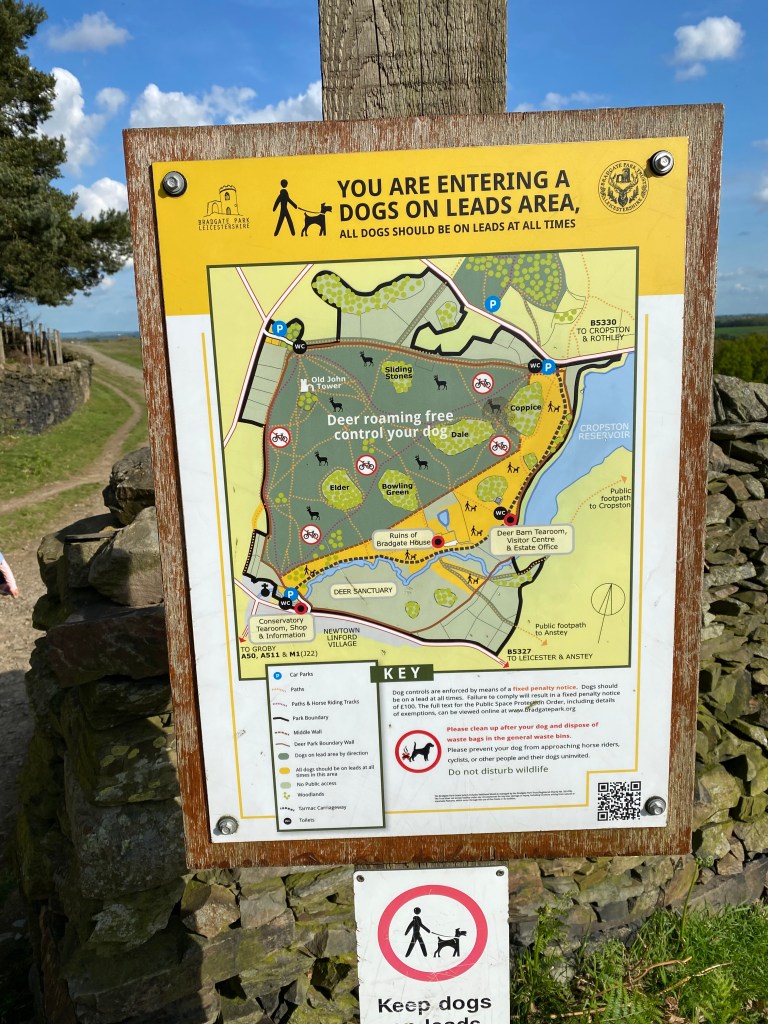
Bradgate Park (/ˌbrædɡət/) is a public park in Charnwood Forest, in Leicestershire, England, northwest of Leicester. It covers 850 acres (340 hectares). The park lies between the villages of Newtown Linford, Anstey, Cropston, Woodhouse Eaves and Swithland. The River Lin runs through the park, flowing into Cropston Reservoir which was constructed on part of the park. To the northeast lies Swithland Wood. The park’s two well-known landmarks, Old John and the war memorial, both lie just above the 210 m (690 ft) contour.[3] The park is part of the 399.3-hectare Bradgate Park and Cropston Reservoir Site of Special Scientific Interest, which has been designated under both biological and geological criteria.[4][5]
Following a fire in April 2017, the owners of Bradgate Trust advised that all visitors are expected to be alert to the risk of causing fire,[6] though another fire in June destroyed one of the ancient oaks.[7]
History
The area now enclosed as Bradgate Park was one of several parks surrounding Charnwood Forest. Since medieval times it has been part of the Manor of Groby.[8] In the reign of Edward the Confessor, the area was owned by a landowner named Ulf. The manor, along with some 100 others in and around Leicestershire, was awarded to Hugh de Grandmesnil in the eleventh century as a reward for his assistance in the battle of William I.[9] The name Bradgate is thought to derive from Norse or Anglo-Saxon, meaning “broad road” or “broad gate” respectively.[9] The first mention of Bradgate Park is from 1241, by which time it was laid out as a hunting park, although rather smaller than the current boundary.[8] It was subsequently acquired by the Beaumont family, passing to the de Quincy family and on to William de Ferrers of Groby. It remained in the de Ferrers family until 1445 when it passed to the Grey family after William’s only surviving daughter married Edward Grey.[9] The inquisition into the estates of de Ferrers, made after his death, mentions the park, with “herbage, pannage and underwood, worth 40 shillings yearly”.[10] The Grey family retained it for the next 500 years, and in the 19th century was opened to the public several days a week.[11][12] In 1928 it was bought by Charles Bennion and given, as a plaque in the park describes, ‘to be preserved in its natural state for the quiet enjoyment of the people of Leicestershire’.
Medieval deer park
The park was originally enclosed using a bank and ditch topped by vertical pales of oak. These first ditch works cross the River Lyn east of the Little Matlock Gorge. A parker, living in a moated house, was the only occupant, maintaining stocks of deer for the lord of Groby Manor to hunt.[8] The park was greatly extended by the first marquis in the late 15th century, to occupy land previously farmed by both Newtown Linford and the now-lost village of Bradgate.[8] Lichen’s dating of the dry-stone walls suggests that the north and west boundary walls were built in the 17th and early 18th centuries when Bradgate was still occupied by the earls of Stamford. The walled spinneys are a later feature, built and planted in the early 19th century as coverts for shooting.[9] The park still has herds of red and fallow deer, which probably have an unbroken occupancy since medieval times.[8]
Bradgate House
Main article: Bradgate House (16th century)
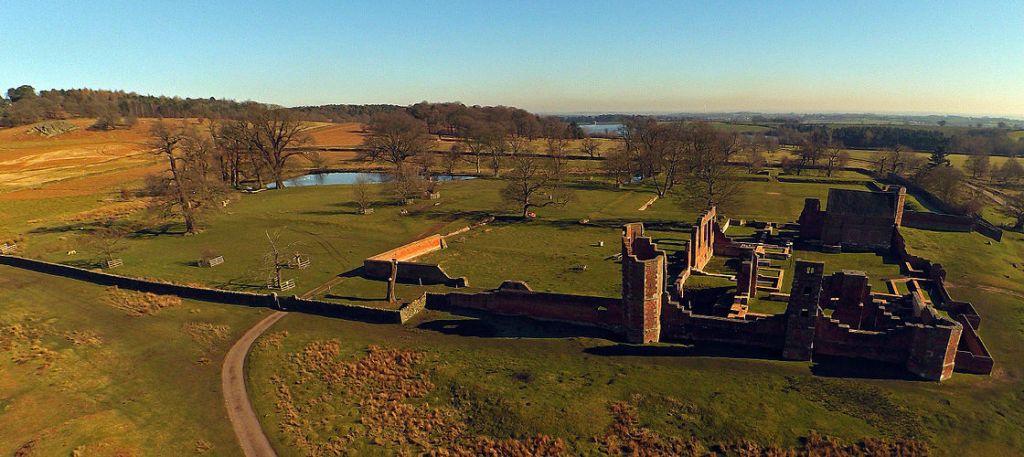
Edward Grey’s son Sir John Grey of Groby married Elizabeth Woodville, who after John’s death married King Edward IV. Their son Thomas Grey, 1st Marquess of Dorset, prepared for building Bradgate House in the late fifteenth century but died before he was able to begin. It was his son Thomas Grey, 2nd Marquess of Dorset, who built Bradgate House, the likely completion date being 1520. There is now some confusion over this completion date, however, as an older house has been discovered under the visible walls and findings have suggested that Lady Jane Grey who wasn’t born until October 12, 1537, lived in the older house.[13]
Sir Thomas Grey died in 1530 and was succeeded by his son Henry, the 3rd Marquess of Dorset, who was married to Frances, the daughter of the Duke of Suffolk and Mary Tudor, King Henry VIII‘s younger sister. The couple’s daughter Jane was born at Bradgate House 12 October 1537.
Bradgate Park. (2023, May 5). In Wikipedia. https://en.wikipedia.org/wiki/Bradgate_Park
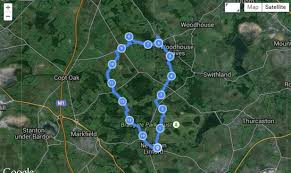


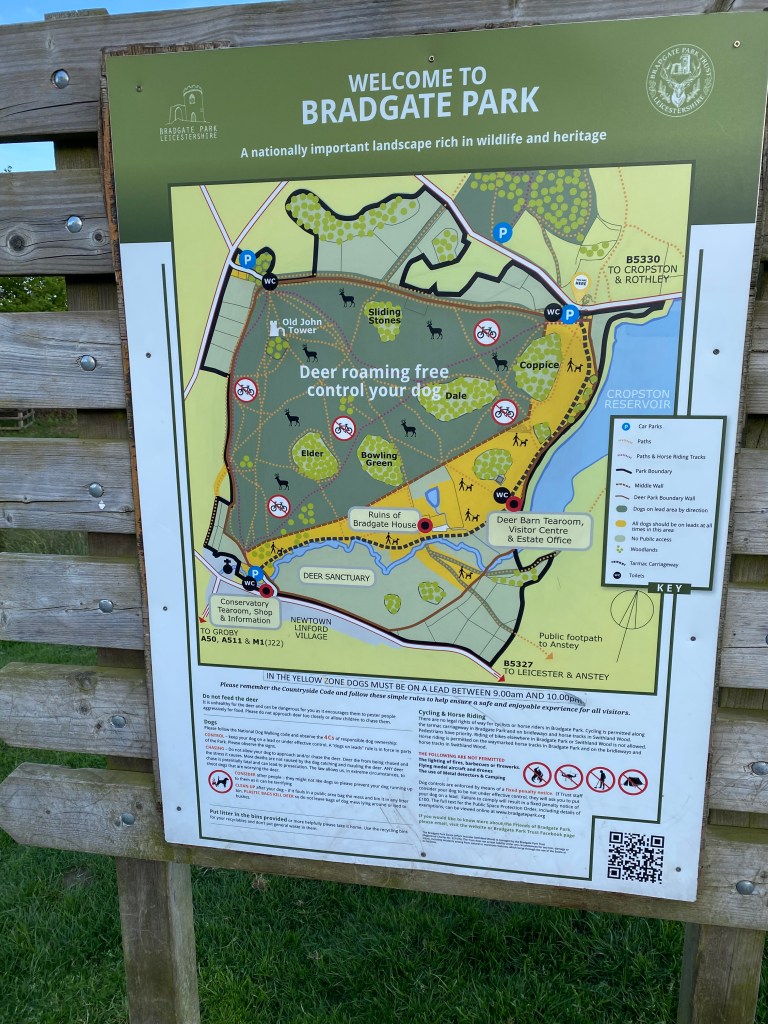
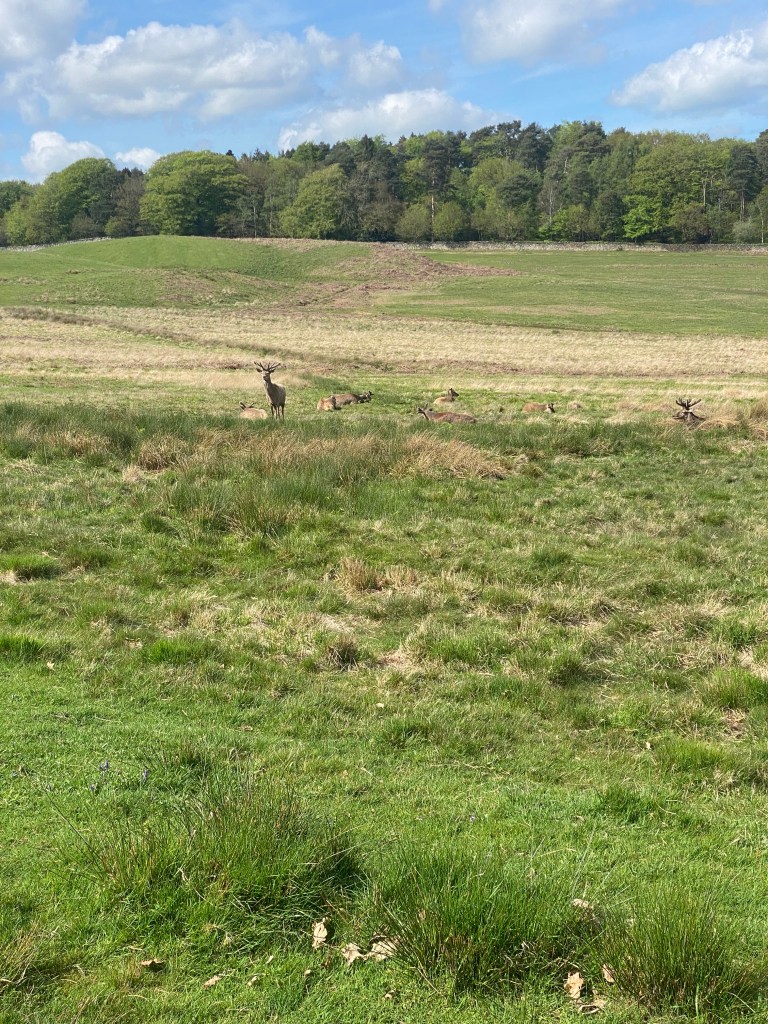
Drifting around the deer: Feels so relaxing and refreshing! As I was walking through the park, I couldn’t help but notice a group of deer drifting around in the meadow. They looked so peaceful and graceful, almost like they were dancing to some silent melody. I slowed down my step and watched them for a while, enjoying the moment of tranquillity. It was a beautiful sight, and I felt lucky to have witnessed it. Eventually, the deer wandered off, disappearing as quickly as they had appeared.
The views from the hill were absolutely breathtaking. As I stood there, taking in the scenery, I felt a sense of awe wash over me. The rolling hills stretched out before me, with their lush greenery and winding rivers. In the distance, I could see the outline of the city, its buildings towering above the landscape. It was a moment of pure beauty, and I felt grateful to be able to witness it. As I stood there, lost in thought, I couldn’t help but feel a sense of peace wash over me. It was a moment I would never forget.
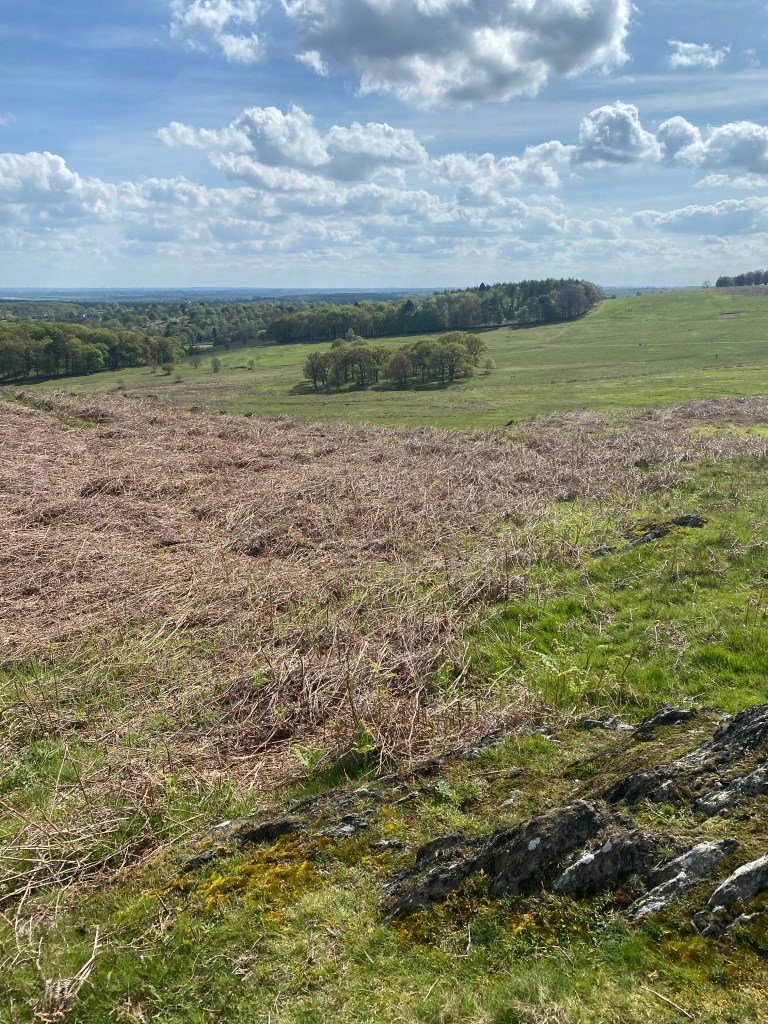

As I walked down the hill, the meadow spread out before me like a colourful blanket. The sun was shining bright and warm. The vibrant wildflowers were a sight to behold, and the sound of birds chirping in the distance only added to the natural harmony of the scene. I found myself wanting to stay in that serene setting forever, basking in the simple pleasures of nature.

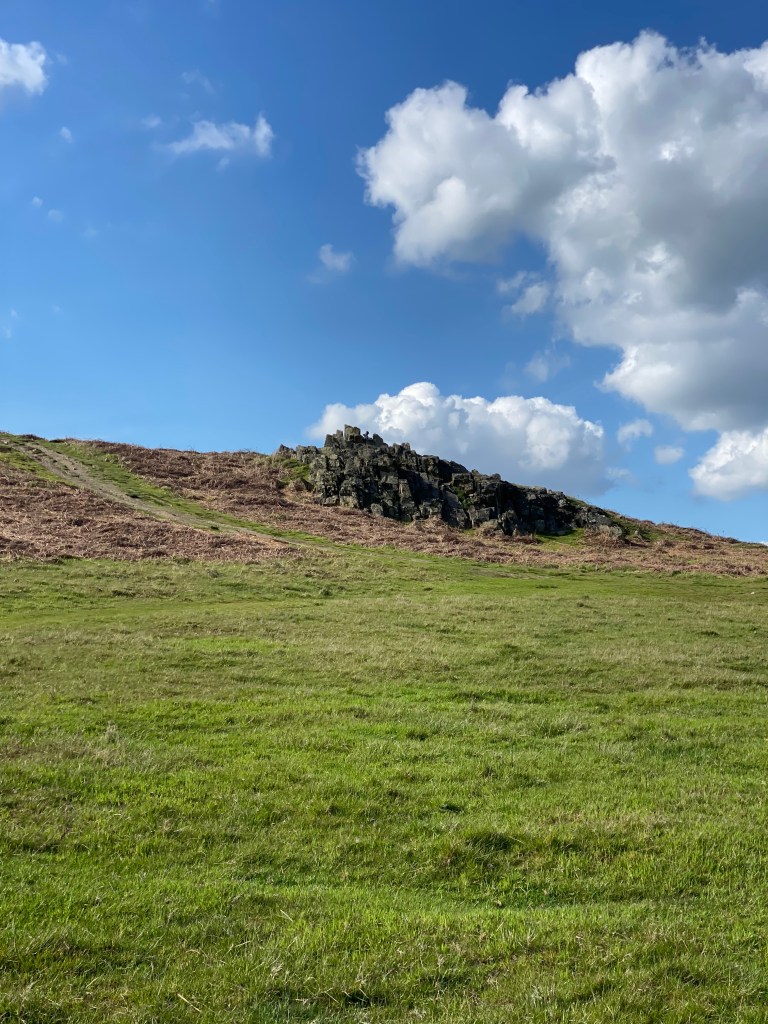
The glorious rocks before me, as I walked in the park, were absolutely breathtaking. As I strolled along, taking in the scenery, I felt a sense of awe. The rugged terrain stretched out before me, with its intricate patterns and textures. In the distance, I could see the outline of the trees, their branches reaching towards the sky. I felt grateful to be able to witness it. As I walked, lost in thought about life’s wonders, I can’t help but feel a sense of awe and curiosity. There are so many mysteries in this world and so much beauty to behold. From the intricacies of the human mind to the vastness of this marvellous park, every aspect of life holds its own unique mysteries and wonders. It’s amazing to think that we are just a small part of something so much bigger than ourselves and that there is still so much left to discover and explore. As I sum up these thoughts, I am reminded of the incredible potential that lies within us all, and the endless possibilities that await us in this incredible journey we call life.
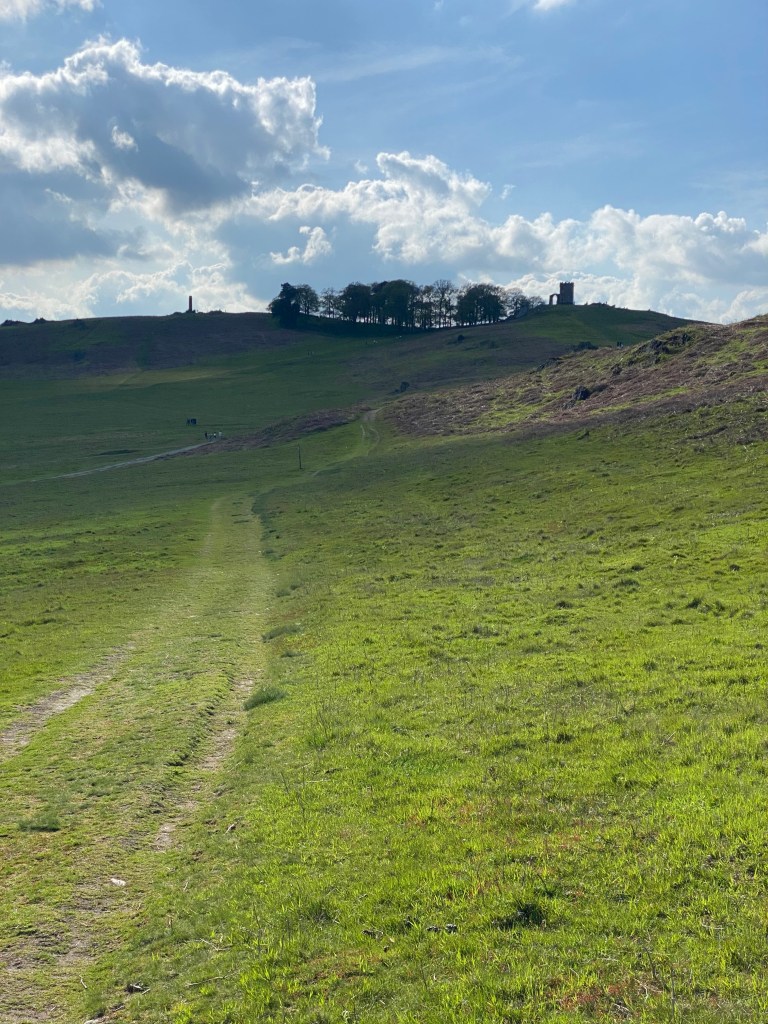
Old John
A prominent landmark is a folly known as ‘Old John‘ on the top of the highest hill in the park. Built by the Greys in 1784, the folly is, by local legend, a memorial to John, an estate worker killed in a bonfire accident during celebrations of the 21st birthday of the future sixth Earl of Stamford. It is reputed that the stonework at the side of the tower was altered to look like a handle, perhaps knowing John’s liking of ale.[14] However he was not 21 until 1786, and a map of 1745 names the hill as ‘Old John’. The tower was used during the 19th century as a viewing point for the horse-racing practice circuit laid out by the seventh earl.
In 2001, Bradgate Park Trust registered the design of the building as a trademark, and in 2018 told a local artist that she would have to pay them if she continued to sell her paintings of it.[15]
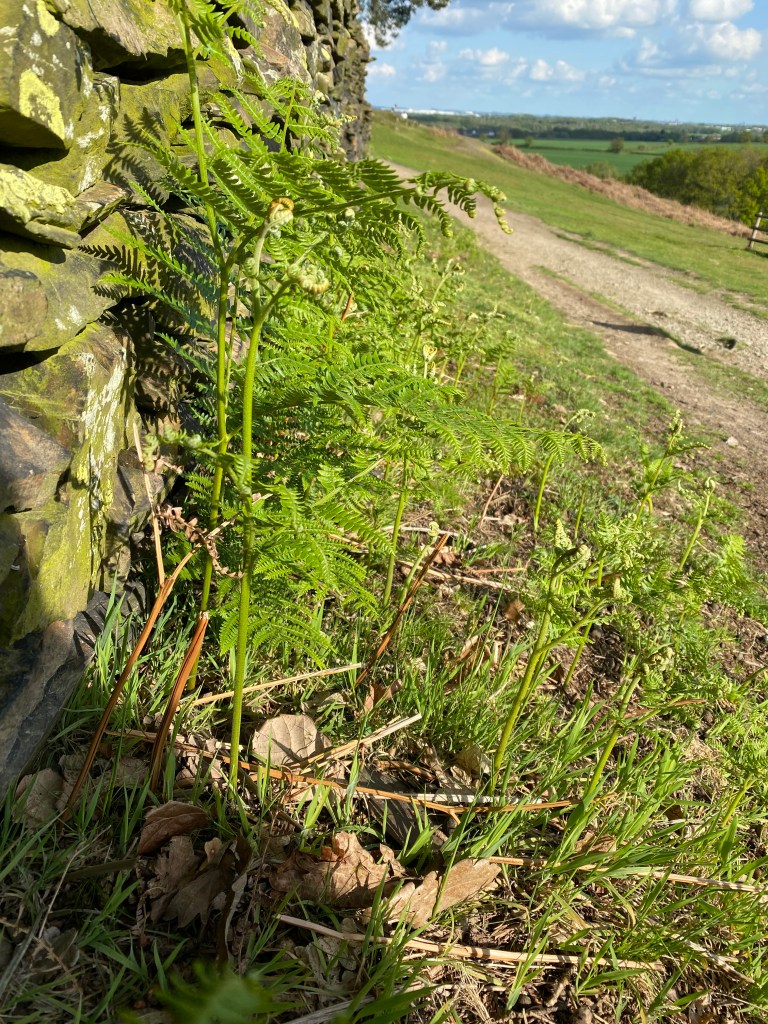
A peaceful scenery of the fern next to the stone wall. It’s so calming to watch the leaves sway in the wind and listen to the gentle rustling sound they make. I often come to this spot to clear my mind and just enjoy the simple beauty of nature. There’s something about the contrast between the vibrant green of the fern and the texture of the stone wall that feels so harmonious. It’s a small but meaningful reminder that even in the midst of chaos and change, there’s always a sense of balance and stability to be found.
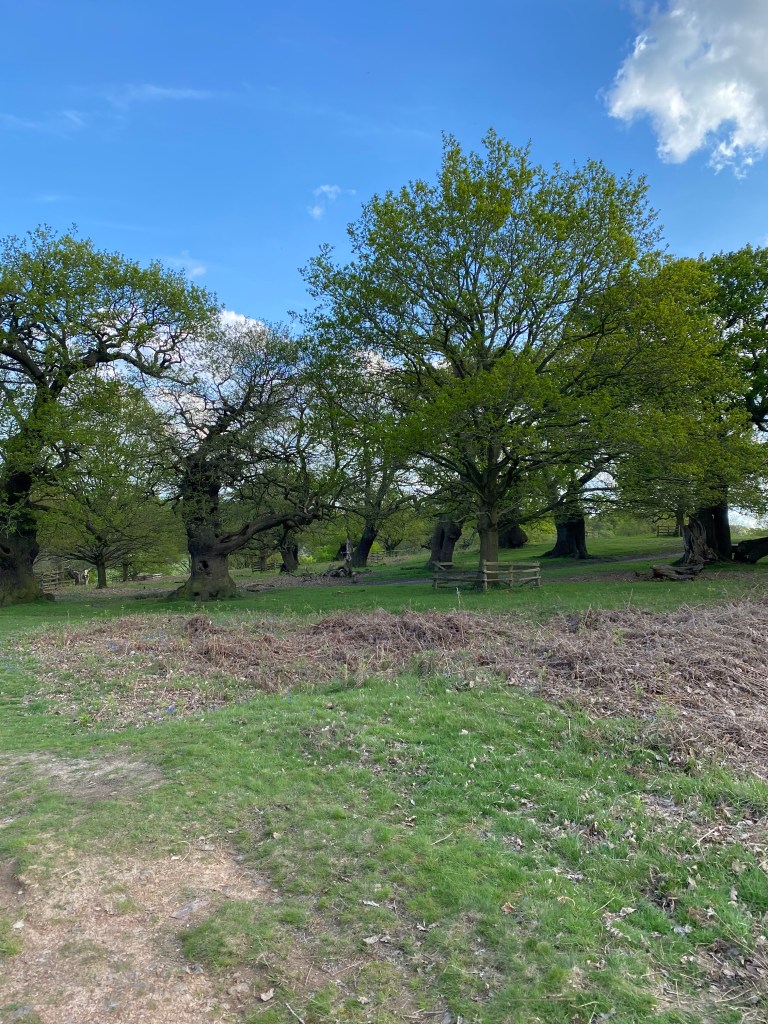
The old oaks stood there, towering over me as I walked through the forest. Their thick trunks and sprawling branches provided shade from the sun, and the rustling of their leaves in the gentle breeze was a soothing sound. I couldn’t help but feel small next to these ancient giants, who had been standing in this same spot for hundreds of years. It was a humbling experience, and I couldn’t help but marvel at the beauty and resilience of nature.
Bradgate House
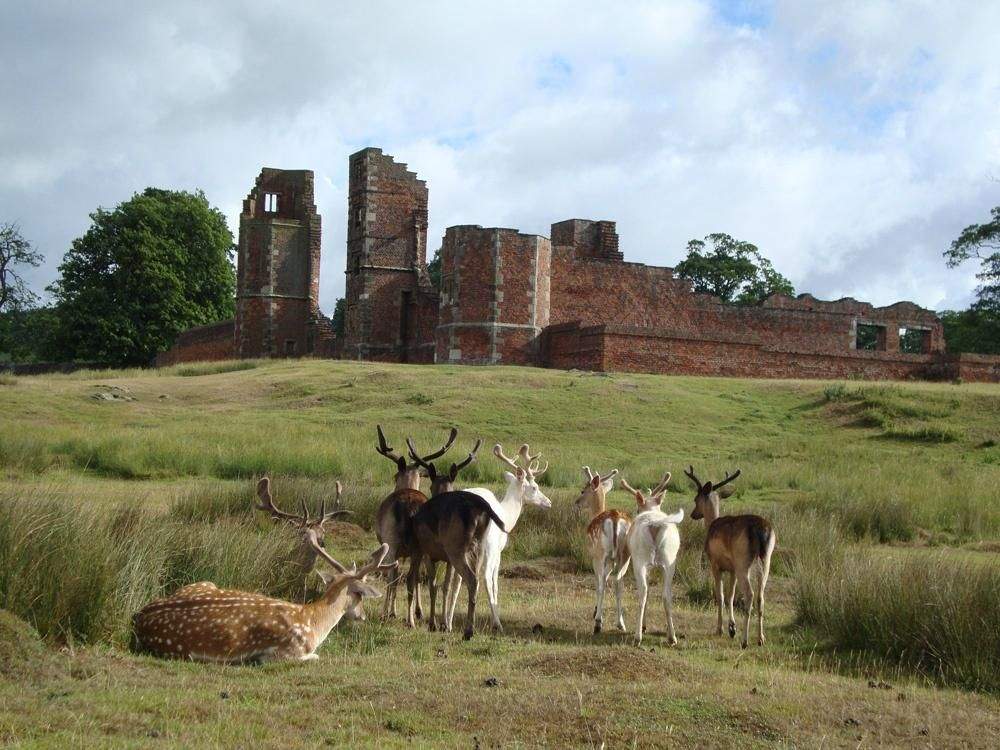
Lady Jane Grey (c. 1537 – 12 February 1554), later known as Lady Jane Dudley (after her marriage) and as the “Nine Days’ Queen“, was an English noblewoman who claimed the throne of England and Ireland from 10 July until 19 July 1553.
Jane was the great-granddaughter of Henry VII through his younger daughter Mary and was a first cousin once removed by Edward VI. She had an excellent humanist education and a reputation as one of the most learned young women of her day. In May 1553, she married Lord Guildford Dudley, a younger son of Edward’s chief minister John Dudley, Duke of Northumberland. In June 1553, Edward VI wrote his will, nominating Jane and her male heirs as successors to the Crown, in part because his half-sister Mary was Catholic, while Jane was a committed Protestant and would support the reformed Church of England, whose foundation Edward laid. The will removed his half-sisters, Mary and Elizabeth, from the line of succession on account of their illegitimacy, subverting their claims under the Third Succession Act.
Lady Jane Grey was the eldest daughter of Henry Grey, 1st Duke of Suffolk, and his wife, Frances. The traditional view is that she was born at Bradgate Park in Leicestershire in October 1537, while more recent research indicates that she was born somewhat earlier, possibly in London, sometime before May 1537 or between May 1536 and February 1537. This would coincide with the fact that she was noted as being in her seventeenth year at the time of her execution. Frances was the eldest daughter of Henry VIII‘s younger sister, Mary. Jane had two younger sisters: Lady Katherine and Lady Mary. Through their mother, the three sisters were great-granddaughters of Henry VII; great-nieces of Henry VIII; and first cousins once removed of Edward VI, Mary I and Elizabeth I.
Bradgate Park. (2023, May 5). In Wikipedia. https://en.wikipedia.org/wiki/Bradgate_Park
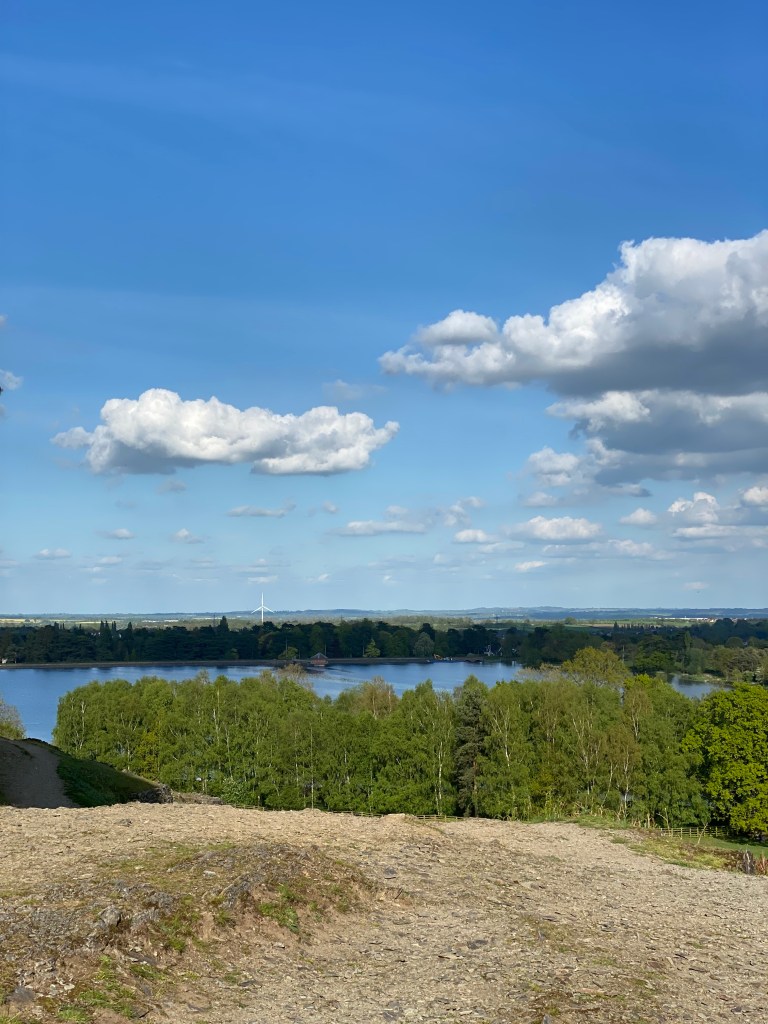
As I sat on the hill staring at the water after a long walk in the park, my mind was buzzing with thoughts. The fresh air and exercise had done wonders for my mental clarity. The sound of the distant water flowing was soothing, was almost like a lullaby. I felt at peace with the world and grateful for this moment. The trees were swaying gently in the breeze, and the sun was starting to set, casting a warm glow over everything. It’s moments like these that make me appreciate the simple things in life. It’s easy to get caught up in the hustle and bustle of daily life, but being in nature reminds me of what’s really important. I feel rejuvenated and ready to take on whatever comes my way.
As I strolled through the park, I couldn’t help but feel a sense of wonder at its everlasting presence. It was then that I realized the lesson the park was teaching me – that even in the face of change and uncertainty, some things will always endure. It was a comforting thought and one that I will carry with me always.
 Alexander's blog