Dissonance
In the following exercise, you will explore the idea of dissonance and how the creative arts can teach us how to stay and reflect in moments of tension. In turn, you will consider how to learn to lean into the dissonance we encounter in the experience and process of creative work and how the boundaries we perceive can lead to constructive critical challenges and conversations.
“Sometimes, people hold a core belief that is very strong. When they are presented with evidence that works against that belief, the new evidence cannot be accepted. It would create a feeling that is extremely uncomfortable, called cognitive dissonance. And because it is so important to protect the core belief, they will rationalize, ignore and even deny anything that doesn’t fit in with the core belief.”
Frantz Fanon, The Wretched of the Earth (1961) New York :Grove Press. P44.
Cognitive dissonance, a term coined by the social psychologist, Leon Festinger, can be described as discomfort caused by holding conflicting ideas simultaneously. Cognition refers to the mental processes involved in gaining knowledge and comprehension. Dissonance is a term used to describe tension resulting from the combination of disharmonious or unsuitable elements.
Within our perspective on the world we are very likely to experience cognitive dissonance. It is possible to encounter such discomfort or tension when experiencing creative art, as artists, designers, writers and musicians often employ conflicting ideas to enact a message that challenges assumptions and opinions. We look at art with many expectations. Sometimes those expectations are fulfilled, but sometimes we are surprised, even offended. The technique of creating unexpected forms can lead to a piece of creative art that is humorous, confusing, frightening or frustrating, but all works of dissonance demand that the viewer stops and reflects on the feelings they experience.
“Clashing discords, loss of equilibrium, ‘principles’ overthrown, unexpected drumbeats, great questionings, apparently purposeless strivings, stress and longing […] This is our harmony.”
Wassily Kandinsky, Concerning the Spiritual in Art (1947) Dover Publications.
The writing in larger font is my writing, whereas the smaller one comes from the brief.

Wassily Kandinsky, Painting with Spikes – Composition no. 223 (1919) © Mondadori Portfolio / Bridgeman Images.
the painting above reminded me of me one of my scribbles:

and inspired me to create a multicolour one because I really enjoy creating abstract designs without any real life reference. It’s what i call them whimsical patterns.
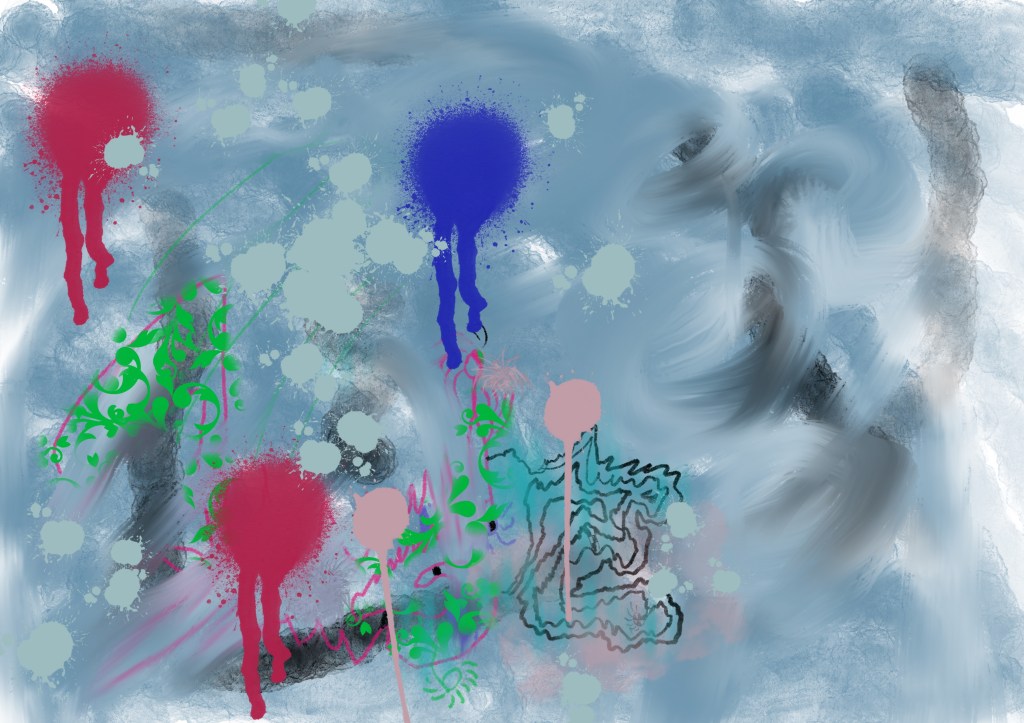
The creation of music is often reliant on the resolution of dissonance, where sounds build tension and begin to form structure before the resolution accentuates consonant harmony and recognisable melody. Like dissonance in music, Wassily Kandinsky’s painting connects us to the tension between disjointed lines and shapes that defy gravity in conflict and chaos, reflecting the dissonance prevalent in modern society.
Avant-garde movements in art, music and literature of the 20th Century purposely generated forms of creative tension in the viewer. Often, artists present social issues that challenge established ideas and present creative statements about politics, religion, psychoanalysis, and, more broadly, the human condition.
“The intention is to motivate critical thinking and demand active participation in the construction of “reality”’
Solso, R. L. (1933). The Psychology of Art and the Evolution of the Conscious Brain. London. MIT Press.
Surrealism, as one such movement, took these ideas and incorporated them into works that explored the fragmented state of humanity, utilising incisive humour, the absurd, unconscious and occasional moral outrage to confront the social dissonance in post-war Europe. By exploring the curious feeling induced by simultaneously holding inconsistent thoughts, beliefs and actions, creative art attempts to draw our attention, examine the inconsistencies and devise to reduce that discomfiting feeling. It urges us to evaluate ourselves objectively and become aware of how conflicting cognitions – thoughts and actions contradicting firmly held beliefs and values – impact our lives.
Today, the digital landscape of screens and fast-flowing content offers us a vivid reflection of aesthetic dissonance – often an experience of being bored and entertained at the same time – a plethora of experiences, values, and behaviours observed and encountered that can result in unrest, conflict and tension between beliefs, politics and our general wellbeing.
Exercise 3: DissonanceSpend time researching the term Cognitive Dissonance. Recall an experience in your life when you may have felt it. What artwork, music, films and stories have you encountered that utilise dissonance to create tension? Add your response to these questions to the Cognitive Dissonance thread in the Unit Forum.
Rene Magritte, The Betrayal of Images (1935) Photo © Christie’s Images / Bridgeman Images. 1
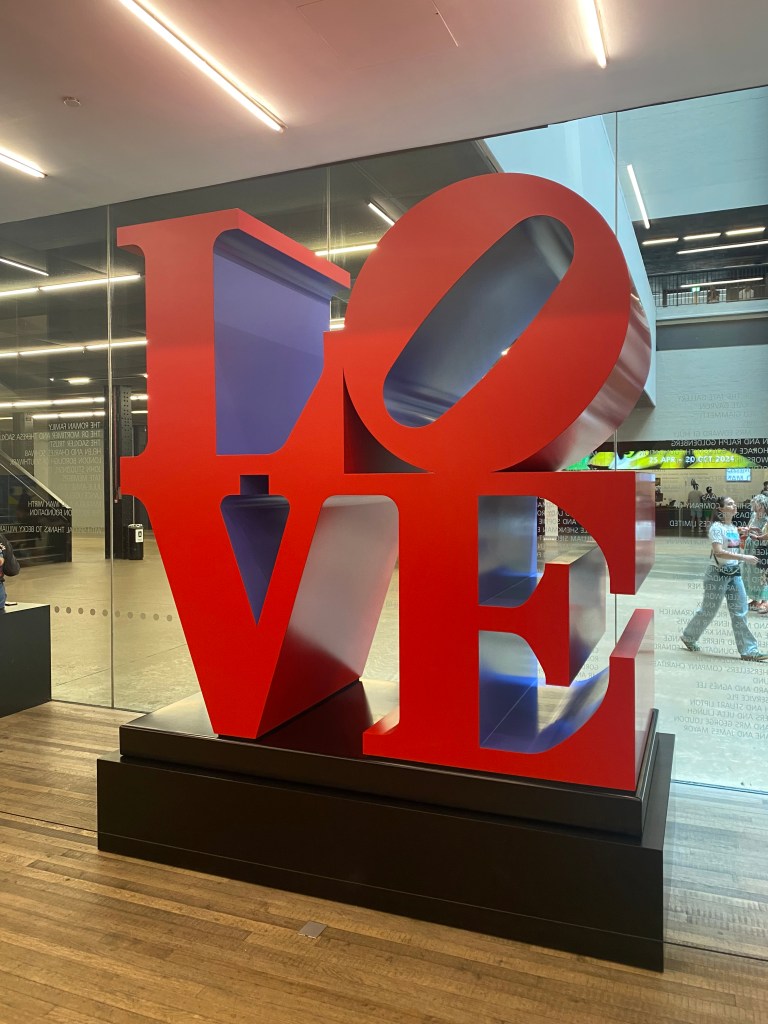
Tate Modern museum in London
I recently went to the Tate Modern museum in London and I took the picture bellow.
It is the iconic LOVE sculpture.
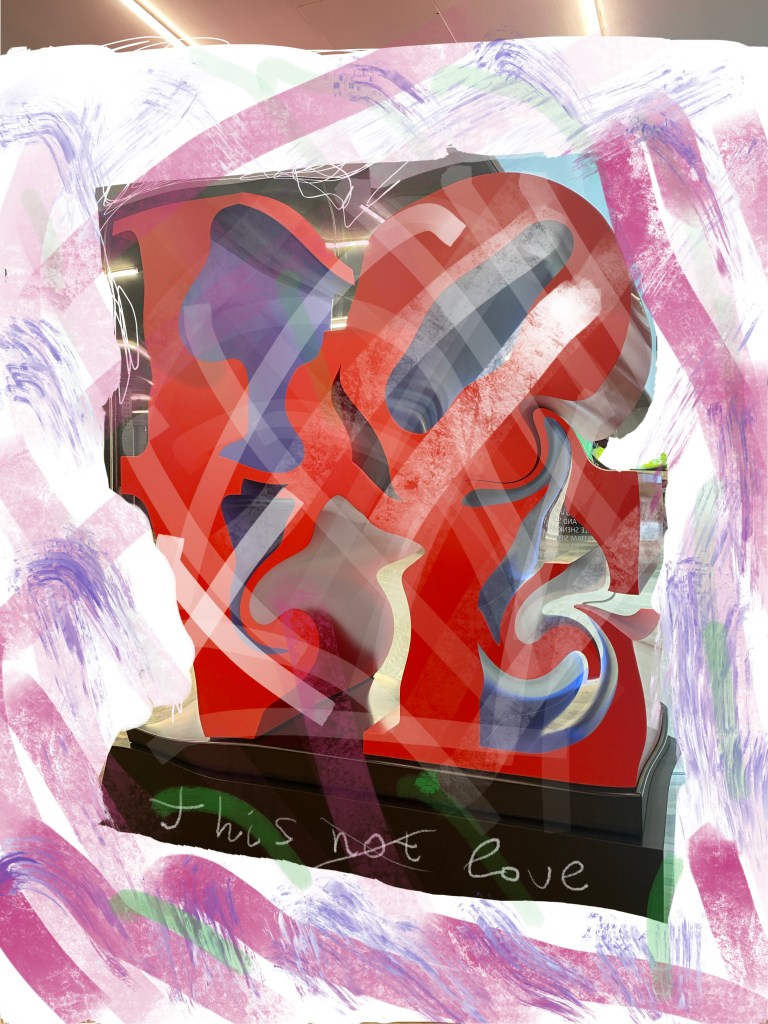
Inspired by the ‘’this is not a pipe’’ painting listed above, I processed the picture to my taste and to my perspective.
I played with the curves firstly, then I erased the background to focus only on the primarily picture and then I felt like I wanted to use a paint brush to add a more playful mood as well as a bit more colour.


I love to use the ambiguous meaning of words! It surprises people and brings a smile to their faces. I like this sense of humour because it is witty and appealing.

How do I perceive Dissonance? The right word would be as a paradox. Paradox ‘’παράδοξο’’ is a greek word meaning weird, unexpected, giving the element of surprise to the one receiving the message.
To expand my idea, I have uploaded pictures to match the paradigms listed above.
One of my favourite artists who explored the idea of Dissonance is one of the Pop Art pioneers Andy Warhol.
In my recent visit in the Tate Modern museum I was stunned my this piece of work
’’Christ $9.98 (negative and positive)”
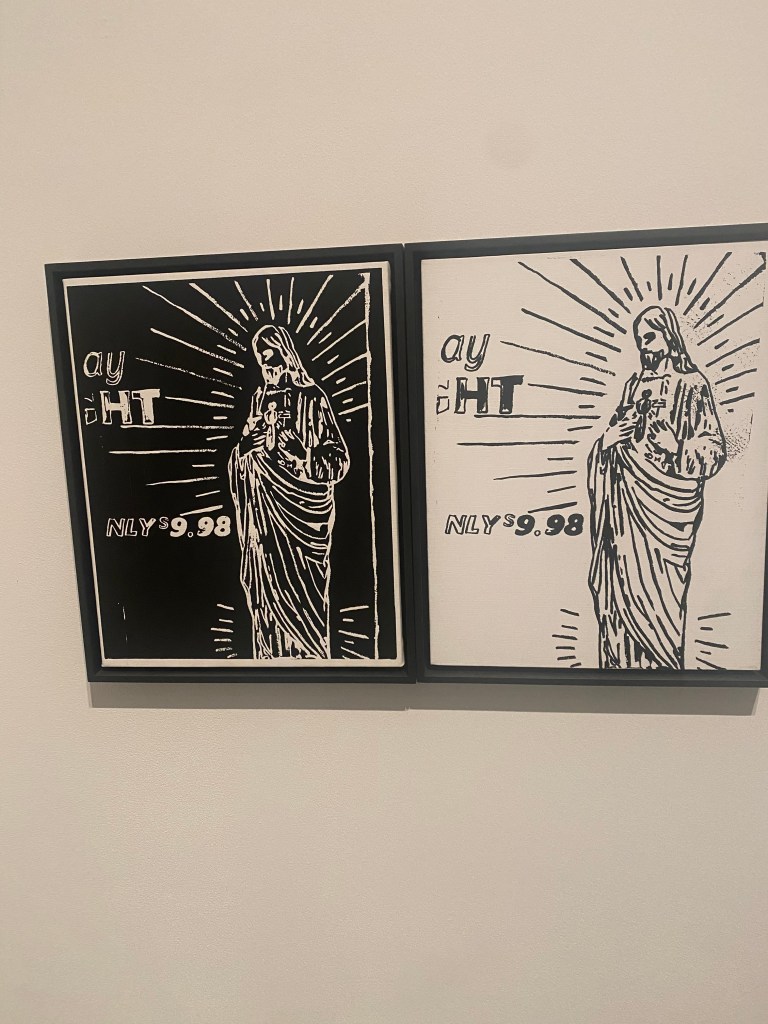
And then I remembered Banksy’s brilliant print of Jesus. Banksy, is an agent provocateur of our time. I admire his work and I believe he found the perfect principal to satirise the odds of the world we live in.
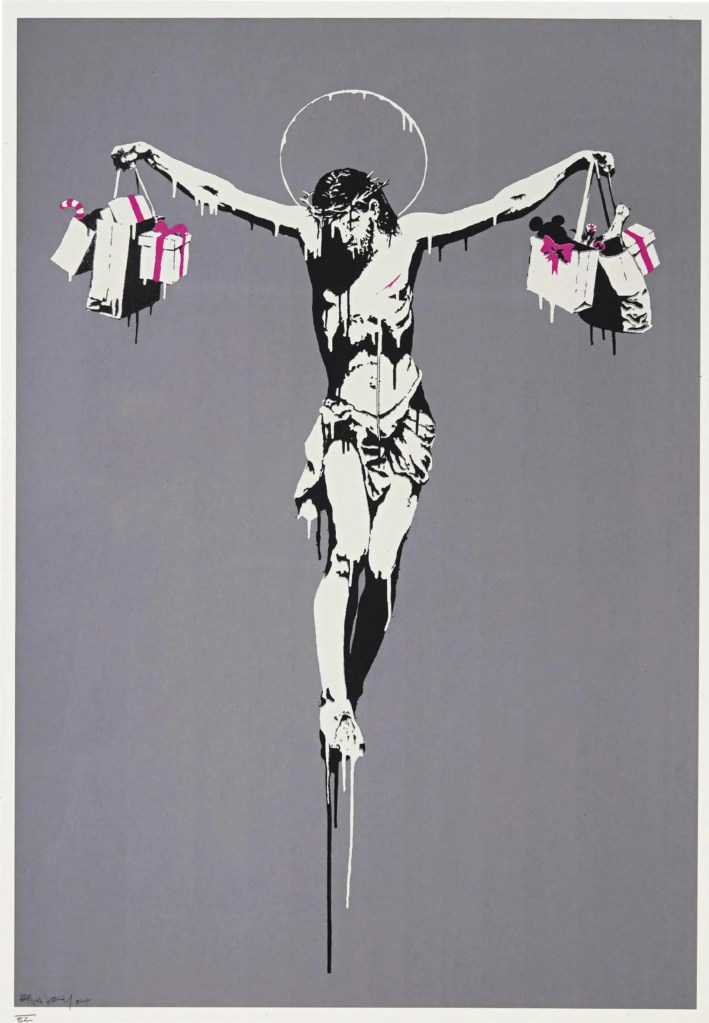
I believe that both of their artworks were created to show the irony of the commercialisation of the Western world by using something extreme and powerful; religion. This path is sometimes controversial, and it can be perceived as hubris, but in my opinion, that is not the case.
Dissonance is α path I would like to explore; it is a way to express your abstract ideas, to be provocative, to create something out of this world.
I would definitely come back to it sometime in the future because it has so much more to explore about.
 Alexander's blog