“Landscape photography is the supreme test of the photographer; and often the
supreme disappointment.”
(Adams, 1970, p.43)
Scenery, views and landscapes – all are standard fare for snapshots of the noteworthy or pretty.
Straight records of views are rarely satisfying because we expect them to look their best,
irrespective of the viewpoint, weather or techniques employed. We also judge photographs by
the evidence of the photographer’s skill (whether we realise its effects or not), so snapshots of
anything have to be exceptional to create wonder or awe.
Landscape photography is a huge area of practice and study; we can only scratch the surface
here. If you want to explore further, Malcolm Andrews (1999) Landscape and Western Art,
Oxford: OUP is an excellent introduction to the subject.
How do photographs convey a sense of place? Space, placement and depth in images are
shown by juxtaposition and perspective. Check your understanding of these terms before you
read on. Placing smaller objects near to the camera can balance the composition with larger
objects further away, creating a sense of depth in the image, as in some of Ian Berry’s images of
Whitby in North Yorkshire:
http://www.magnumphotos.com/C.aspx?VP3=SearchResult&STID=2S5RYDIDH861 [accessed
08/12/18]
Imagine the same images without the people. How would this affect your sense of Whitby as a place?
Ian Berry was born in Lancashire, England. He made his reputation in South Africa, where he worked for the Daily Mail and later for Drum magazine. He was the only photographer to document the massacre at Sharpeville in 1960, and his photographs were used in the trial to prove the victims’ innocence.
Henri Cartier-Bresson invited Ian Berry to join Magnum in 1962 when he was based in Paris. He moved to London in 1964 to become the first contract photographer for the Observer Magazine. Since then assignments have taken him around the world: he has documented Russia’s invasion of Czechoslovakia; conflicts in Israel, Ireland, Vietnam and the Congo; famine in Ethiopia; apartheid in South Africa. The major body of work produced in South Africa is represented in two of his books: Black and Whites: L’Afrique du Sud (with a foreword by the then French president François Mitterrand), and Living Apart (1996). During the last year, projects have included child slavery in Ghana and the Spanish fishing industry.
Important editorial assignments have included work for National Geographic, Fortune, Stern, Geo, national Sunday magazines, Esquire, Paris-Match and LIFE. Ian Berry has also reported on the political and social transformations in China and the former USSR.
———————————————————————————–
The pictures shown below were captured at Whitby by Ian Berry.
There are everyday people getting on with their lives. Whitby looks like a place where people have a purpose, a lifestyle. Looks like a beehive.
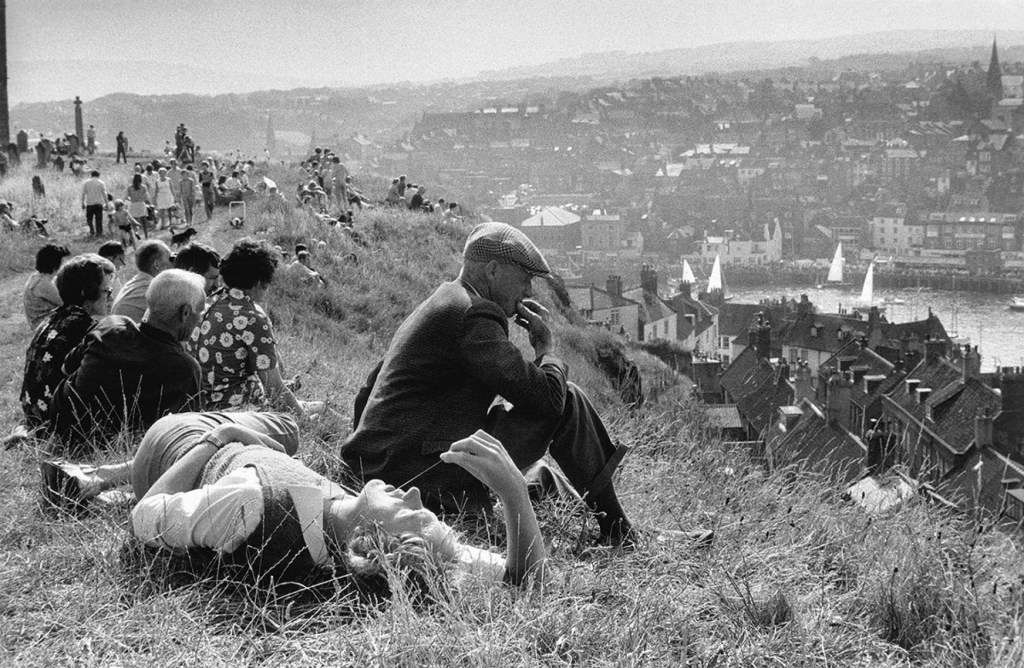
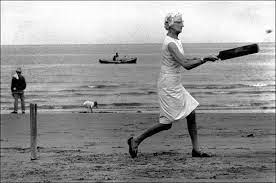
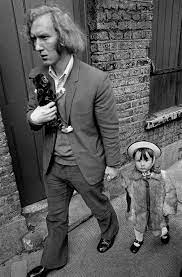

The brief is asking if we could imagine all the pictures below without the people.
I believe, with the absence of humans the dynamic of the pictures would shift dramatically.
Whitby would look so different! Human activity is what defines a site, a space. So, Whitby would look like be a lifeless area. There would be no individuality , no sense of identity. It would look a depressing town, none would wish to visit: a dystopian place.
 Alexander's blog