Our personal and distinctive perspective of the world is formed by a complex mix of experiential, geographical, social, cultural and political experiences. This course unit expands on the themes within 2.1: Relations, exploring the wider context of how our perspectives on the world are formed and informed by personal and social contexts and increasingly by global affairs and technological developments.
The creative arts are a celebration of perspectives – a platform that showcases a multitude of creative practices from around the world, mapping interests, opinions, skills and ideas in a lively, engaging and, at times, challenging environment. During this unit, you will review a range of theoretical and practical examples and exercises to expand your perspective of the world relative to the perspective of others.
In our interconnected world, we face challenges, such as climate change and the recent global pandemic, which foreground the need for evaluating the various positions and perspectives impacting the types of work we wish to create and the wider creative arts more generally. How does our way of seeing the world take shape? How is it formed or changed by events around us? And how does this inform practice, research interests and your work?
This course unit presents various perspectives from within the creative arts, broadening your awareness and engagement with themes related to your relationship with the wider world. The following exercises are designed to support and expand your developing creative practice, enabling you to explore the personal and contextual parameters of your work and ideas and strengthen the technical skills necessary to utilise various disciplines and creative possibilities.
research Task: New Ways of Seeing
“We can only see what we look at. To look is an act of choice.”
John Berger, Ways of Seeing (1972) Penguin.
The British Broadcasting Corporation (BBC) televised Ways of Seeing first in 1972, inspiring generations of creative practitioners and academic programmes. The series of 30-minute films by writer John Berger was subsequently adapted into a book of the same name and featured as core reading for many creative subjects around the world. While the key ideas of Ways of Seeing are still poignant today, the modes of creativity, art, design and music are ever-changing to such a degree that a reevaluation is paramount to assess our current position and perspective on how we see and engage with the world around us.

Alan Denney, Remembering John Berger – Albion Road – Via Flickr.
The unpacking of visual culture explored in Ways of Seeing offers us tools to critically engage with our surroundings and experience of media and culture. The ideas therein also enable a reevaluation of other forms of sensing and perceiving our world through other disciplines, such as writing, music and film. Within the development of digital media, the themes of Ways of Seeing carry even further, enabling text, images and sounds to perpetuate in myriad ways that create an even more complex and indefinable space of voices.
The switch from analogue to digital media in the last 20 years is changing our perceptions of the world. Ideas concerning time, space and power, amongst others, are evolving as technology becomes an increasingly potent aspect of our lives. The writer–musician Damon Krukowski examines this landscape in his book Ways of Hearing (2019), modelled on Ways of Seeing as a nod to Berger’s seminal investigation. Krukowski explores aspects of listening in the digital age, seeing sound as a medium shared by many people;
“but … I’m worried about the quality of that sharing – because we don’t seem to be listening to each other very well right now in the world. Our voices carry further than they ever did before, thanks to digital media. But, how are they being heard?”
Damon Krukowski, Ways of Hearing (2019) MIT Press.
A theme consistent throughout Ways of Hearing is the difference between a world enriched by noise (the beautiful cacophony of multiple, layered, interwoven sounds from multiple surrounding sources) and ‘a world that strives toward signal only’. This, says Krukowski, is the essential change in the shift from analogue to digital communications. Krukowski calls attention to unconsidered aspects of sound, ‘to highlight different parts of the noise around us. By listening to a wider swath of noise, we might discover more about what is a meaningful signal for each of us. And how we might best share those signals with one another’.
These ideas concerning our relationship to sounds can be applied to other sensoria as the evolution of our experiences of text, image and sound become increasingly modified, manipulated and controlled. The shifting media culture outlined by Berger (visual) and Krukowski (sound) is augmented by an equally seminal book, The Medium Is the Massage: An Inventory of Effects, co-created by Canadian media theorist Marshall McLuhan and graphic designer Quentin Fiore in 1967. There are many crossovers and similarities between these authors, each pushing at assumptions and predicting interpretations of the future and being a force of influence for many creative practitioners of our time. A common thread among them all can be found in offering more instigations than conclusions, inviting optimistic scepticism and personal interpretation of the ever complex and layered contemporary environment.
One of the many contributions by Marshall McLuhan to communications and technology theory is his transposition of the eye and ear as primary human sensory inputs. ‘The ear favours no particular point of view,’ he wrote in The Medium Is the Massage;
“We are enveloped by sound. It forms a seamless web around us. We hear sounds from everywhere without ever having to focus. We can’t shut out sound automatically. We simply are not equipped with earlids. Where a visual space is an organised continuum of a uniformed connected kind, the ear world is a world of simultaneous relationships.”
McLuhan and Fiore, The Medium is the Massage (1967) Penguin. Pg 111.
Both McLuhan and Krukowski note the ability of the ear to shift its focus through the layers of surrounding noise (the unwanted sounds) and isolate foreground-specific sounds. In short, our ears separate the signal from the noise and focus our hearing on an intended sound subject.
- Respond to the content outlined above and use the questions, further reading and search terms within the New Ways of Seeing Padlet to expand your understanding of how our perspective on the world has evolved.
- Make notes in your Learning Log that summarise your comprehension of how images, text and sound coalesce in ways that shape our perspective.
- Use the course resources available to follow up on points within the presentation and build on the notes you have compiled.

Austin Kleon, WAYS OF SEEING by John Berger (2008) Image via Flickr.
Notes on the subject
The way we perceive the world around us is closely linked to how we see things. Our perception is the result of a complex interplay of our sensory experiences, cognitive processes, and personal biases, which together shape our understanding of reality. By interpreting the sensory information we receive, our brain constructs a mental model of the world, which is then filtered through our personal experiences, cultural background, and other factors. This means that what we perceive as real may not always be an accurate representation of objective reality. Our interpretation of events, people, and situations can be influenced by a range of factors, including our emotions, beliefs, and expectations. Being aware of these influences is essential if we want to gain a more nuanced understanding of the world and avoid falling into the trap of seeing things only from our perspective. By embracing different viewpoints and considering alternative interpretations, we can broaden our horizons and develop a more comprehensive understanding of the world around us.
The mechanical reproduction of images has had a significant impact on the way we see things. With the advent of technologies like photography, film, and digital imaging, we are now able to view and reproduce images with greater speed, accuracy, and detail than ever before. This has led to a democratization of images, as they are now accessible to a wider audience and can be reproduced and distributed more easily.
However, this has also led to some negative consequences. The proliferation of images has led to a saturation of our visual field, making it difficult to discern the significance or value of any one image. Additionally, the ease with which images can be manipulated and altered has led to a loss of faith in the authenticity of images, with the result that we often question whether what we are seeing is real or not.
Overall, the mechanical reproduction of images has had a profound impact on our relationship with the visual world, both positive and negative. It is up to us to navigate this new landscape and determine how best to utilize these technologies for the betterment of society.
Oil painting played an important role in the art of the Rennaissance, and the Raisannese era was no exception. This period, which spanned from the late 15th to the early 17th century, saw many famous artists such as Leonardo da Vinci, Michelangelo, and Raphael create some of their most iconic works using oil paint. One of the key characteristics of oil painting in the Raisannese era was the use of light and shadow to create depth and realism in the artwork. Artists used a technique called chiaroscuro to create dramatic contrasts between light and dark areas, which gave their paintings a three-dimensional quality. Another important aspect of Raisannese oil painting was the use of glazes, which involved layering thin, translucent layers of paint on top of each other to create rich and vibrant colors. This technique allowed artists to create a sense of luminosity and depth in their paintings that was not possible with other mediums. Overall, oil painting played a significant role in the art of the Raisannese era, helping artists to create some of the most beautiful and iconic works in art history.
Publicity and oil painting may seem like two entirely different worlds, but they can actually intersect in interesting ways. For example, an artist may use publicity to promote their oil paintings and gain recognition for their work. On the other hand, a company may commission an artist to create an oil painting for a publicity campaign or as a way to showcase their brand. Additionally, oil paintings themselves can be the subject of publicity, such as when they are featured in a museum exhibition or sold for a record-breaking price at an auction. Overall, while they may initially seem unrelated, publicity and oil painting have the potential to complement and enhance each other.
Exercise 1: Your Place and Experience
As everyone learned in school, when our idea of the position of the Earth in the cosmos is modified, a revolution in the social order may ensue. Remember Galileo (1), when astronomers declared that the Earth moves around the Sun, it felt as though the whole fabric of society was under attack.
- Bertolt Brecht, Life of Galileo (Harmondsworth: Penguin, 1980). Originally written in German as Leben des Galilei in 1938/39.
Our experiences and perspective of the world are inherently connected to the place in which we are born, the circumstances of our life, our position in society, past experiences, etc. There are many aspects of our lives that impact our perspective and how we can express and explore this through creative devices and disciplines.
This exercise asks you to explore some initial ideas about your place in the world and experience of it through a piece of creative work. You can use the prompts below as starting points to generate ideas and create an outcome in an imaginative and explorative way, reflecting on how your perspective is reflected in your work;
- Where am I? A village, town, country, planet?
- What can I see, feel and/or hear from where I am?
- Multiple perspectives.
- Personal histories.
- Document and review your outcomes in your Learning Log.
- Geotagging
- Use the Creative Arts Geotagging Padlet to add details about your Place and Experience exercise to your location, including images, text and/or sound.
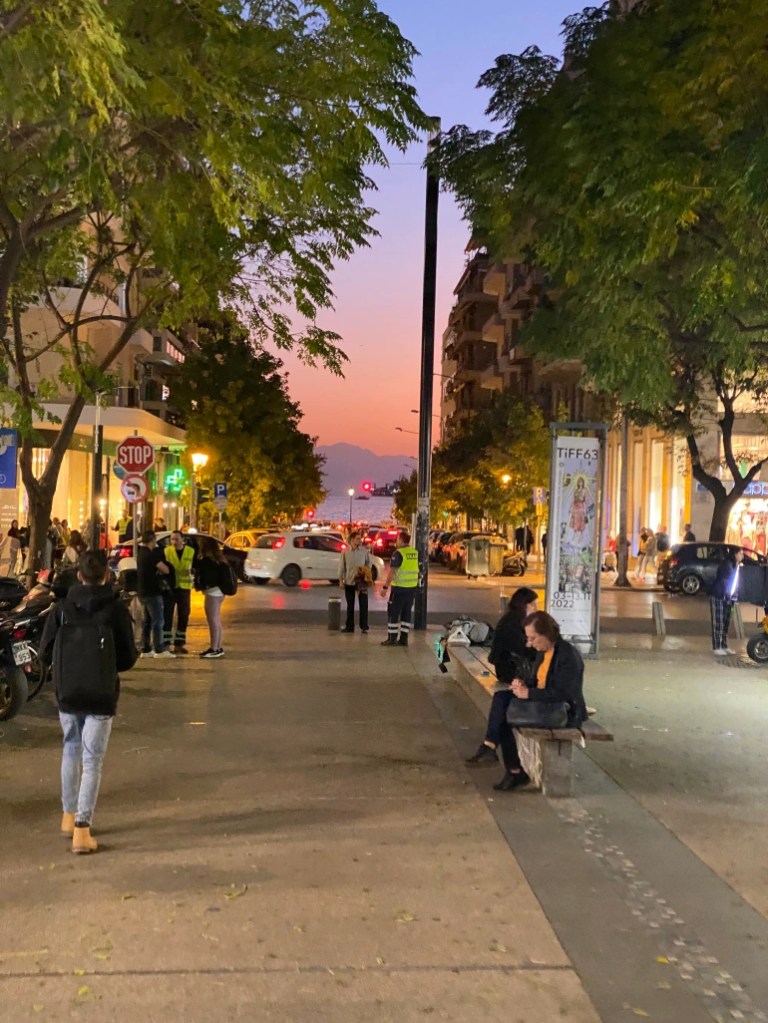
I was born in Thessaloniki. A beautiful city by the sea in the northern part of Greece.
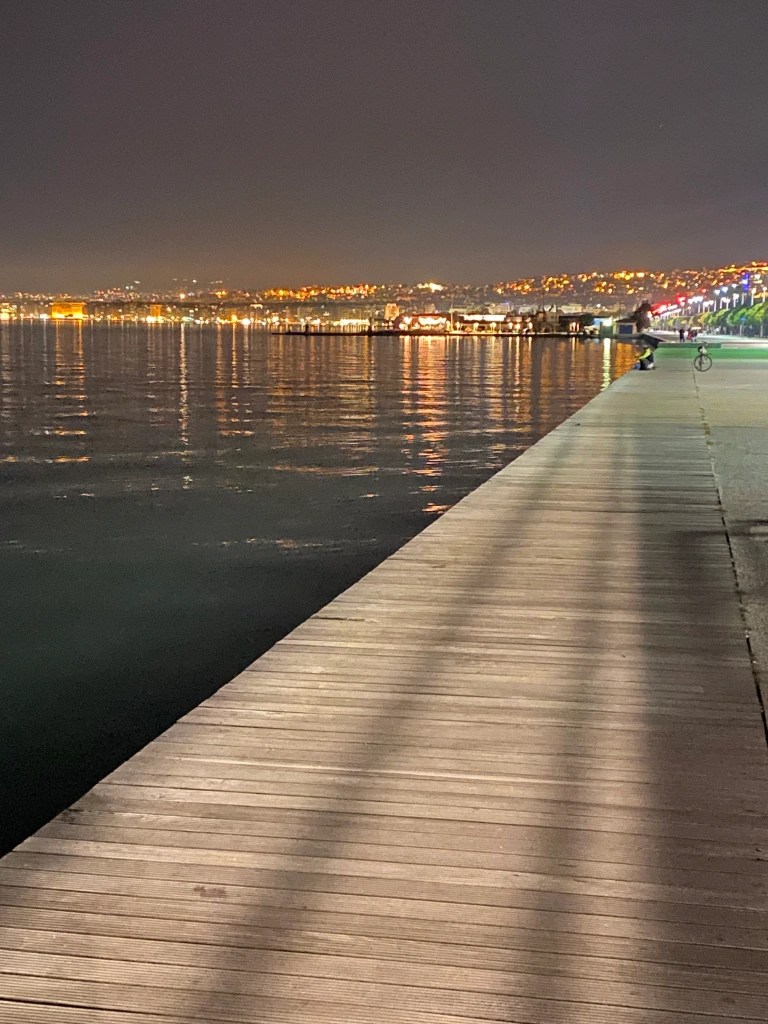
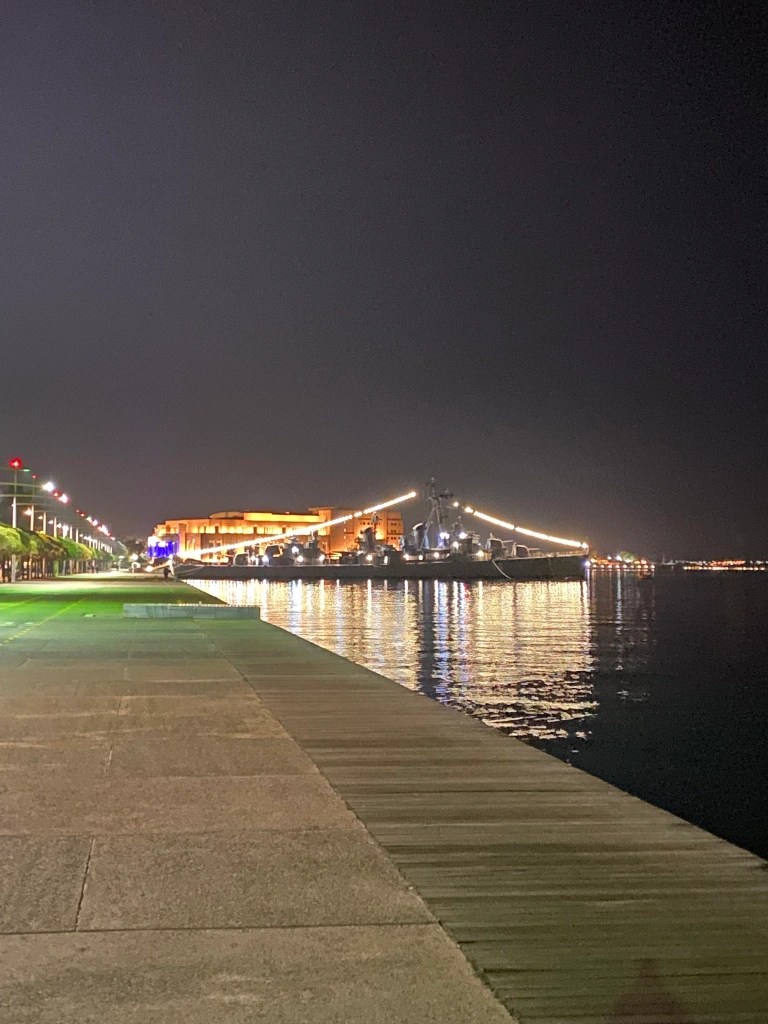
When the atmosphere is clear you can see across the gulf of Thermaikos the mount of Gods:Olympus.
My hometown was founded by Cassander who named the new city after his wife, Alexander the great’s sister.

Because of its geographical position, Thessaloniki has been a melting pot of various civilizations: The Greeks, Byzantines, Ottomans
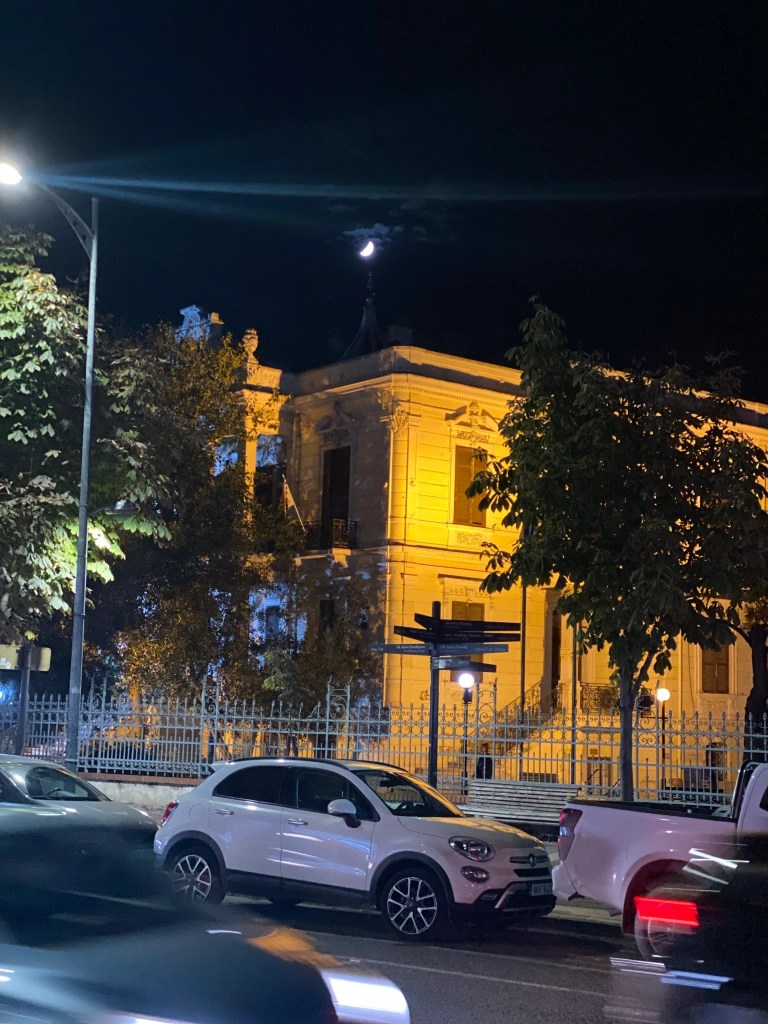
Slavs and Jews. Before World War II, more 50,000 thousand Jews were living in harmony and in prosperity along with the Cristian populations. During the German occupation, all this community perished in concentration camps.
In 2011, I turned a page in my life and moved to Leicester, UK, one of the most multicultural cities in Europe.
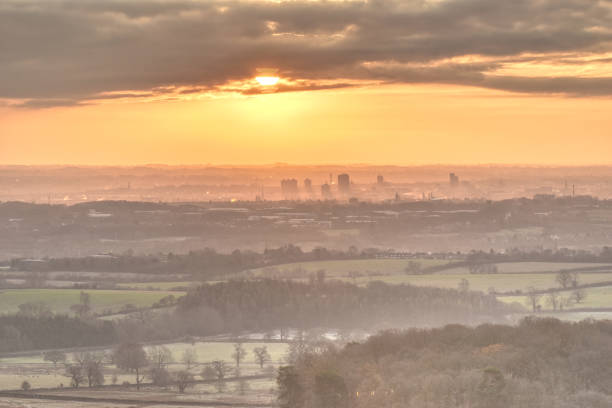

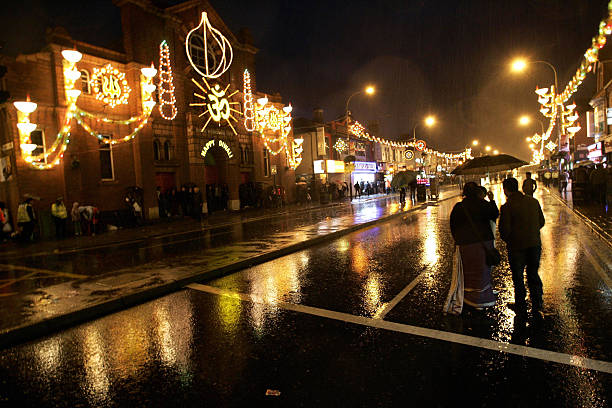
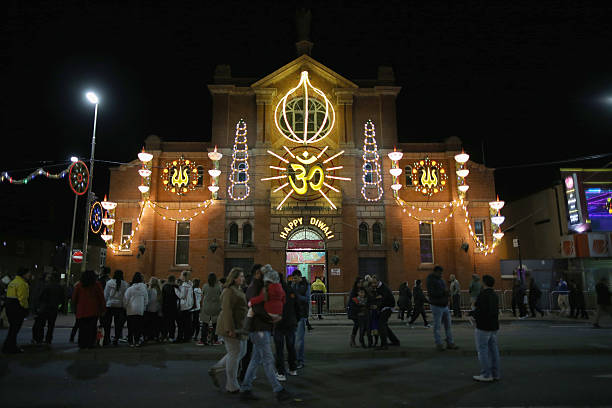

In a multicultural society, one can witness a diverse range of individuals from different ethnicities, religions, and backgrounds. Each person brings their unique perspective, language, and culture, which contributes to the vibrancy and richness of the society. I can feel a strong sense of inclusivity, where people are accepting and accommodating of each other’s differences. Various languages can be heard when spoken, music from different cultures can be enjoyed, and various cuisines can be tasted. With multiple perspectives and experiences, I can learn and grow, expanding my worldview and gaining a deeper appreciation for the world’s diversity.
Living in a diverse community offers multiple perspectives that can broaden our understanding of the world. When we interact with people from different backgrounds and cultures, we gain exposure to various lifestyles, traditions, and ways of thinking. This exposure allows us to challenge our biases and assumptions and to appreciate the value of diversity. We learn to recognize and respect cultural differences, which can help us develop empathy and understanding towards others. We can also gain new skills, such as communication skills, conflict resolution skills, and adaptability, which are essential in a globalized world. Additionally, living in a diverse community can expand our social networks and provide opportunities for new experiences and adventures. Overall, embracing diversity can enrich our lives and enhance our personal and professional growth.
I can vividly go back to my first visit to a Sikh temple in 2011, shortly after arriving in Leicester. Everything seemed so wonderfully different, almost like stepping into a new world. I had a brief conversation with one of the volunteers, who graciously offered me food and a delightful masala tea. He understood that my first visit to a Gurdwara might be a bit overwhelming, especially if I wasn’t familiar with the customs and traditions. ‘It’s admirable that you took that step,’ he said, ‘and it could be a positive experience that sparks your curiosity to continue exploring and learning about different cultures.’
It dawned on me later that every encounter with a new culture and tradition is a chance for personal growth and learning. By stepping out of your comfort zone, you can develop a deeper appreciation and understanding of the world’s diverse cultures. In the case of the Sikh temple, it was an invaluable opportunity to delve into the Sikh religion, culture, and way of life, enriching my understanding and broadening my horizons.
 Alexander's blog