Exercise 1: What does this apple mean?
Using existing images of apples as a starting point, think about what the image
of an apple could represent or signify. , placing recognisable images in contrast to
others, in order to generate new meanings, or to reveal critique or satirise existing images and
the ideas represented in those images in some way.
• Select apple images from art history or from commercial visual communication. Try to use
different visual examples or signifiers to explore different meanings in different contexts.
For example an apple in a religious painting is likely to mean something very different from
an apple in a TV advert.
• Construct a list of images that describes the signifier and what you think is being signified.
Reflect on the results in your learning log. What is the range of uses of an apple as a
signifier? Can you spot any dominant meanings emerging?
WIKIPEDIA:
Apples appear in many religious traditions, often as a mystical or forbidden fruit. One of the problems identifying apples in religion, mythology and folktales is that as late as the 17th century, the word “apple” was used as a generic term for all (foreign) fruit other than berries, but including nuts.[1] This term may even have extended to plant galls, as they were thought to be of plant origin (see oak apple). For instance, when tomatoes were introduced into Europe, they were called “love apples”. In one Old English work, cucumbers are called eorþæppla (lit. “earth-apples’), just as in French, Dutch, Hebrew, Afrikaans, Persian and Swiss German as well as several other German dialects, the words for potatoes mean “earth-apples”. In some languages, oranges are called “golden apples” or “Chinese apples”. Datura is called “thorn-apple”.
Ethnobotanical and ethnomycological scholars such as R. Gordon Wasson, Carl Ruck and Clark Heinrich write that the mythological apple is a symbolic substitution for the entheogenic Amanita muscaria (or fly agaric) mushroom. Its association with knowledge is an allusion to the revelatory states described by some shamans and users of psychedelic mushrooms.[2][3][4] At times artists would co-opt the apple, as well as other religious symbology, whether for ironic effect or as a stock element of symbolic vocabulary. Thus, secular art as well made use of the apple as symbol of love and sexuality. It is often an attribute associated with Venus who is shown holding it.
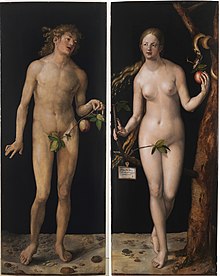
Adam and Eve: a classic depiction of the biblical tale showcasing the apple as a symbol of sin. Albrecht Dürer, 1507; oil on panel.
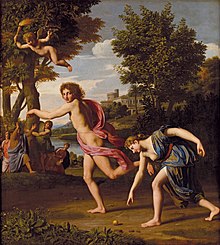
Atalanta and Hippomenes by Nicolas Colombel
Hippomenes fell in love with Atalanta, the virgin huntress who strongly disliked the idea of getting married. After a warning from an oracle about getting married, she declared that whoever wanted to marry her was to beat her in a footrace (herself being a notoriously swift runner), and that those who should try and lose would be punished by instant death. Another version (followed by Hyginus) was that her father wanted her to be married, but she did not. She agreed to running races against her suitors because she thought she would never lose.
Atalanta raced all her suitors and outran all but Hippomenes, who defeated her by cunning, not speed. Hippomenes knew that he could not win a fair race with Atalanta, so he prayed to Aphrodite for help (the goddess, in the meantime, disliked Atalanta’s neglect of love).
Aphrodite gave him three golden apples – which came from her sacred apple-tree in Tamasus, Cyprus, according to Ovid,[9] or from the garden of the Hesperides according to Servius – and told him to drop them one at a time to distract Atalanta. After each of the first two apples, Atalanta was able to recover the lead, but when she stopped for the third, Hippomenes won the race. It took all three apples and all of his speed, but Hippomenes was finally successful, winning the race and Atalanta’s hand.
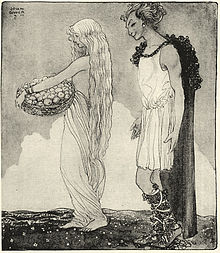
Loki and Idun (1911) by John Bauer
In Norse mythology, Iðunn, the goddess of eternal youth, is the keeper of an eski (a wooden box made of ash wood and often used for carrying personal possessions) full of apples eaten by the gods when they begin to grow old, rendering them young again.
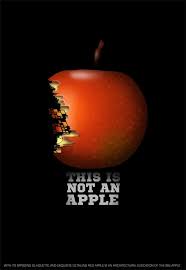
Reference to Star Wars Death Star

Apple logo.
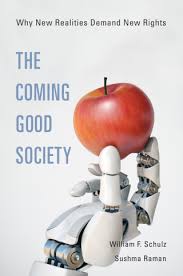
A natural element (apple) manipulated by an artificial hand.
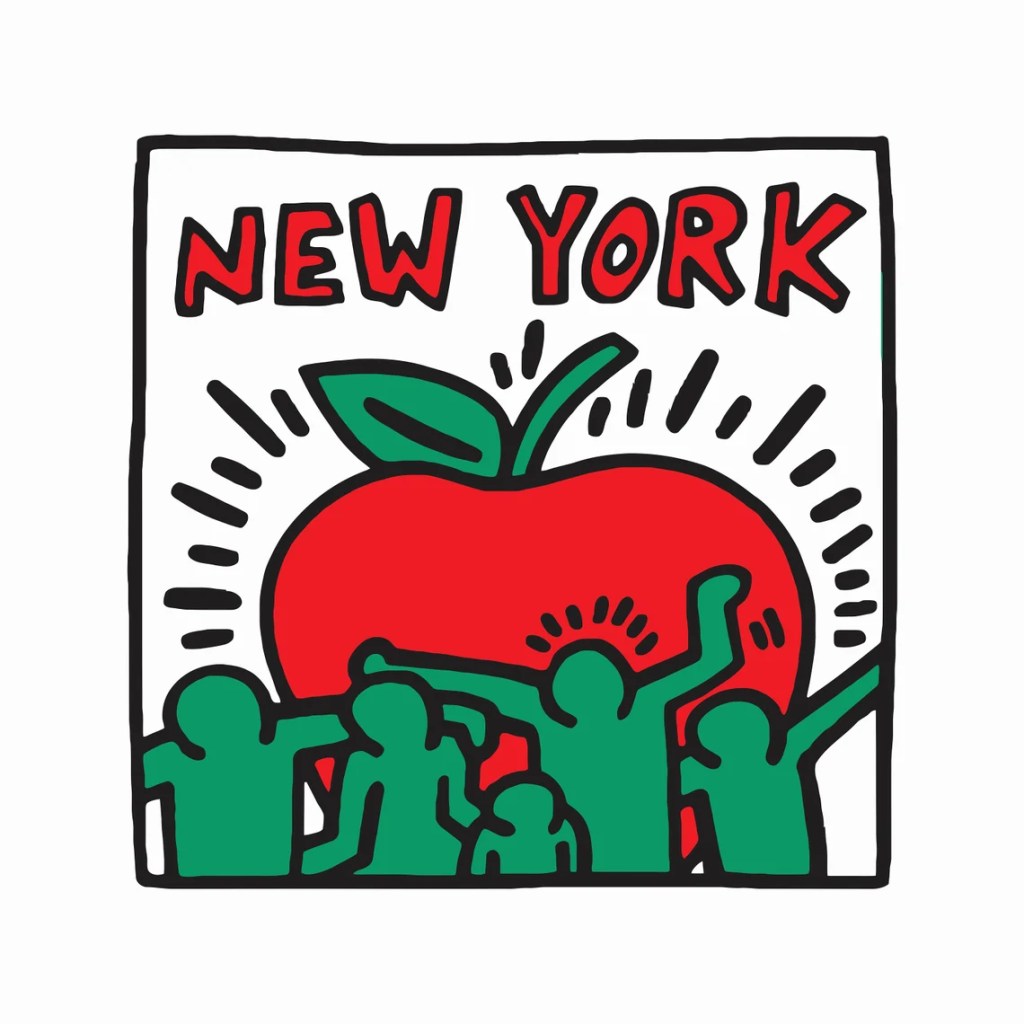
New York as the Big Apple

Apple production promo.

A classic fairy tale Snow White. With the apple as the central feature.


A provocative image: Using an iPhone and taking a photo picture. Detail: the apple logo appears where the green apple was before.

Pop art of Mona Lisa using apple to cover its face like the ‘Son Of Man’ mentioned above.
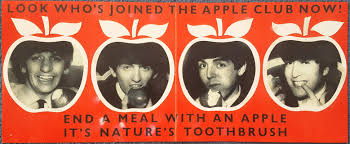
The Beatles promoting the healthy benefits of apple consumtion.
It is amazing how a simple feature can influence all aspects of life. The humble apple becomes an item, a logo a pop culture icon and so on. It is amazing how the human brain works and how can use the same item for countless purposes.
 Alexander's blog