Creating a sustainable process to expand and evolve your practice is important for creative longevity and for forming lasting methods and approaches. During this project, you will use strategies to experiment and diversify your process, learning from experimentation and exploration to re-energise your practice and identify new methods and skills to develop.
After testing and exploring the boundaries of your practice, you will respond to feedback and identify tailored learning to advance your knowledge of content relevant to your disciplines. You will discuss personal creative challenges with tutor support, and identify specifically tailored exercises to develop and support your practice.

Shelagh Wakely, As Yet Unnamed [series] (1988-90) Image courtesy of Richard Saltoun Gallery.
Contextual Point: Relations Between Disciplines

This contextual point introduces three practitioners utilising connections between creative endeavour and collaboration with various industries. Relationships between science, art, design, craft, textiles and manufacturing, amongst others, can be seen to be blurred and codependent, enabling the creative practice to permeate any number of social, political and cultural avenues.
https://learn.oca.ac.uk/mod/page/view.php?id=15389
Sculpture-drawing-textile relation. A try out.
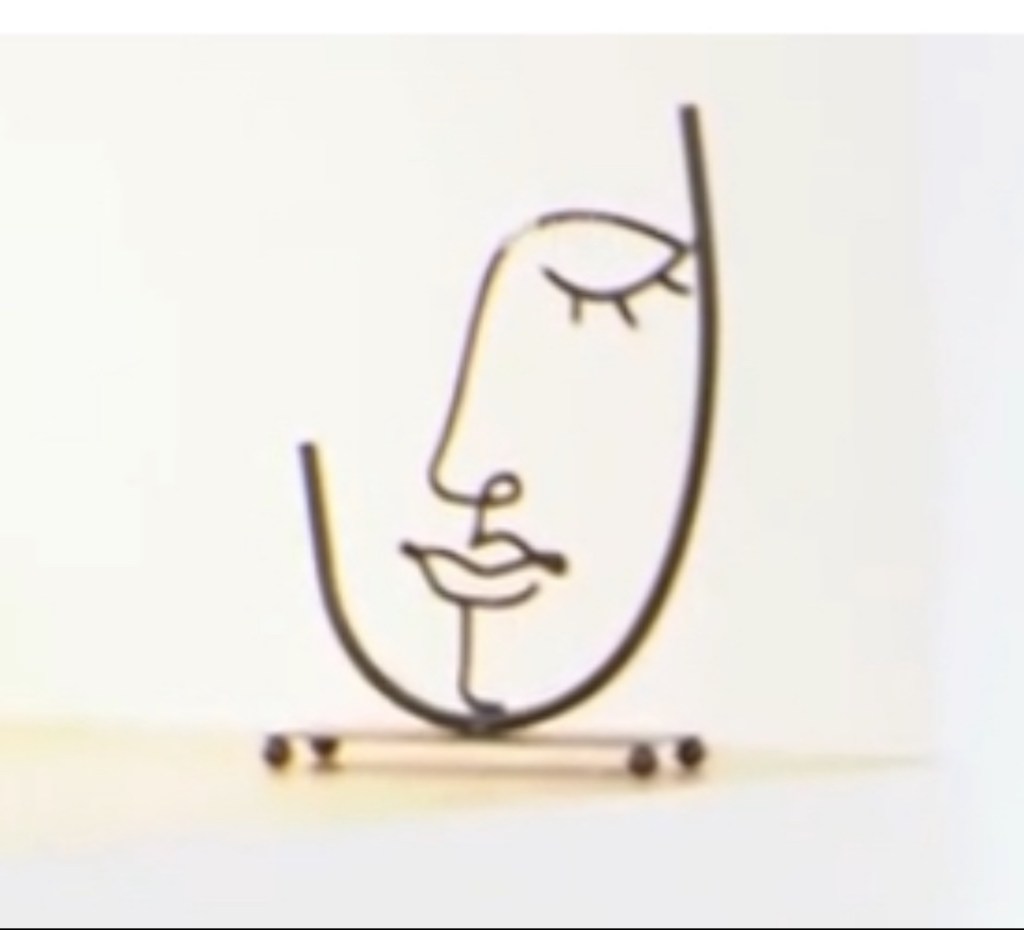
I was browsing a Greek website where a decorative item caught my attention.

It is a piece of wire that turned into a portrait. Looks like a Picasso.
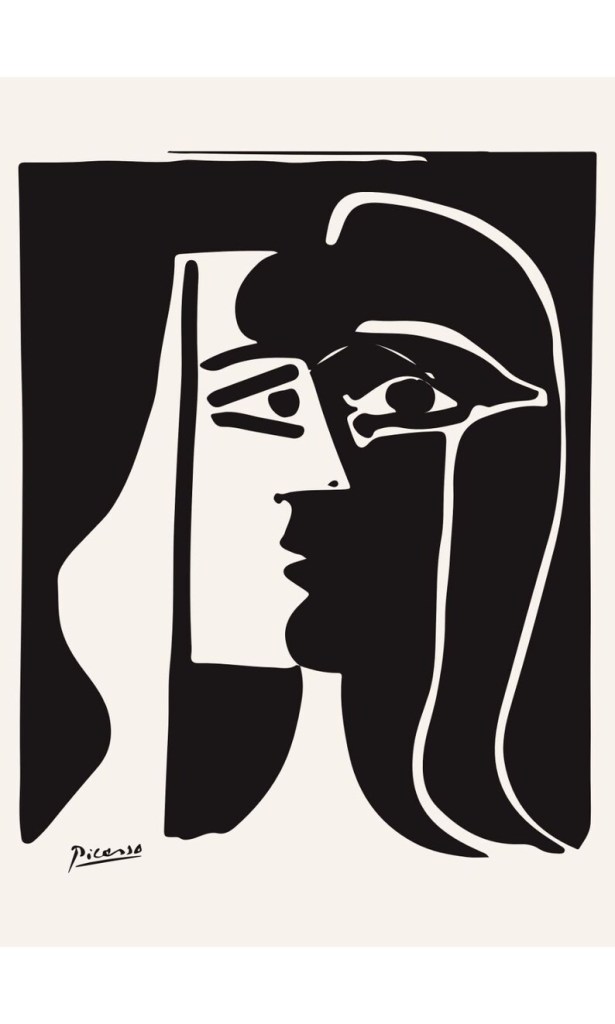
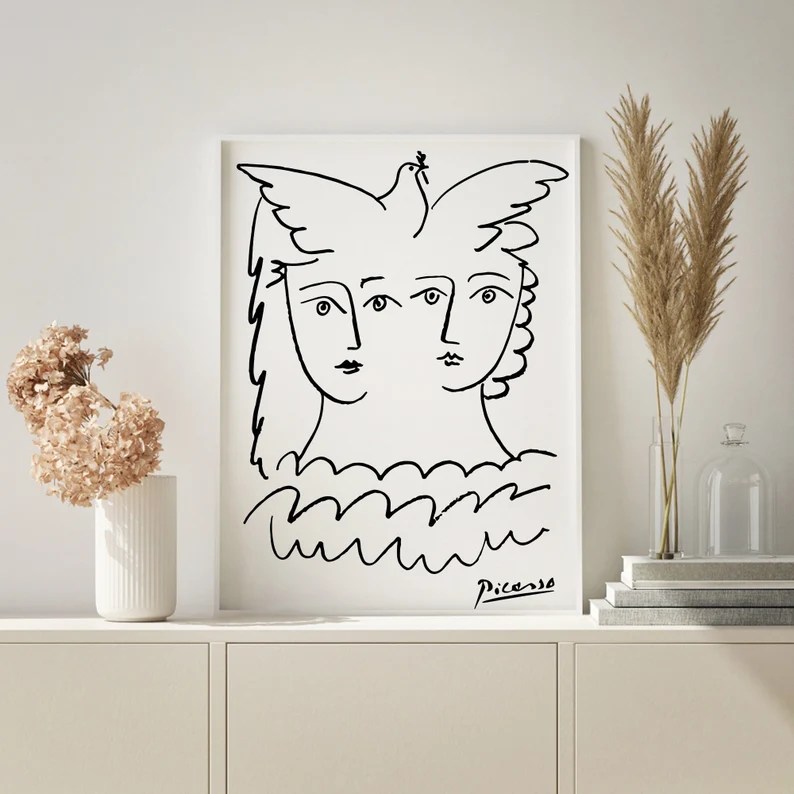
I believe my choice clicks onto my story of Helen of Troy. The beauty of an artefact been born with only a few strokes of a brush, as Homer did with his Helen: creating a beauty standard in a subjective matter of how the spectator wants to see and appreciate it.
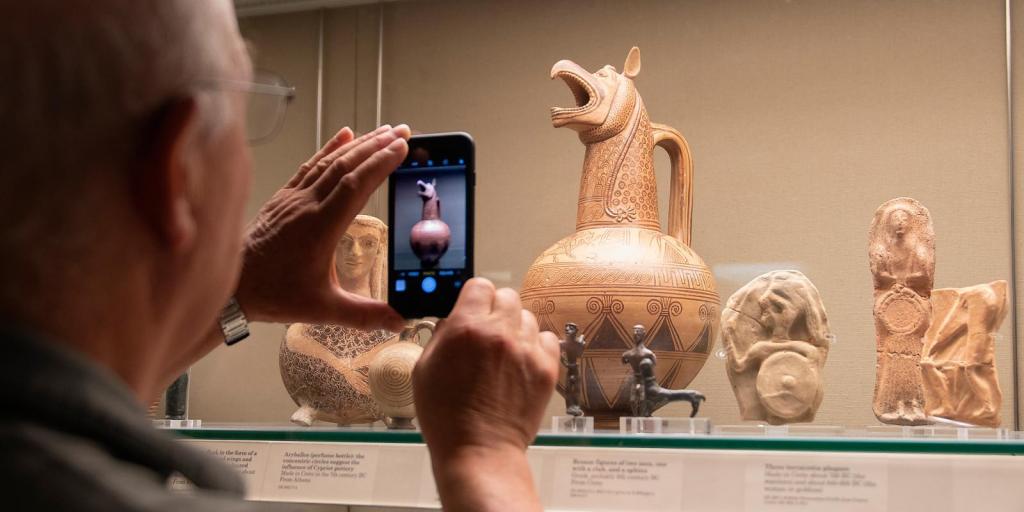
Greek vases in the British Museum.
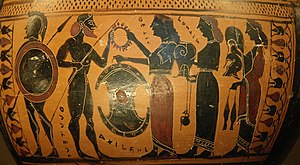
Achilles receives his weapons from his mother Thetis. Representation on a black hydria, c. 575-550 BC. Louvre Museum, E 869

Mycenaean-style crater (between 1300-1200 BC), Time of the Trojan war.
Another surprise: the theme and the link to connection to Picasso’s bull study.

I love the idea of the simplicity introduced in the video above. It fits my idiosyncrasy. An unpretentious, subtractive artefact tells me and makes me feel more because it triggers my imagination, makes me think and challenges me to connect the missing bits.

Aristonothos krater, view 1, Greek, from Caere (Cerveteri), ceramic, 2nd quarter of 7th century BC – Musei Capitolini – Rome, Italy
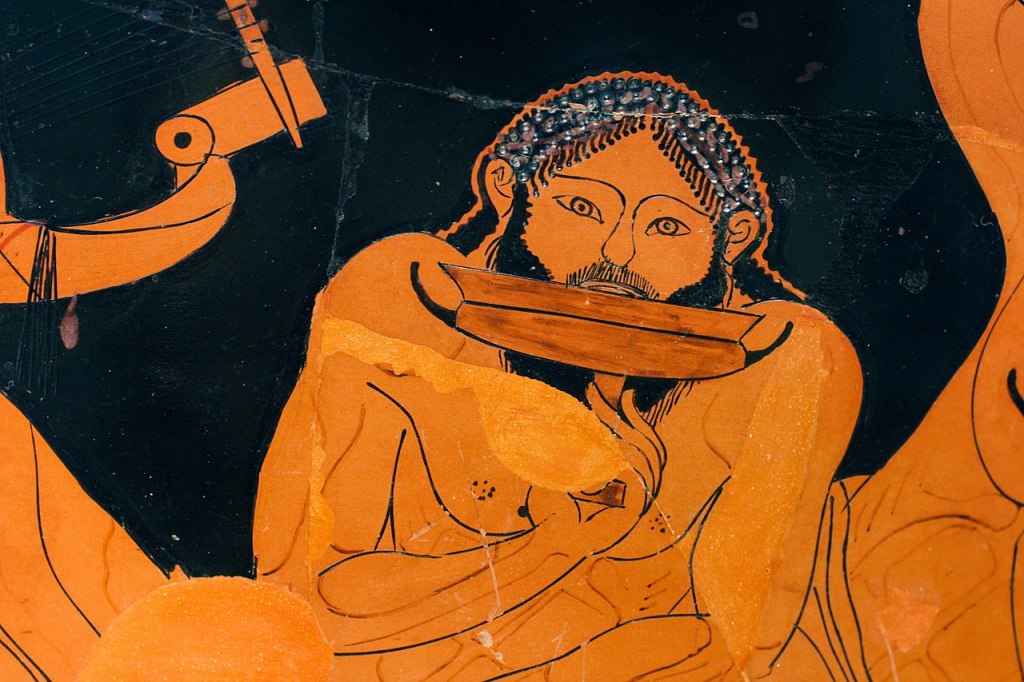
Shape: attic red-figure calyx-krater – description: symposium: side A: 4 men (name inscriptions: Thodemos, melas, Smikros, Ekphantides) on 2 klinai, hetaira (Syko) playing auloi (double flute); Leagros kalos – side B: 3 young cupbearers / servants preparing the wine – production place: Athens – painter: Euphronios – period / date: late archaic, ca. 510-500 BC – material: pottery (clay) – preserved height: 38,3 cm – findspot: unknown – museum / inventory number: München, Staatliche Antikensammlungen 8935
I see a connection between Picasso’s and ancient Greek paintings; the simple beauty of the monochrome aspect: even though there is a gap of 2500 years between these artefacts, they seem to me as part of the same family. That discovery fascinates me and it is worth exploring.
Also fits my story of Helen of Troy and how this idea spreads out to be articulated and re-introduced as an <<endless-deathless>> beauty. It really highlights and maps the story of artistic creation through the passage of centuries and how this concept is still moving the world of art. Black figures created on a white (sand colour) canvas representing the time of Homer.
Last, but not least, I wanted to explore a whole new perspective of an existing form, creating a new outcome in a different texture.
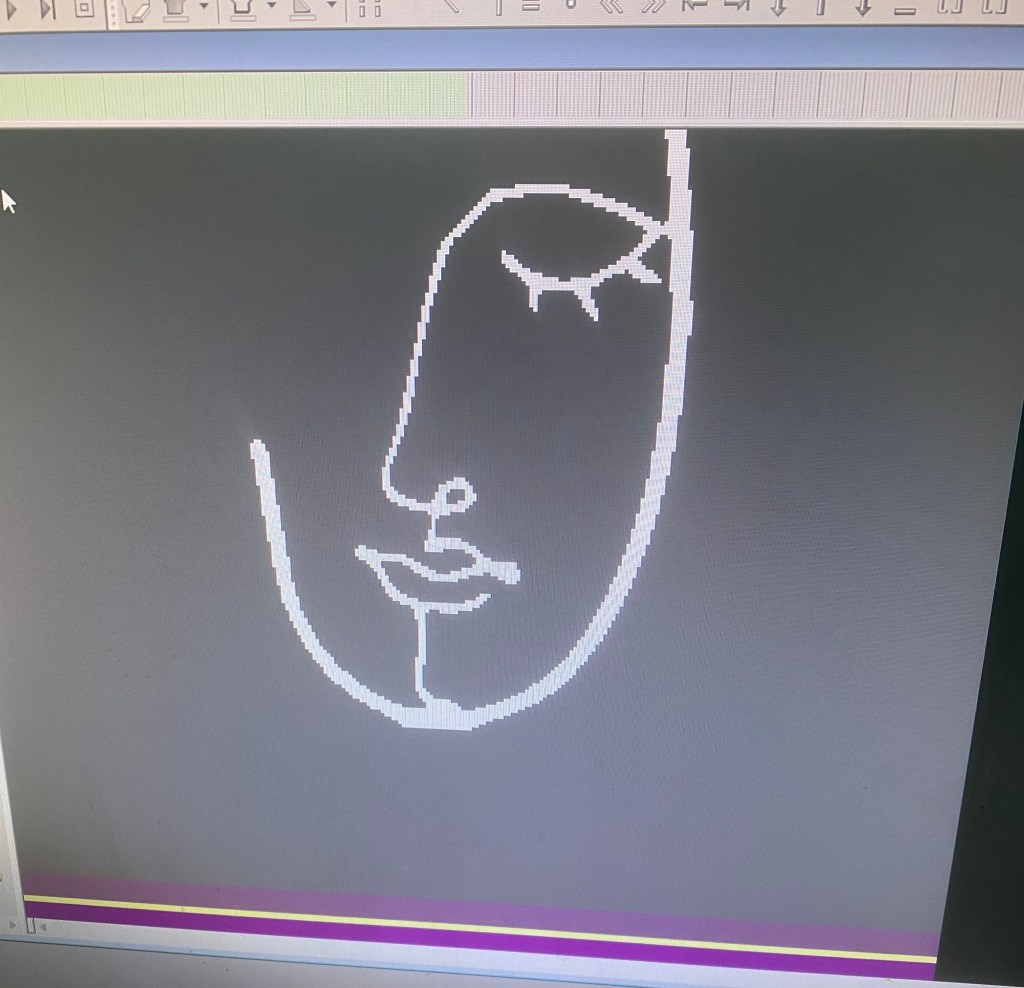
So, I created a CAD on my computer.
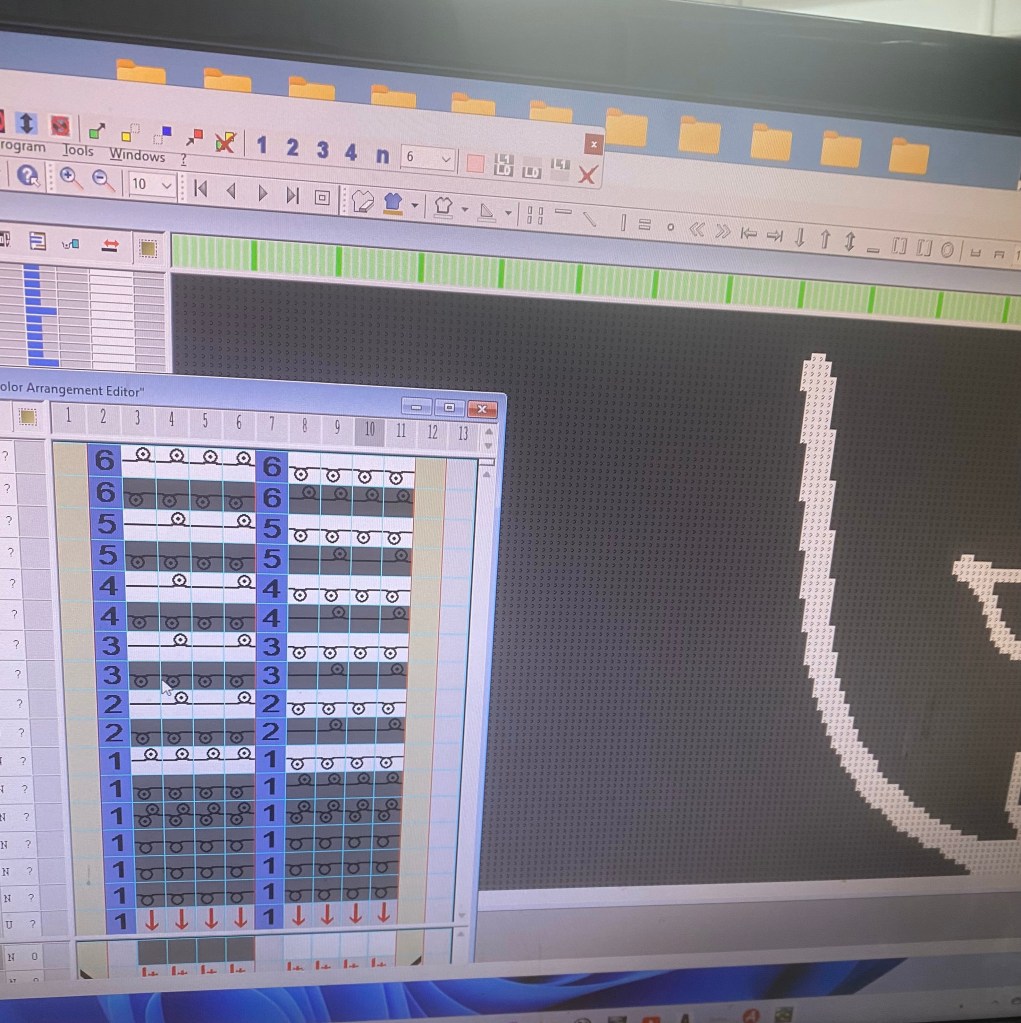
Using my knitting program, I have engineered the stitch using Colour Arrangement.
Then, was the time to knit. I used black and white yarn to create a monochrome effect.

I’m delighted with the outcome.
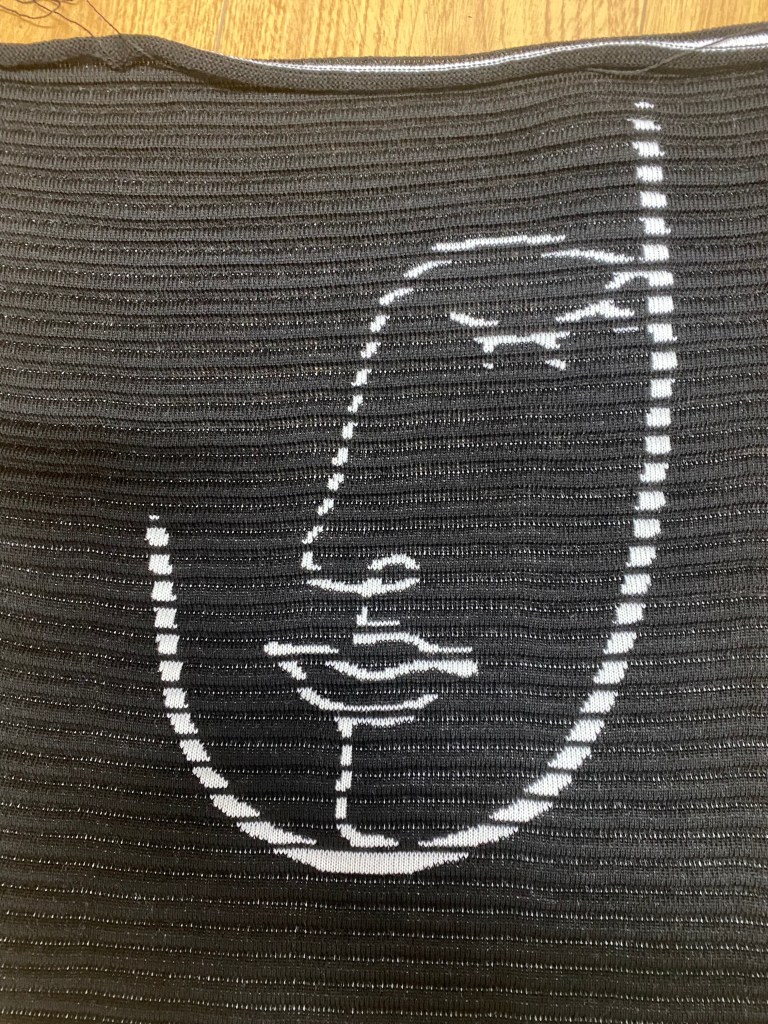

I also found the rear part of the fabric riveting. Looks like the negative of the front aspect.
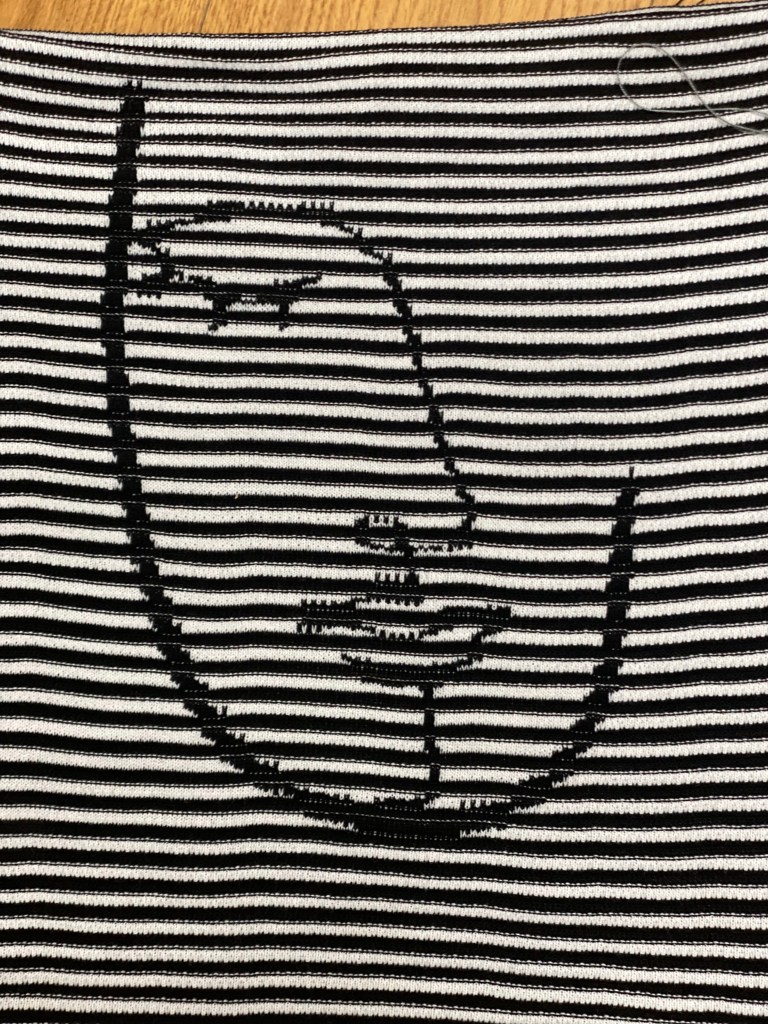
I am really pleased with the exercise. I find a deep connection between the piece of work I have produced so far as it seems to be another face of Helen. It can be perceived as a mask, a cover that represents frozen feelings and faces that hide what is behind it. Masks were widely used in the ancient Greek theatre:
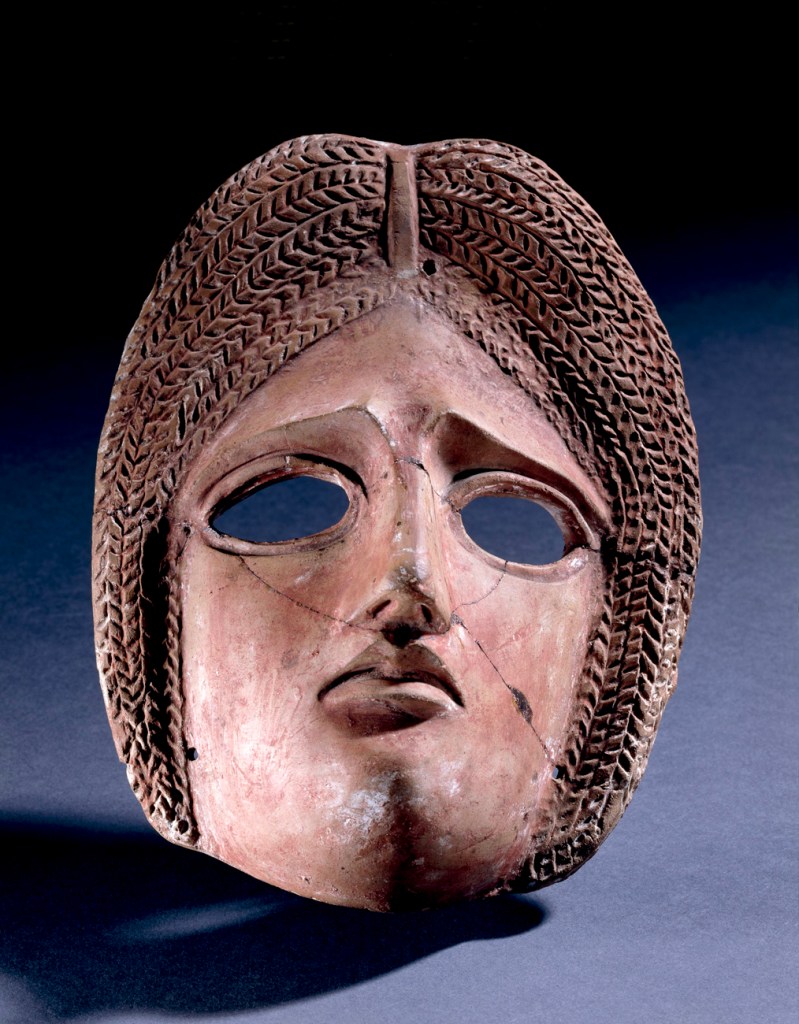
so Euripides heroine of his theatrical drama HELEN, should have worn something similar to it! That thought really excites me!
I’m excited about my findings on that small journey through the centuries of the continuous re-introduction of standard models in art and the outcome of my textile exercise. I’m sure, that producing textiles inspired by artworks and then manipulating them can be worth exploring into the future.
 Alexander's blog