Using irony to disrupt an idyllic tone.


A poem
My (Moniza Alvi infuenced) own SHE-CELL…
& also
Inspired by Niko’s Kavvadias ”ΠΙΚΡΙΑ” BITTERNESS
Ό,τι αγαπούσα αρνήθηκα για το πικρό σου αχείλι
τον τρόμο που δοκίμαζα πηδώντας στο κατάρτι
το μπούσουλα, την βάρδυα μου και την πορεία στον χάρτη
για ενα δυσεύρετο, μικρό θαλασσινό κοχύλι…
I refused everything I loved for your bitter lip
The terror I felt jumping onto the mast
the compass, my night watch and the course on the map
for a hard-to-find, small seashell…
Kavadias, N. (1975) Traverso. Athens: Kedros. Poem: Pikria.
“The Rare Seashell”
He was walking alone by the edge of the sea,
where the tide had just whispered its secrets to shore.
The sun was soft, the wind was still,
and something shimmered at his feet.
A rare little seashell:
not just beautiful,
But unlike any he had seen before.
Delicate.
Mysterious.
Alive with the colours of the deep.
He bent down, lifted it gently,
And for a moment, the world stopped.
He imagined what it might mean
to keep such beauty,
to hold it close,
to place it on a shelf;
His secret miracle.
But something in him knew:
It belonged to the sea.
And the sea belongs only to itself.
To keep it would be to kill it.
To take it would be to silence its song.
So he placed it back,
let the waves reclaim their treasure,
and stood watching
as the ocean swallowed it whole once more.
He walked away with empty hands,
But a heart quietly full.
Because this was a one-in-a-million moment.
A kind of luck few ever meet.
He had found beauty so rare,
he couldn’t even dream of it.
And though he could not keep it,
he had seen it.
He had touched it.
And that was enough.
Some never find such things.
Some never recognise them when they do.
But he had.
And it changed him.
Some never see such beauty.
Some never recognise it when it’s there.
But he did.
And though it was bittersweet,
that glimpse,
That moment,
It was a kind of
unconditional
True love.
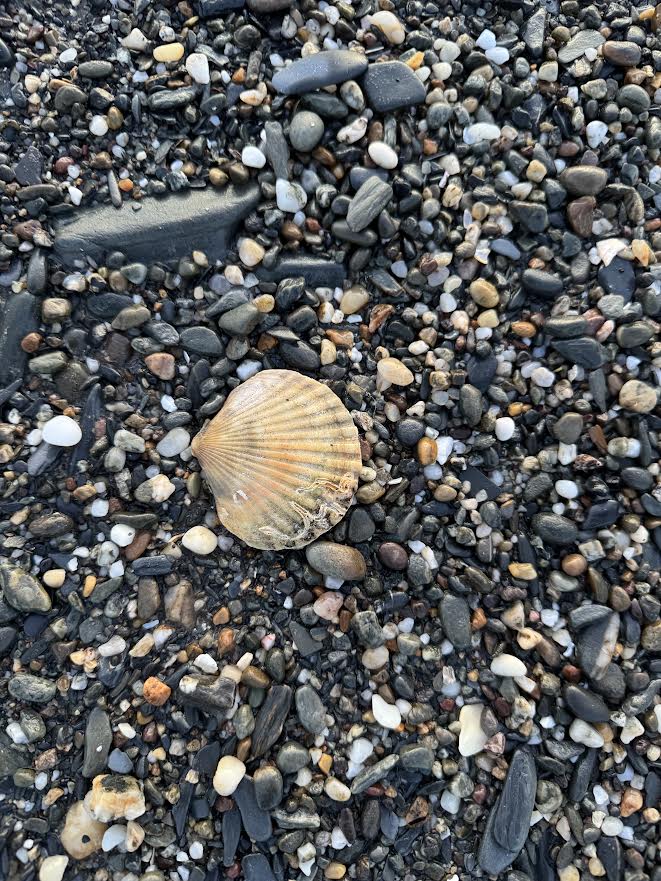
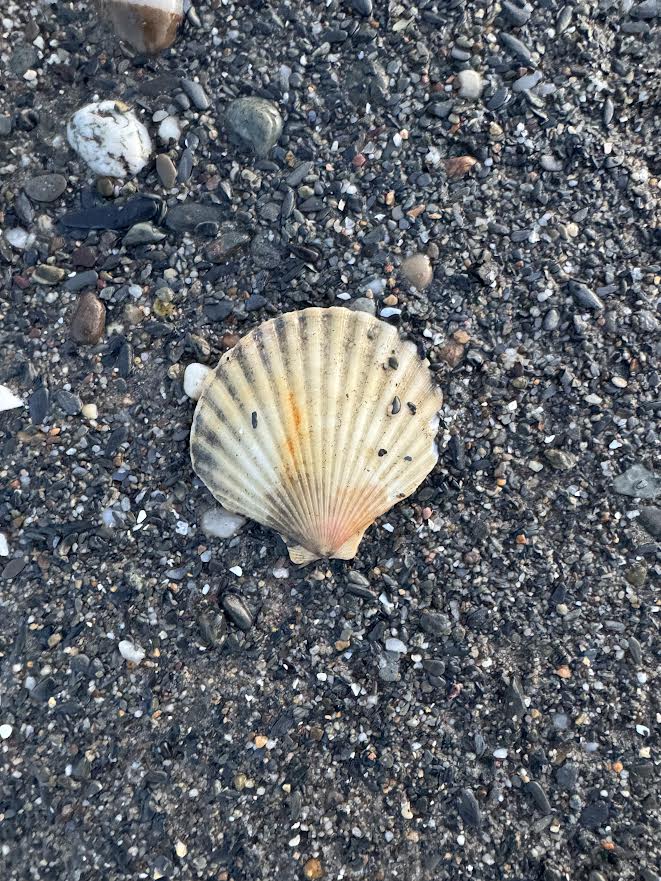
Here it is: the rarest seashell in existence.
I held it once.
I lost it.
I wept.
I wrote poetry.
A tragic saga and drama of loss and beauty.
Too much drama!
And we Greeks are the inventors of drama!
I traveled, I changed continents and reached my new destination grieving about my loss.
…And then I went for a walk.
It seems like the Isle of Man is basically a Costco for seashells!!!
Mountains of them!
Seashells by the metric ton.
So much for rarity!
So much for symbolism!
Turns out my precious relic was just nature’s loose change, scattered everywhere,
waiting for gulls, tourists, and whimsical people like me
to make a big deal out of it!!!

Reflection: Romanticism, Irony, and Disruption
In my current project I have been working with images that are strongly romanticised: sunsets, idyllic landscapes, seashells; pictures that could easily be read as sentimental or escapist. Yet my intention is not simply to celebrate beauty, but to test how these “romantic” images can be disrupted, subverted, or even ridiculed, and in doing so reveal something more complex about memory, hope, and the contradictions of everyday life.
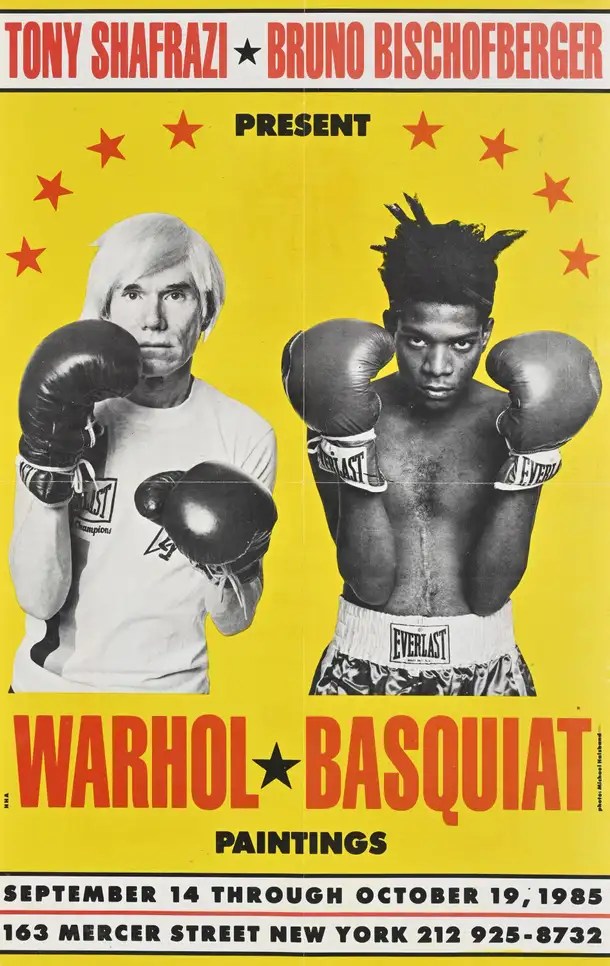
Looking at Andy Warhol’s work has been instructive. Warhol found glamour in the banal: soup cans, Coca-Cola bottles, celebrity headshots. His Pop Art simultaneously romanticised and mocked consumer culture, showing how repetition could turn ordinary icons into art. In contrast, Jean-Michel Basquiat’s paintings brought raw emotion and critique into the gallery, layering imagery, text, and scrawled figures that drew attention to inequality and power. When Banksy later spray-painted over Basquiat’s imagery at the Barbican, adding policemen frisking the figure of a boy, the gesture collapsed romance into irony, exposing the uncomfortable relationship between art, authority, and spectacle.
Banksy himself is perhaps the clearest model for my practice. He often takes sentimental or idealised images: children playing, lovers kissing, picturesque landscapes and punctures them with absurd or disruptive details, whether rats, riot police, or slogans. The result is a tension between beauty and comedy, idealism and critique. This irony is what I am experimenting with: placing text or imagery that undercuts the romance of my photographs. For example, a beautiful Isle of Man sunset captioned not with poetic longing, but with the mundane frustration of “because I can’t eat all the chips by myself.”
I also find inspiration in the absurd humour of comics such as Asterix and Obelix. The Romans, beaten senseless yet declaring “what an adventure, discovering new places and people,” embody the collision of romance and ridicule that I am drawn to. In my project, this becomes a metaphor: life’s most personal or emotional moments, once remembered, can sometimes appear over-dramatic or faintly ridiculous.
Through this approach, I aim to find a creative voice that balances sincerity with irony, beauty with disruption: allowing the work to be both playful and reflective.
Chinglish
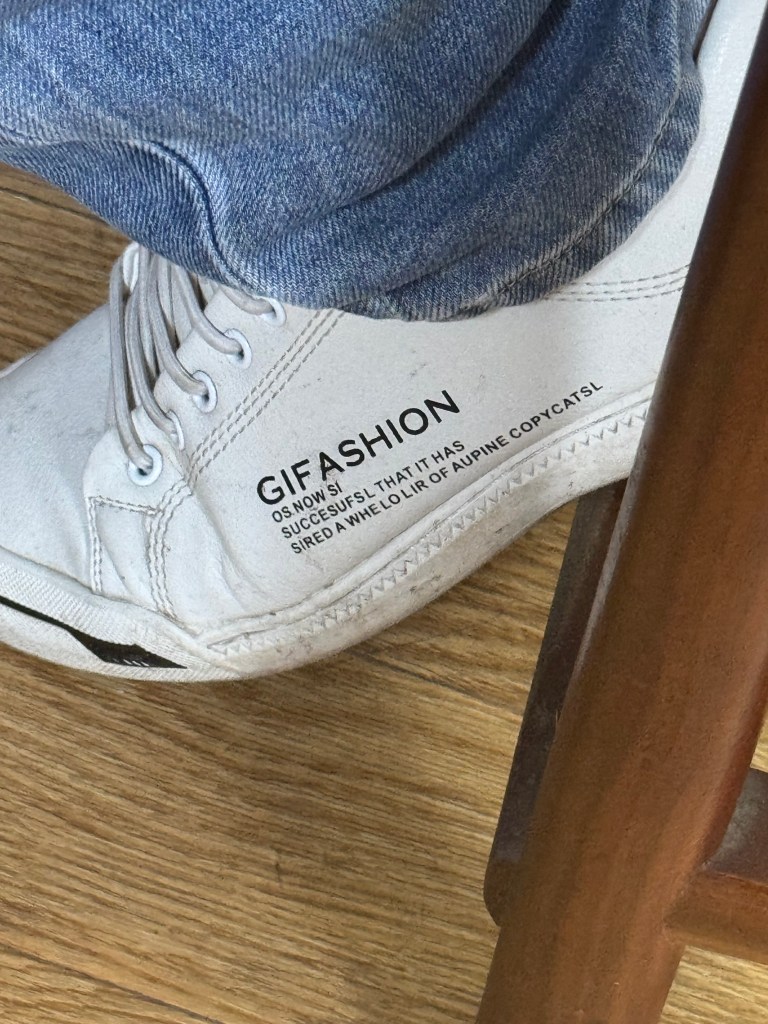
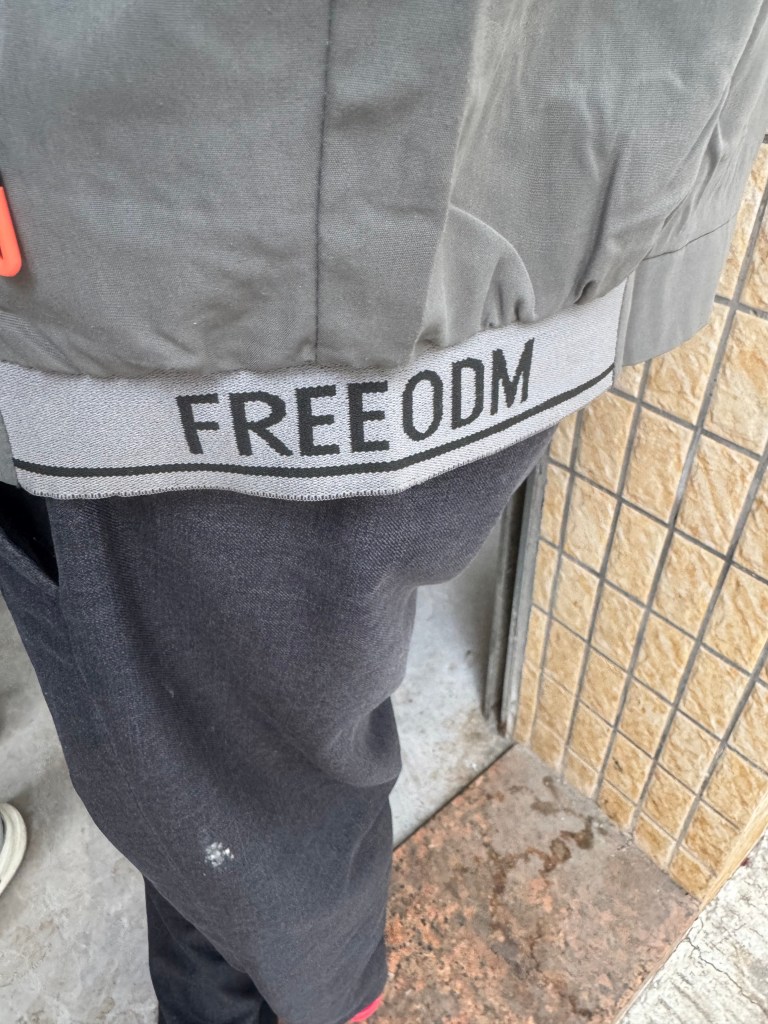
Another layer of irony I discovered during my time in China was in the “Chinglish” signs and posters I photographed. Many public signs, menus, and advertisements displayed English words assembled in ways that were grammatically broken or semantically meaningless.
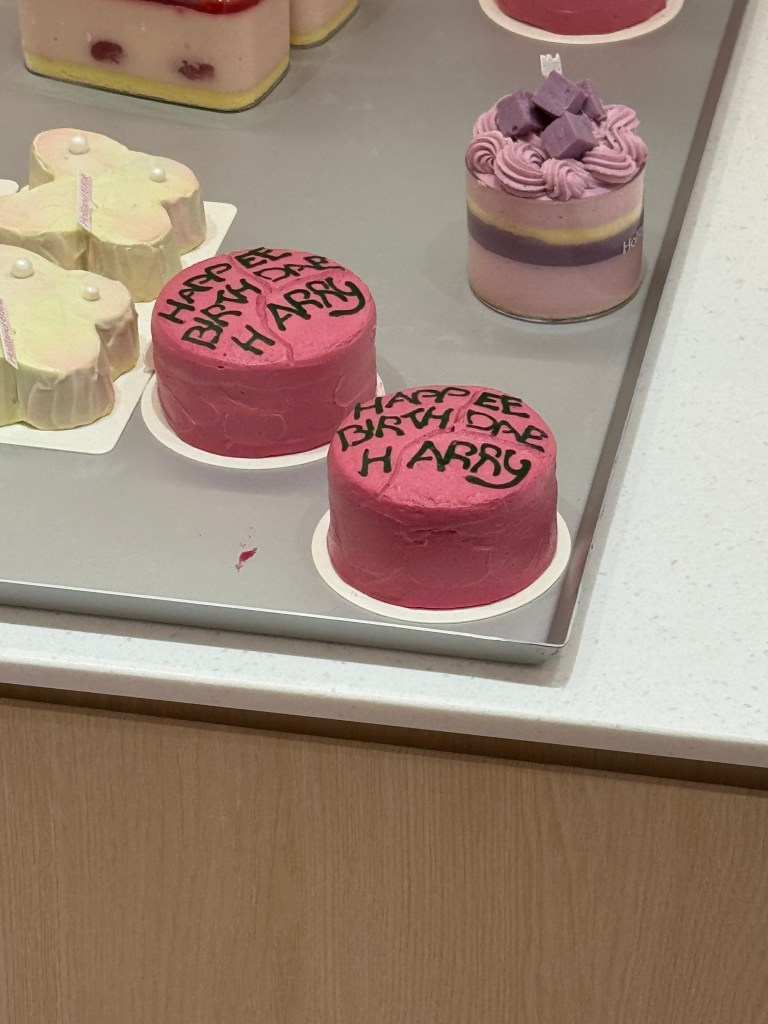
You had one job!
I work Gifashion industry.
To become succesufsl…
Free ODM or a word you can’t use properly?
Her name is Mary and she works in a coffee shop…

A new designer that resembles of someone we know?

Authentic gelato!
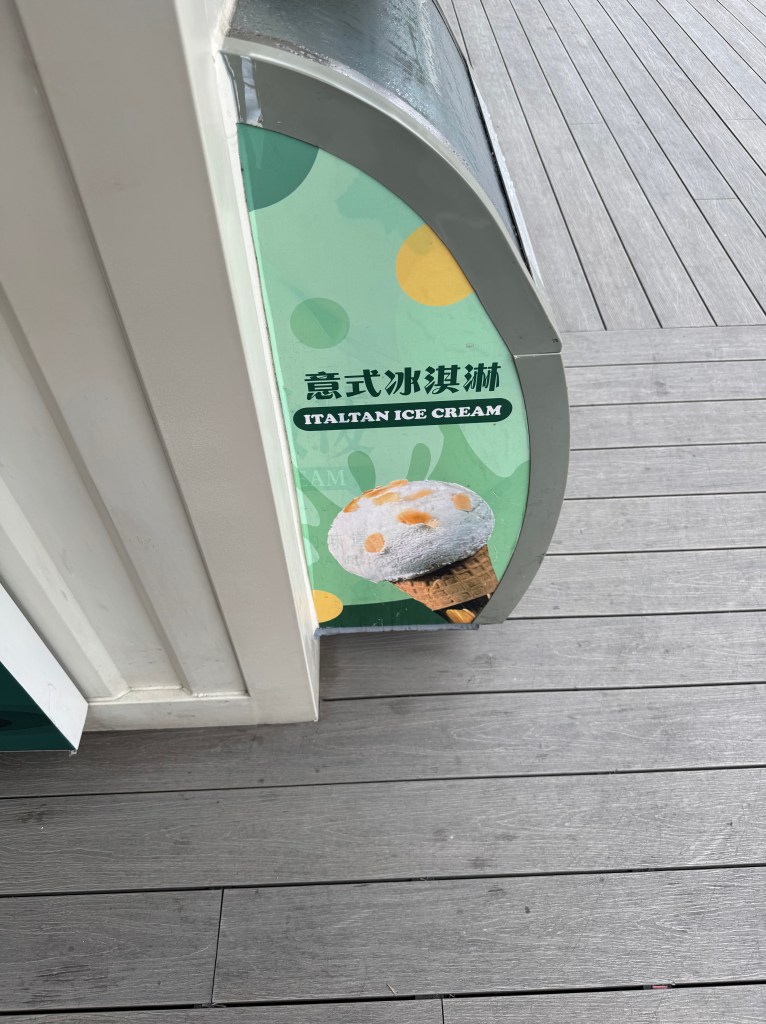
MELCOME!

It felt as though the language was there simply to give an appearance of modernity or international style, rather than to communicate. For me, these fragments were humorous but also revealing: they showed how language can lose meaning when stripped of context, and how easily romance or authority can be punctured by accidental absurdity.
 Alexander's blog