Inspiration: My story
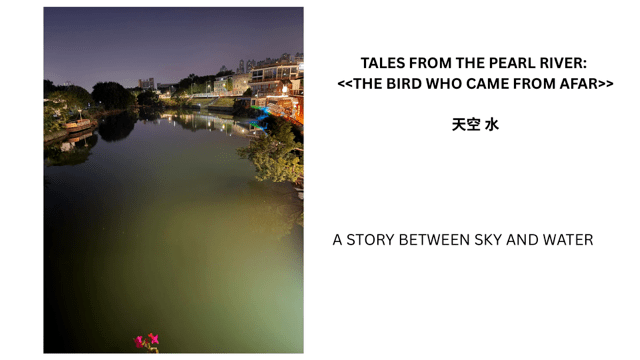
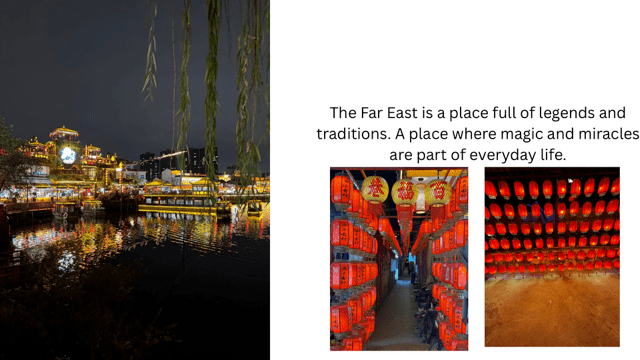
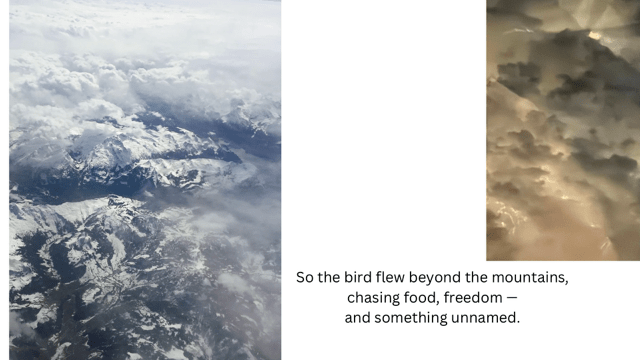
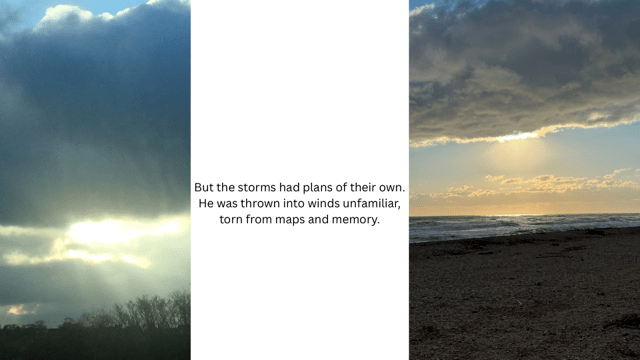
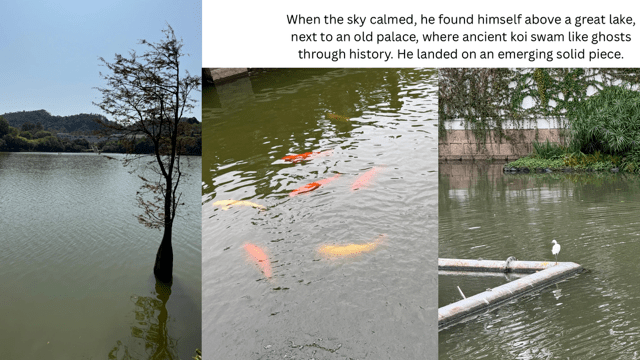
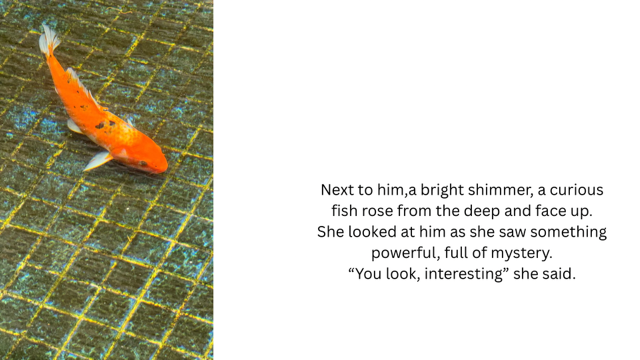
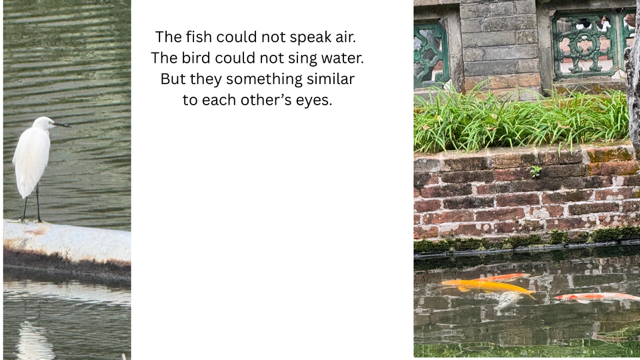
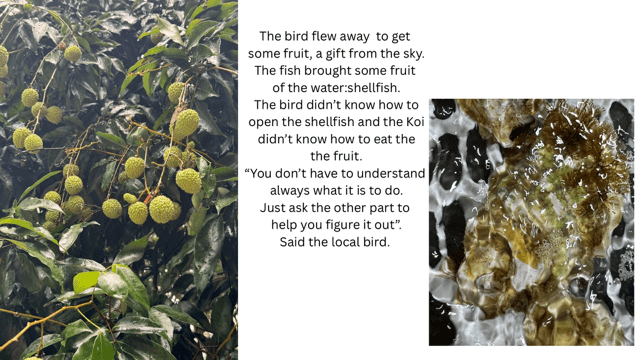
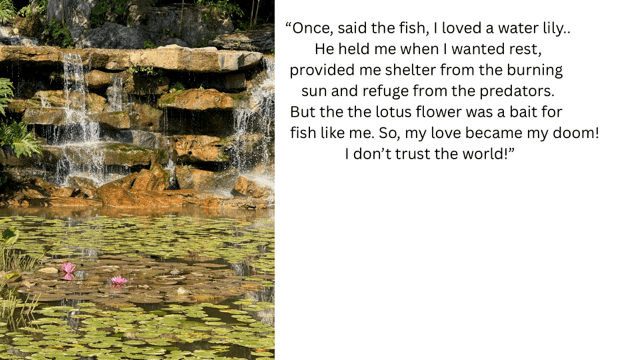
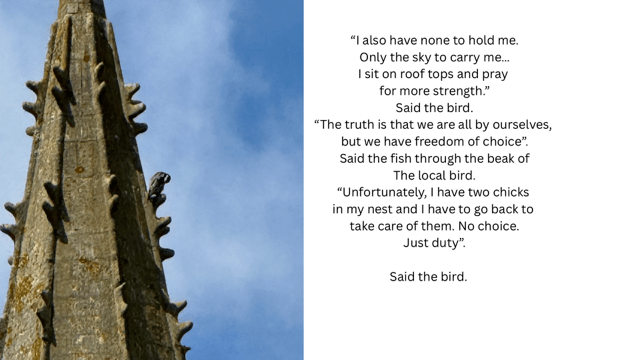
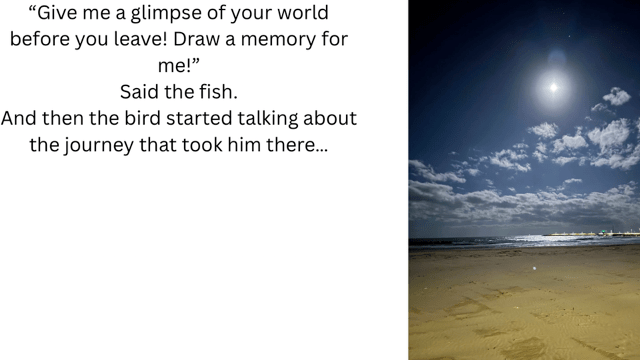
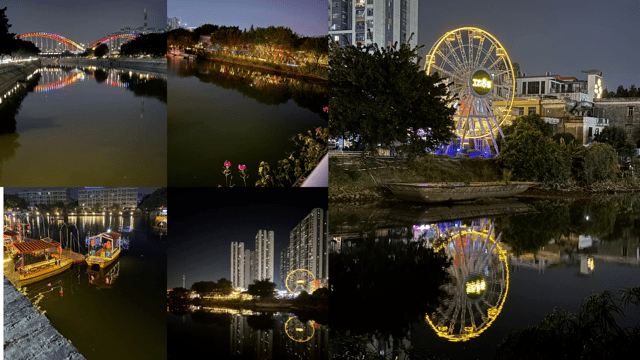
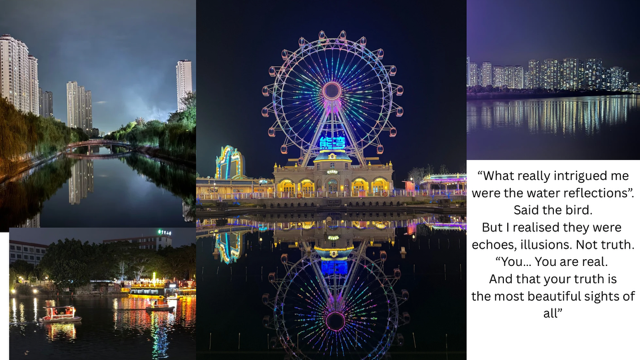
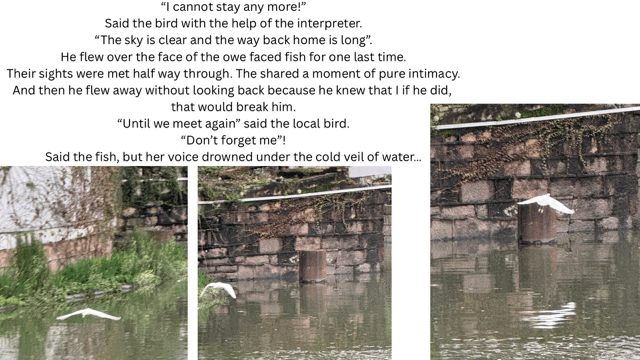
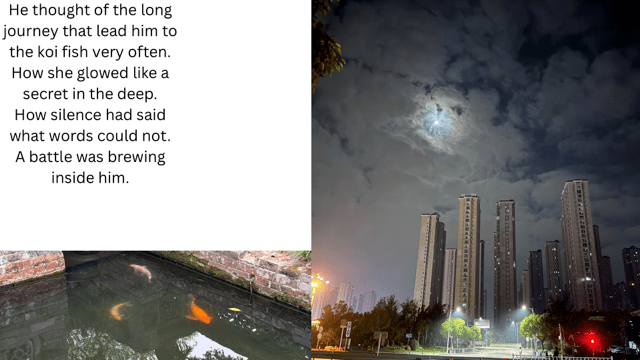
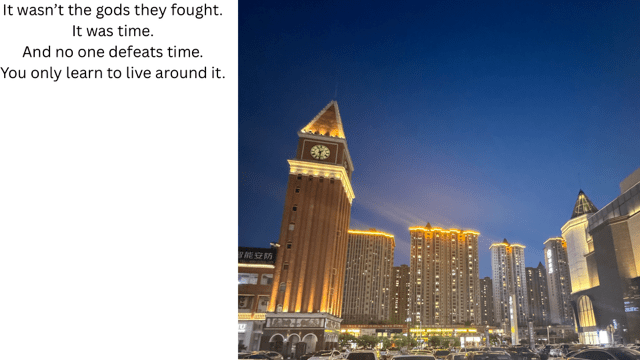
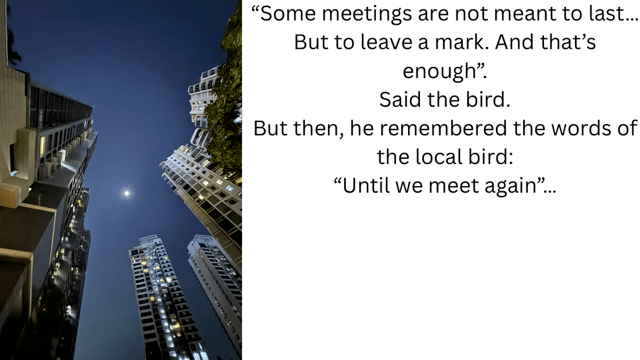
All the pictures were taken by me in various places in the world.





A to Z of Practice
A Glossary of Creative Methods and Inspiration, Rooted in the Story of the Bird and the Fish
Written in my own voice, as part of my journey in Creative Arts BA (OCA)
Introduction: Why this glossary?
This glossary isn’t just a list of terms. It’s a map of my creative process: a personal archive of how I think, feel, and build meaning through stories. At the centre of it all is a tale I wrote: a poetic, visual, emotional narrative about a bird and a koi fish. A story not just about two creatures, but about connection, distance, love, silence, and departure.
Through that simple but layered story, I’ve begun to recognize the core tools and themes I return to again and again. This glossary, then, is my way of understanding myself better as an artist and writer — and giving structure to the creative impulses that guide me.
I want this to be a living, breathing document that evolves alongside me. The words I’ve chosen come from observation, intuition, emotion, philosophy, and practice. They are my own definitions of my creative methods. Some are technical, others are poetic — like my work, baptised in the pool of my point of view, shaped by my Greek heritage.
The Glossary (A to Z)
A glossary of techniques, instincts, and materials I use in my creative practice.
| Letter | Term | My Own Definition & Why It Matters to Me |
| A | Anthropomorphism ( from the Greek word ΑΝΘΡΩΠΟΜΟΡΦΙΣΜΟΣ) | I use animals to carry human feelings. A way to speak honestly without exposing real people. The bird is me. The fish is someone or something I can’t quite reach. Reference to Aesop’s fables. |
| B | Body language | Even in writing, gestures matter. A tilt of the head, a glance, the act of flying away without looking back — all carry emotional weight. |
| C | Contrast | I’m fascinated by opposing forces: sky versus water, freedom versus waiting, presence versus absence. I write through contrast because life feels like that. |
| D | Dialogue (imagined) | In silence, there is communication. The bird and the fish speak in stares. I often write conversations that aren’t said aloud. |
| E | Emotional resonance | If it doesn’t stir something deep inside me or the reader, it’s empty. I aim to write what lingers in the soul. |
| F | Fable | I prefer the old ways of telling the truth. My stories are often like parables: simple, timeless, and full of symbolic meaning. |
| G | Gestural narrative | A wingbeat can be a sentence. A stillness, a paragraph. I build stories through physicality, not just language. |
| H | Hybrid media | I don’t adhere to a single form. Words, photography, poetic expression, and philosophy. I use whatever helps me tell the truth. |
| I | Intimacy | I write to get close to myself, to the subject, to the reader. Every story is about emotional closeness, or the loss of it. |
| J | Juxtaposition | I explore unexpected pairings, an emotional truth sitting beside a surreal image. A fish that holds your heart. |
| K | Kinetic imagery | Movement is emotion. The moment the bird flies away is not just action: it is a heartbreak. I write motion like to describe feelings. |
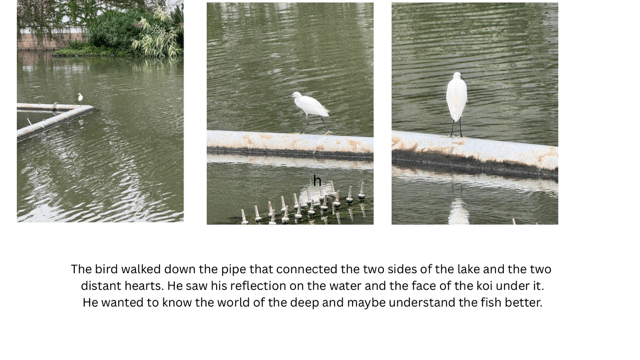
| L | Light and reflection | I’m drawn to the metaphors of water, glass, shadows, and mirrors. What we see, what we don’t. What is real and what is an illusion. |
| M | Metaphor | Everything is metaphor in my writing. A bird is a longing. A fish is a secret. A pipe is a connection. I live inside symbolism. |
| N | Narrative arc | Even the smallest piece has a journey: a beginning, a middle, a transformation, and an end. My bird and fish evolve through their silence. |
| O | Observation | I write by noticing. The curve of a branch, a bird on a rooftop, the way silence sits in a room. Being observant is my first and most honest tool. |
| P | Poetic language | My sentences breathe. They are not always logical, but they move with emotion. I use poetry to express what prose can’t. |
| Q | Quietude | Stillness is sacred. Silence has a sound. I create space in my work for the moment before the goodbye, the pause before flight. |
| R | Reflection (inward & outward) | My work is full of mirroring. The surface of the water, the memories of the bird. The story reflects me, and I reflect it. |
| S | Symbolism | I let objects carry the meaning of their own: a koi fish is more than a fish. A pipe can be a bond. I embed symbols in the ordinary. |
| T | Tone | I’m always aware of a mood that is melancholic, tender, and longing. Even in joy, there is softness. Tone is the colour of my language. |
| U | Unspoken narrative | The things left unsaid are often the most powerful. I hint, I allude. I don’t always explain. Let the reader feel their way in. |
| V | Visual storytelling | I see what I write. I imagine each scene like a painting. This story could easily become a visual book or animation. |
| W | World-building (micro) | Even a 2-minute story can hold an entire world. I build small, rich, emotional universes. Like a snow globe full of feeling. |
| X | Xenoglossia (metaphorical- from the Greek ΞΕΝΟΓΛΩΣΣΙΑ) | I invent emotional languages. The bird and fish don’t speak the same <<tongue>> but they understand through feeling. |
| Y | Yearning | Everything I write comes from longing. For connection, for healing, for beauty. Yearning is my engine. |
| Z | Zoomorphism (again Greek: ΖΩΟΜΟΡΦΙΑ) | I transform myself into a bird, a person, or a place, becoming a fish. I let feelings take animal shape. That way, I can be more honest than with humans. |
Final Reflection:
This glossary helps me look in the mirror and understand how I create. It is not about technical mastery — it’s about emotional truth, and the methods I instinctively return to when making work that feels alive. I hope it grows with me and that I can look back at it in a year or two and see how my practice has changed — or deepened.
 Alexander's blog