Final assessment:
On the first, introductory part of my course, I had the chance to start thinking outside of the box.
All these years I was creating fabrics and stitches without having
on the back side of my head the creation element I’ve used in this course . It was sort of a revelation to me as I’m working in a fast paced environment were I really haven’t got time for second thoughts, time to use my imagination in a whole or look back and rework on what I’ve created or even oversee what I’ve done in a different perspective.
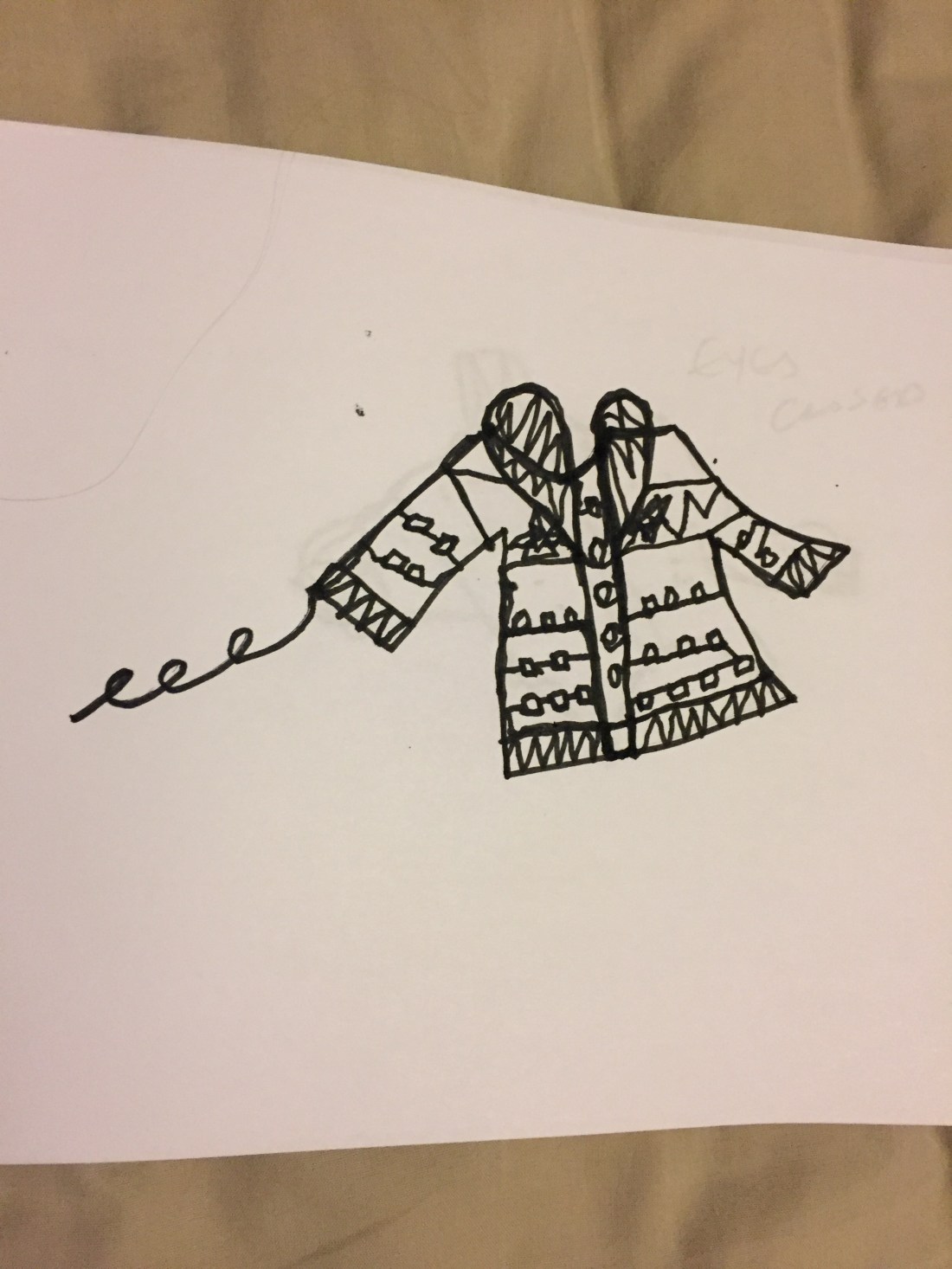
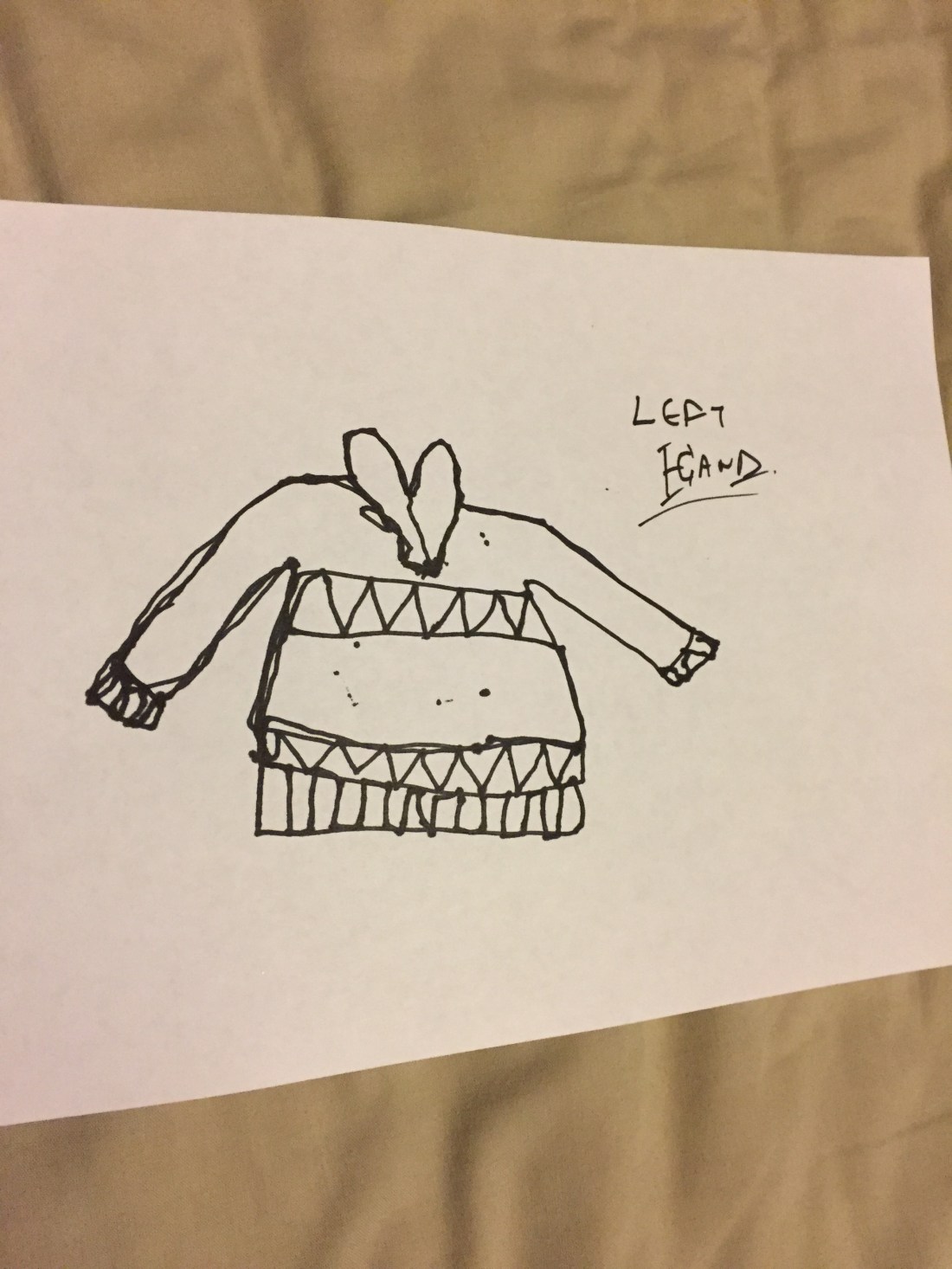
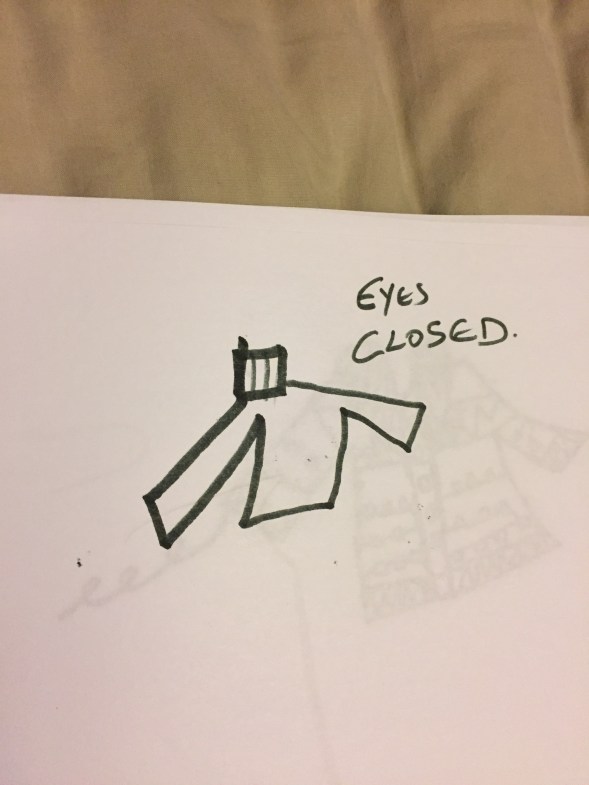
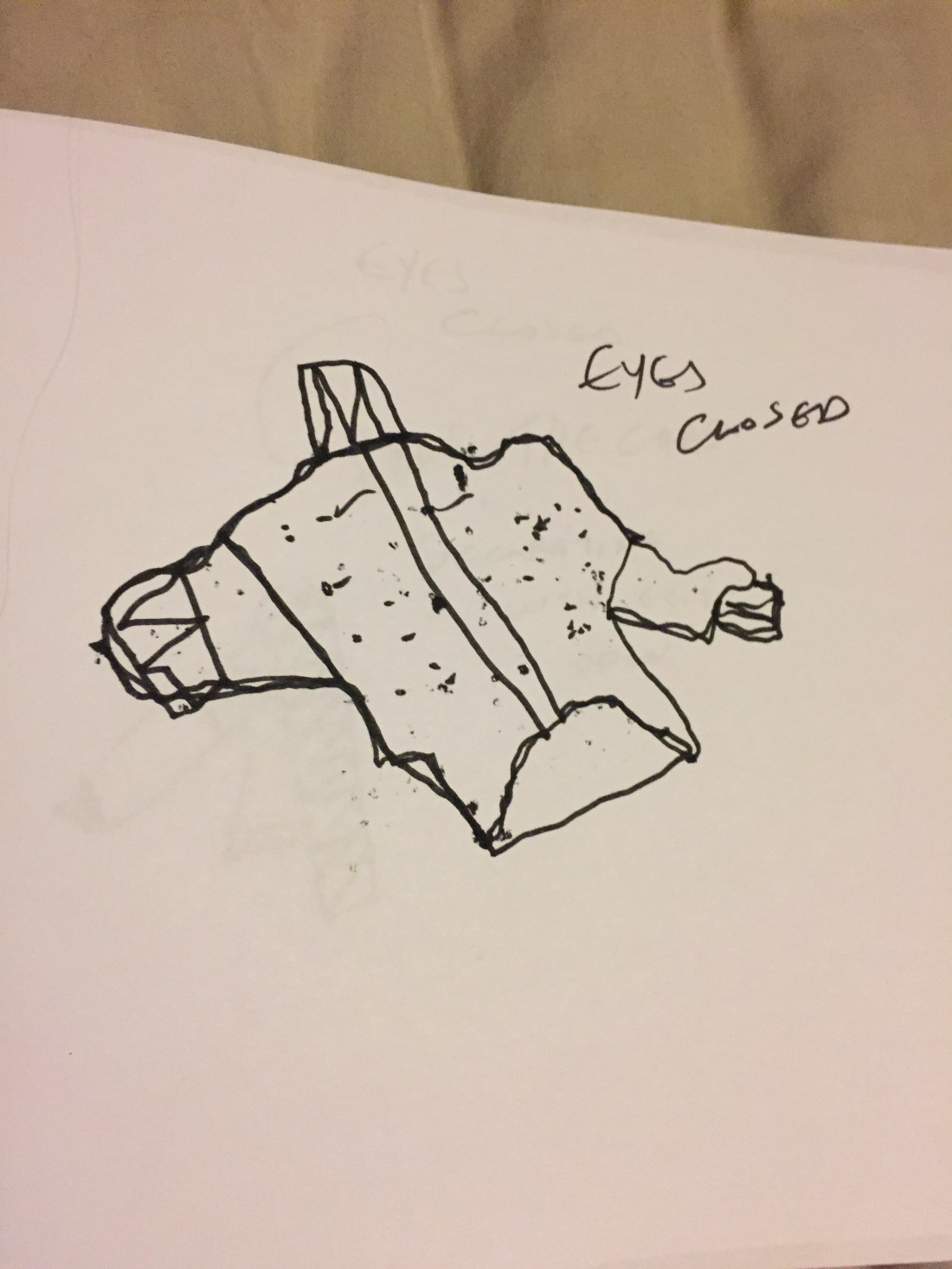
Especially in the task that we had to draw with our hands closed or with our left hand, I had the feeling of being free from any kind of restriction, were time didn’t matter as much as the joy of playing about with your imagination , a sheet of paper and a marker.
I faced two things I’m not familiar with: craftsmanship were I had to create a collage and hand drawing which is something I haven’t practiced since I was a child.
I managed to master these ”fears” and finish my tasks after working around them where I realized how much I enjoyed doing this course ,what a great choice to take textiles it was and how many things I can gain not only as a student but more than anything else as a person…
FIRST ASSESSMENT FEEDBACK
Overall Comments
Congratulations on completing this assignment Alexander. Like we discussed in your Tutorial, there are a few aspects in your work that you need to be spending more time on.
I am going to highlight the main points of action. First of all it would be good if you could send your work to me for each assignment, I only received a few drawings of your Introductory project this time which is not relevant to Part 1.
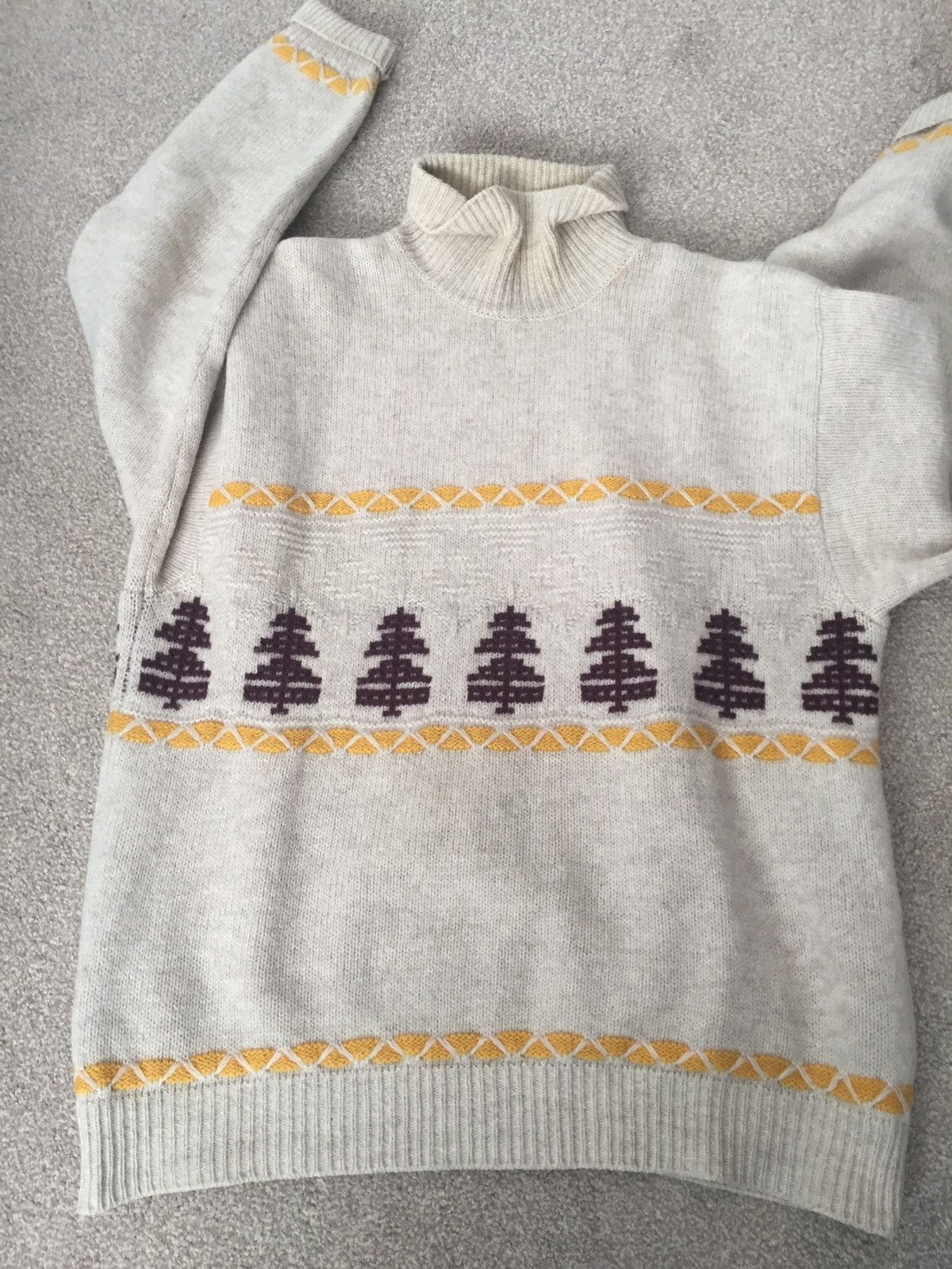
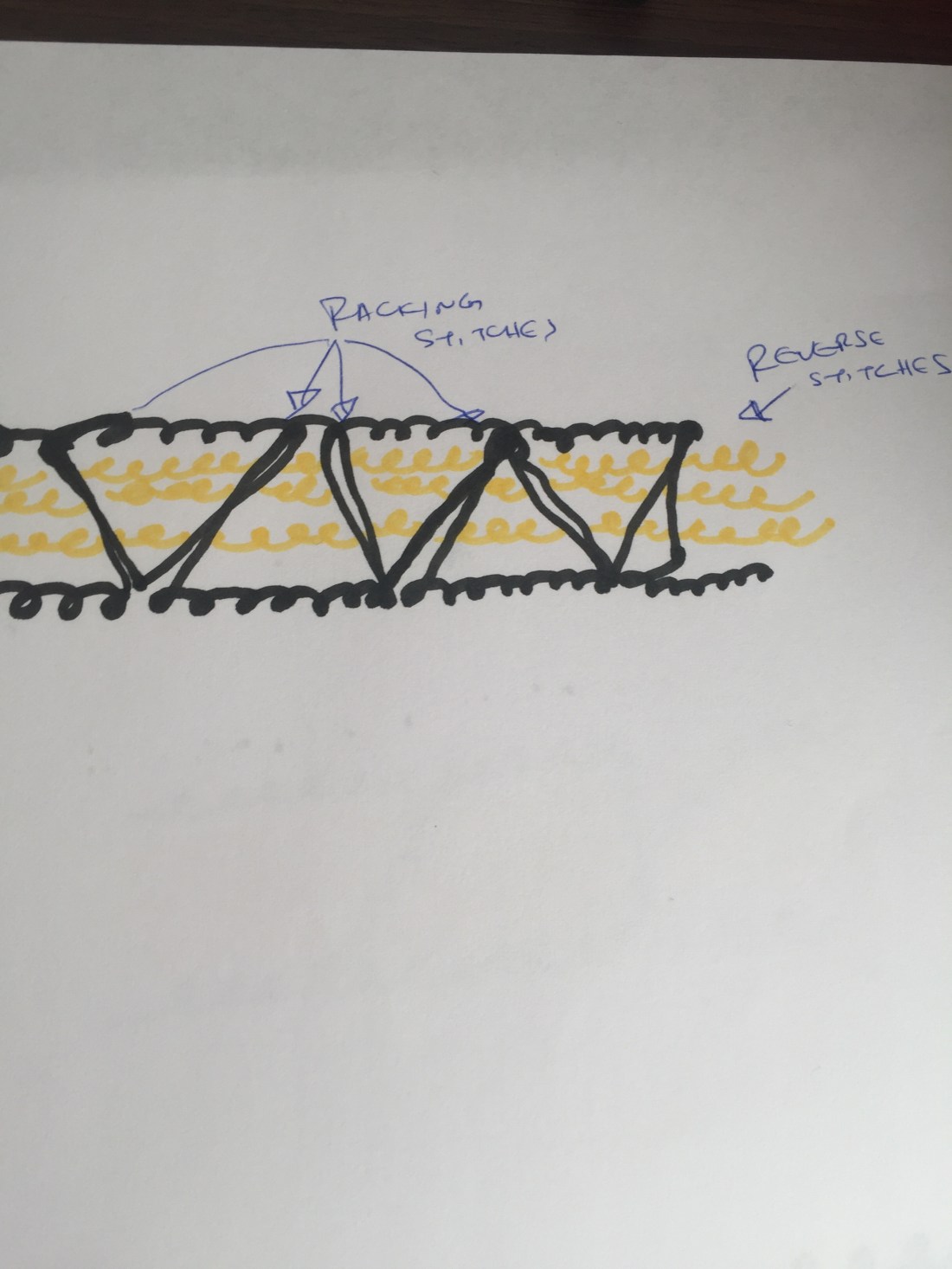
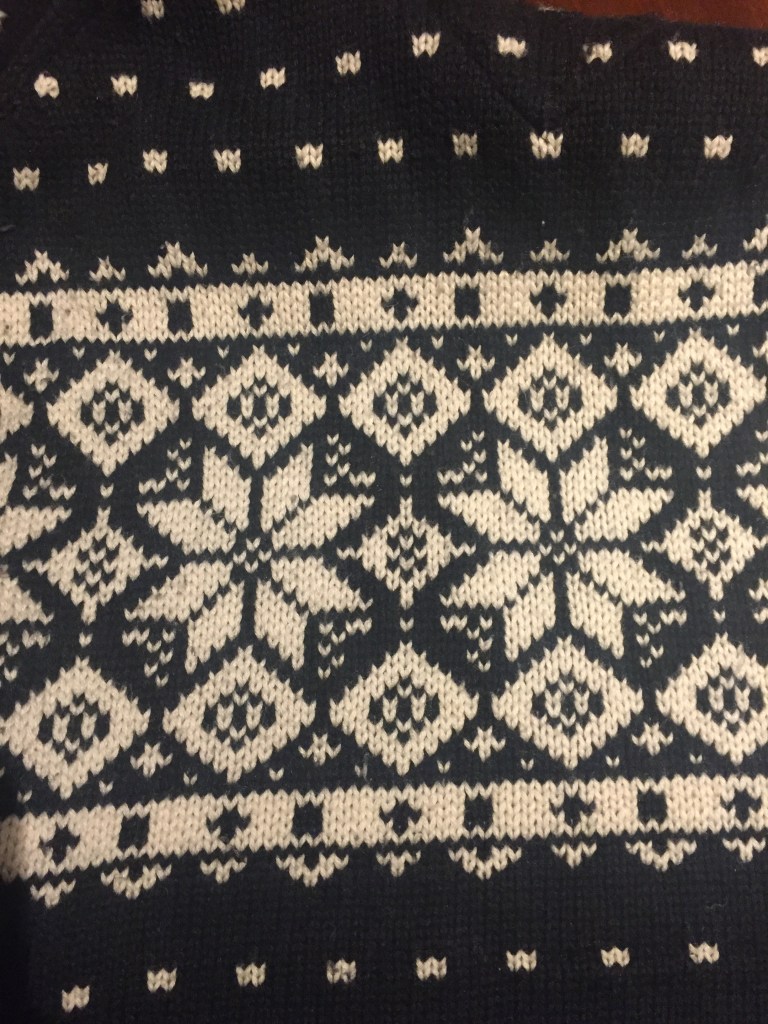
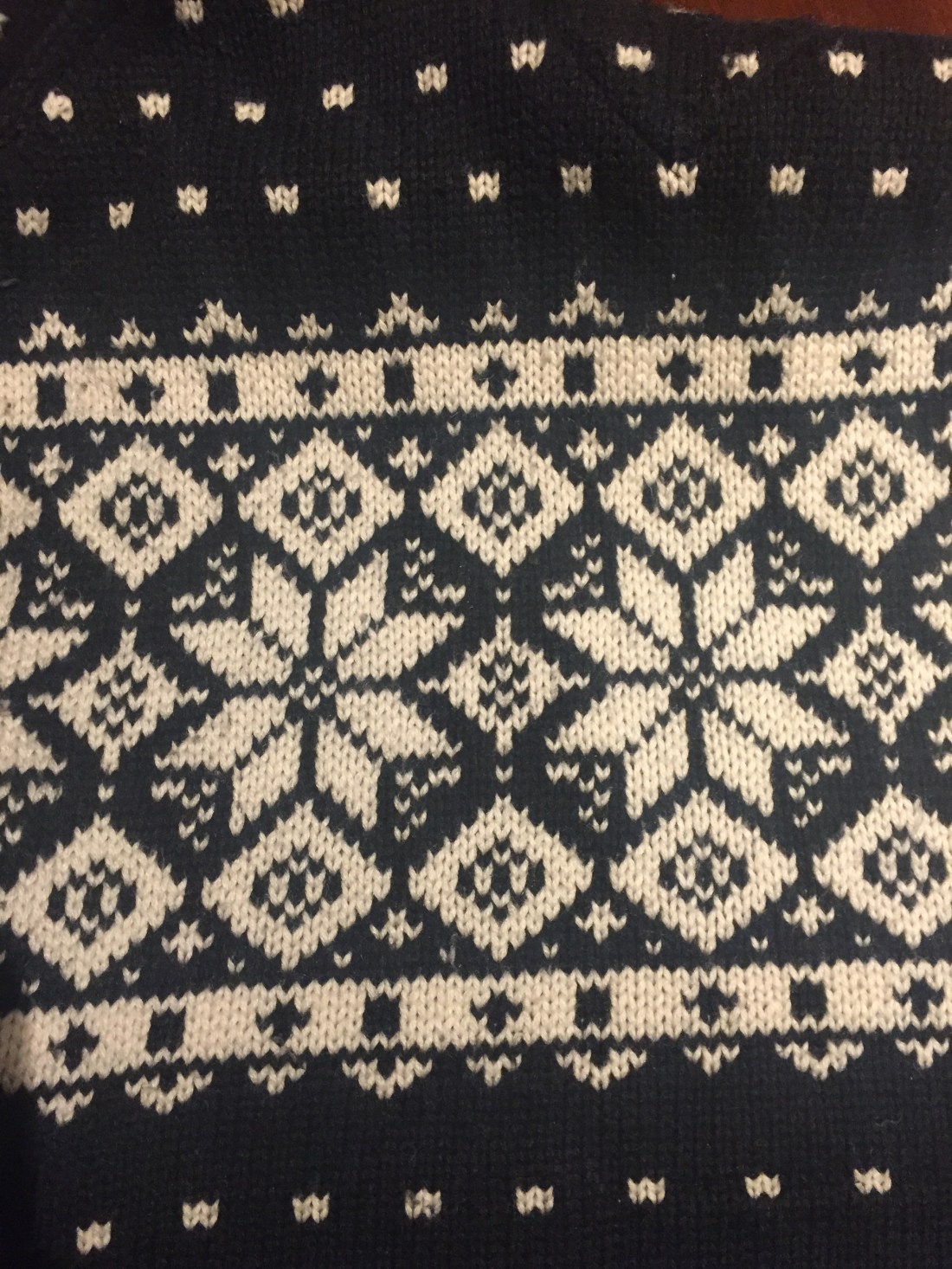
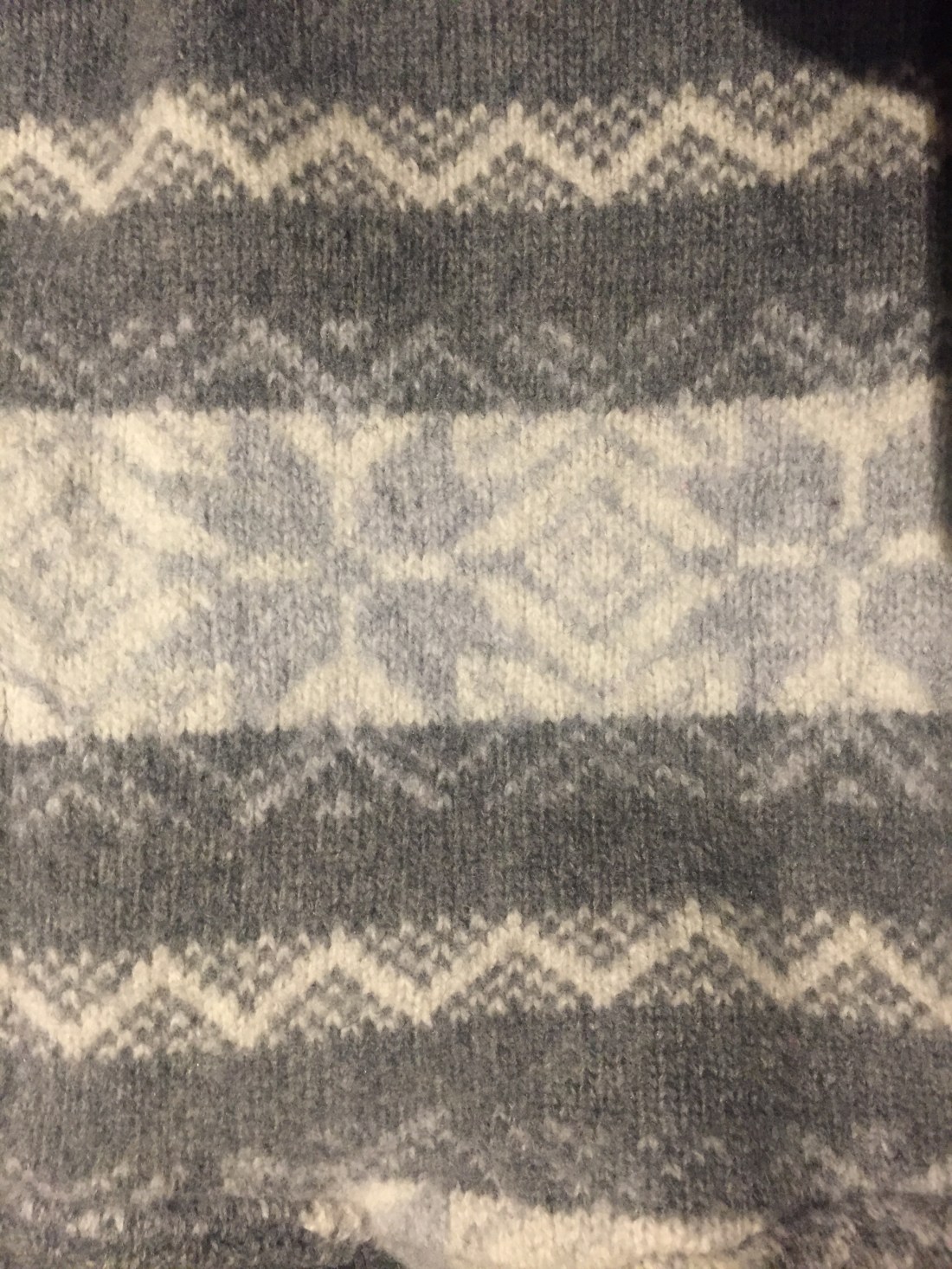
In this first stages of the course I would like you to spend more time on each part of the journey: Useful and relevant Primary and Secondary Research, Drawings and Paintings coming from your sources, Learning techniques and generating a broad number of textile/material experiments rather than focusing on creating finished professional machine samples. Like you mentioned on your Learning Log and on our conversation, you are finding it difficult to come out your comfort zones. As a professional Knitting technician, you are able to produce very good and well finished machine jacquards, that is the reason why I think you should be trying to work differently to what you are used to and focus on learning and improving what it is new for you and those aspects of your work where you feel less comfortable. I think by working this way you will be able to create more exciting work and you would be able to combine your new skills with the ones you already know in future approaches.
Learning Log and Research
Context, reflective thinking, critical thinking, analysis
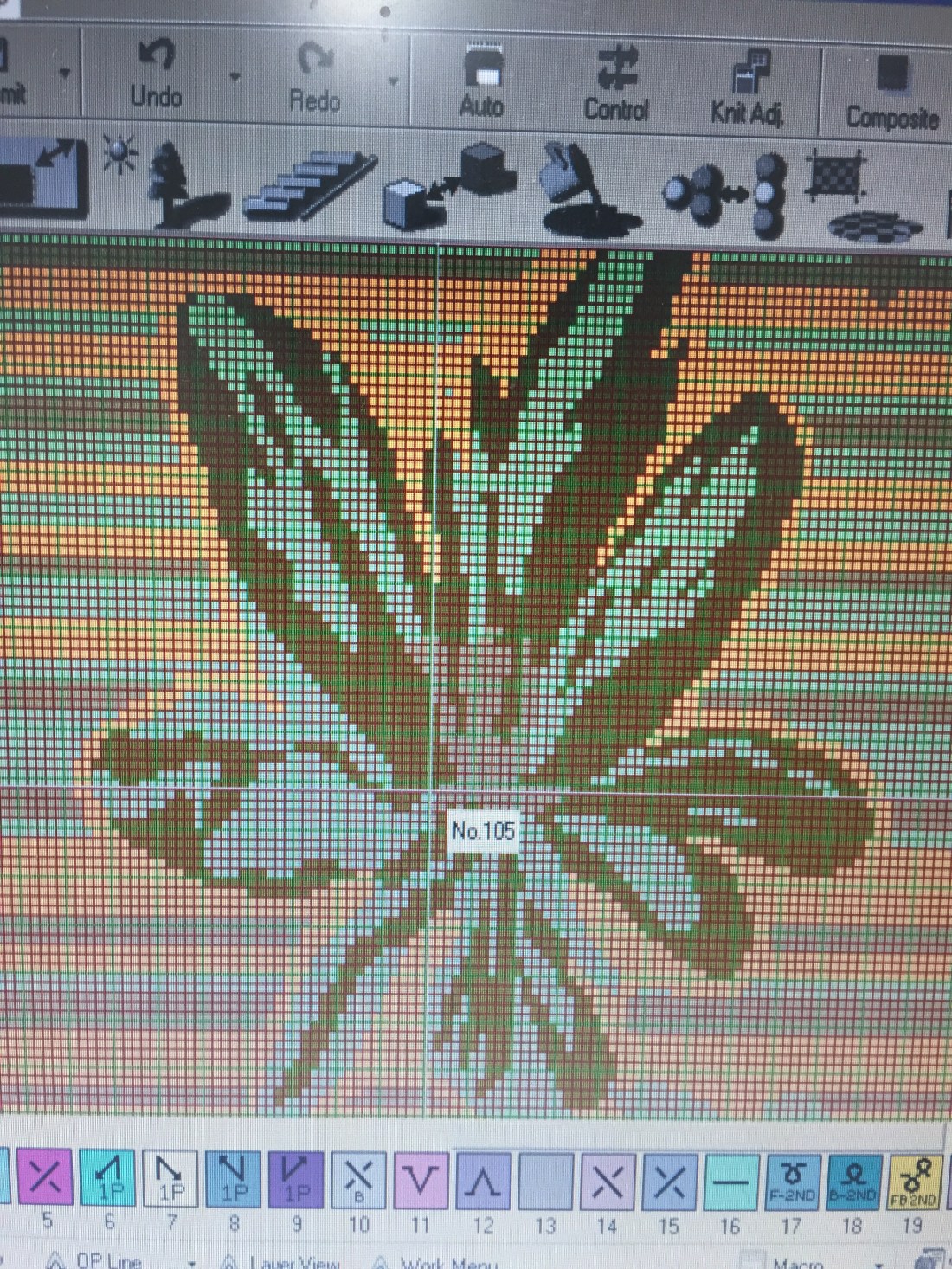
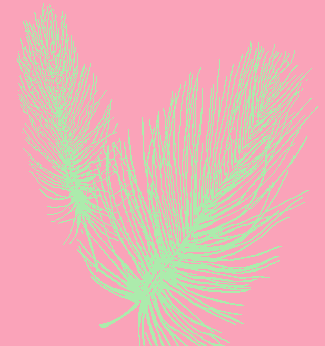
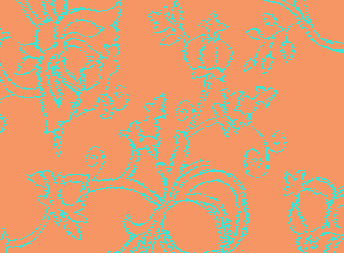
Your Research on this Assignment is not enough, both your Pixel generated drawings using a software and Machine jacquards have been developed from flowers of images found on the internet. I would like you to collect a lot of good quality Images and information from different Artists, Designers, Creatives, Art Periods and Visual culture from books, magazines, Online, Exhibitions, anything that inspires you and that could be useful to each assignemnt. All of this can be posted on your Learning Log, you can also printed and send it to me to review at the end of each assignment. Also make sure that your Paintings and Textile approaches come from your own sources, I think taking photographs can help you and give you ideas to develop future experiments and develop future work.
I would also like you to spend more time on your Learning Log, Make sure that your photographs have a footer with relevant information and that each exercise its clearly updated with good photographs of your work.
Engagement with textile techniques
Demonstration of technical and Visual Skills, Quality of Outcome, Demonstration of Creativity
You have learned some new techniques, working with paper and you have also developed some Knitted Jacquards. There is evidence in your work that you can generate very professional machine jacquards, but working this way is stopping you from using other techniques and engaging with hand made textile techniques. I would like to encourage you to take risks, and start experimenting and generating a lot of small experimental swatches instead of putting your time towards finished looking pieces.
I would like you to think about introducing loads of different materials and yarns, to use different qualities, textures, colours, thickness…
Make sure that your work is well presented, mounted on paper and clearly labelled with important and relevant information of each piece. Some of your Paper manipulations have a written on top of them, the information is confusing and hard to read and it also distracts from your pieces, always mount your work on paper in a form of presentation and attach a label to each piece of work.
If you are particularly interested in Knitting, I would like to look into Artists that work using knit in different fields, Art, Public Space, Interiors, Fashion, Arquitecture… That can also be inspiring to you when using other textile techniques.
– Ana Teresa Barboza >>> FLORAL -TEXTILE
– Vanessa Barragao >>> RUGS
– Anita Bruce >>> CROCHET CORAL REEF
- Freddie Robins >>> FULL BODY KNITS
- Jacqueline Fink >>> EXTREME COAARSE KNITS
- Ellen Schiffman >>> FIBER PAINTING
- Barbara DePirro >>> KNITTED FLOWERS AND ROOTS
- Toshiko Horiuchi >>> TEXTILE PLAYGROUND
- Joan Dulla >>> CROCHET WIRE JEWELRY- FOOD-LAB ANIMALS
- Carol Milne >>> KNITTED GLASS
- Channing Hansen >>> KNITTED PAINTINGS
- Stephane Martello >>> CROCHET KNITTING
- Alexander McQueen
Drawing and Painting
Demonstration of technical and Visual Skills, Demonstration of Creativity
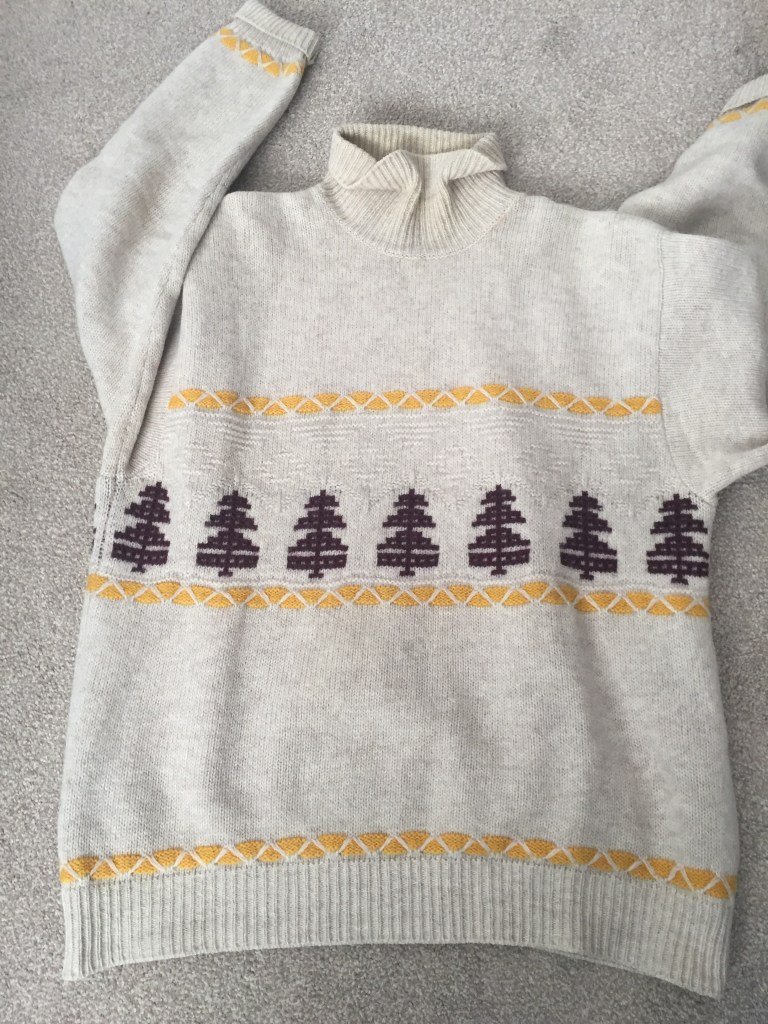
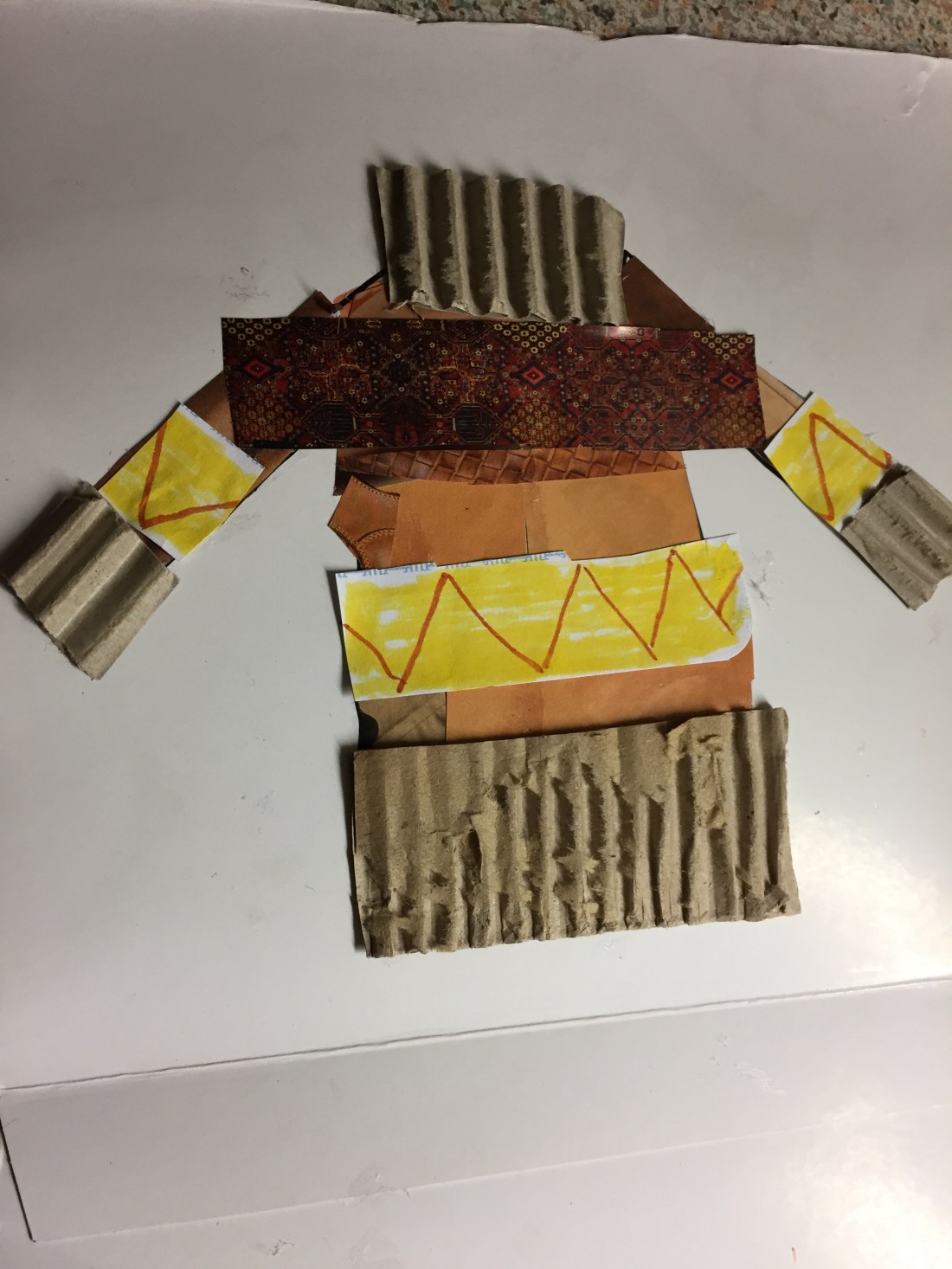
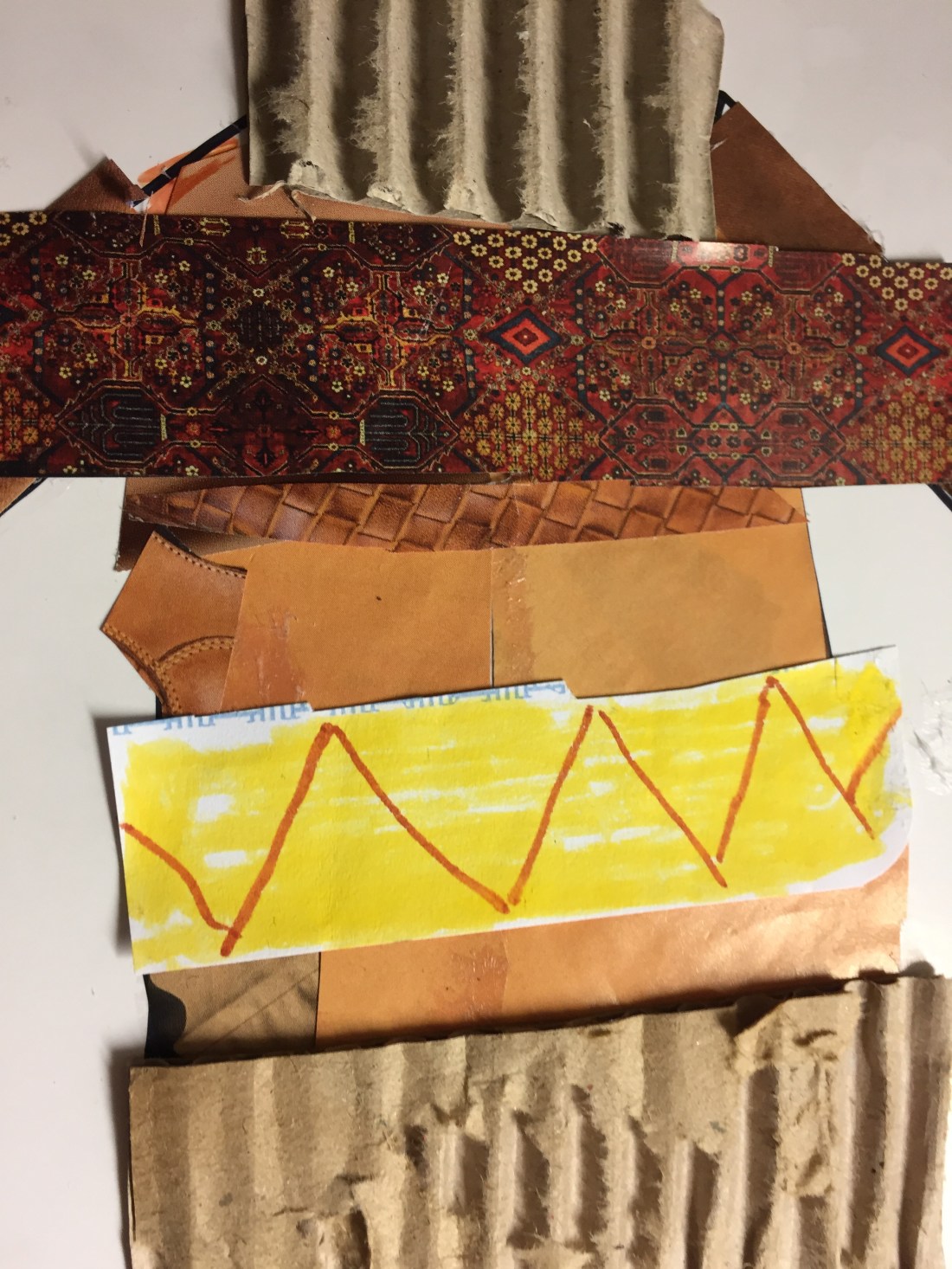
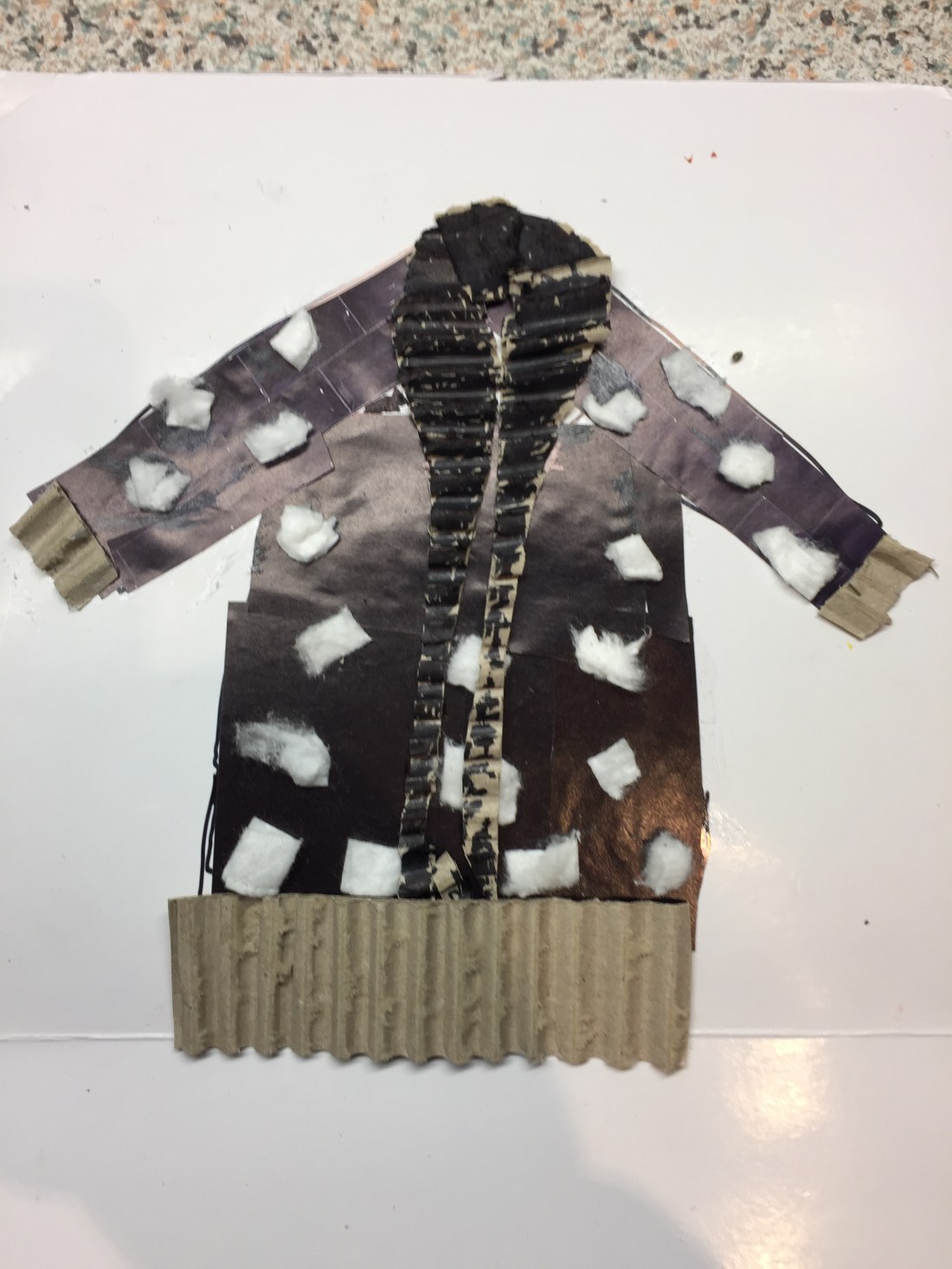
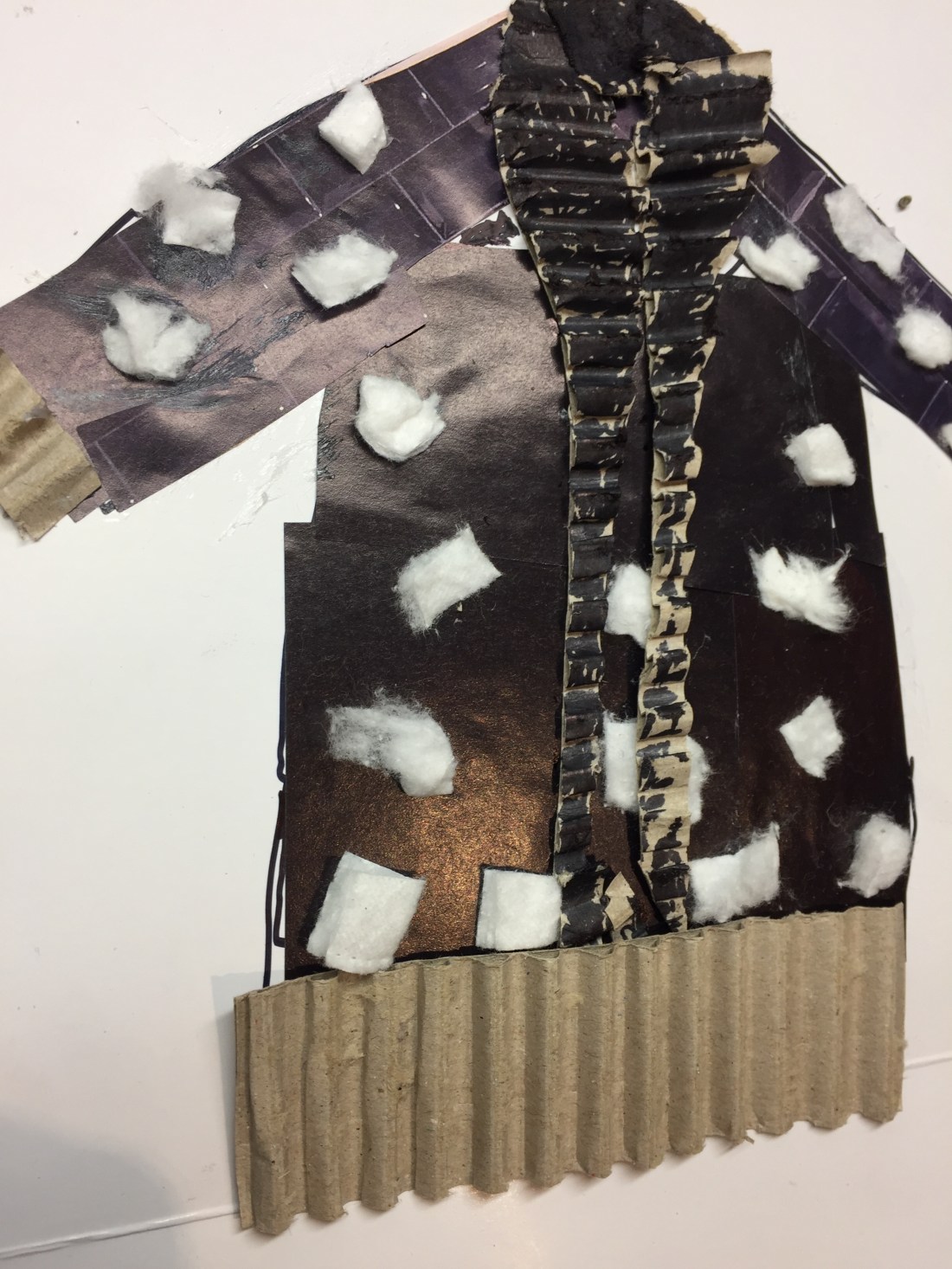
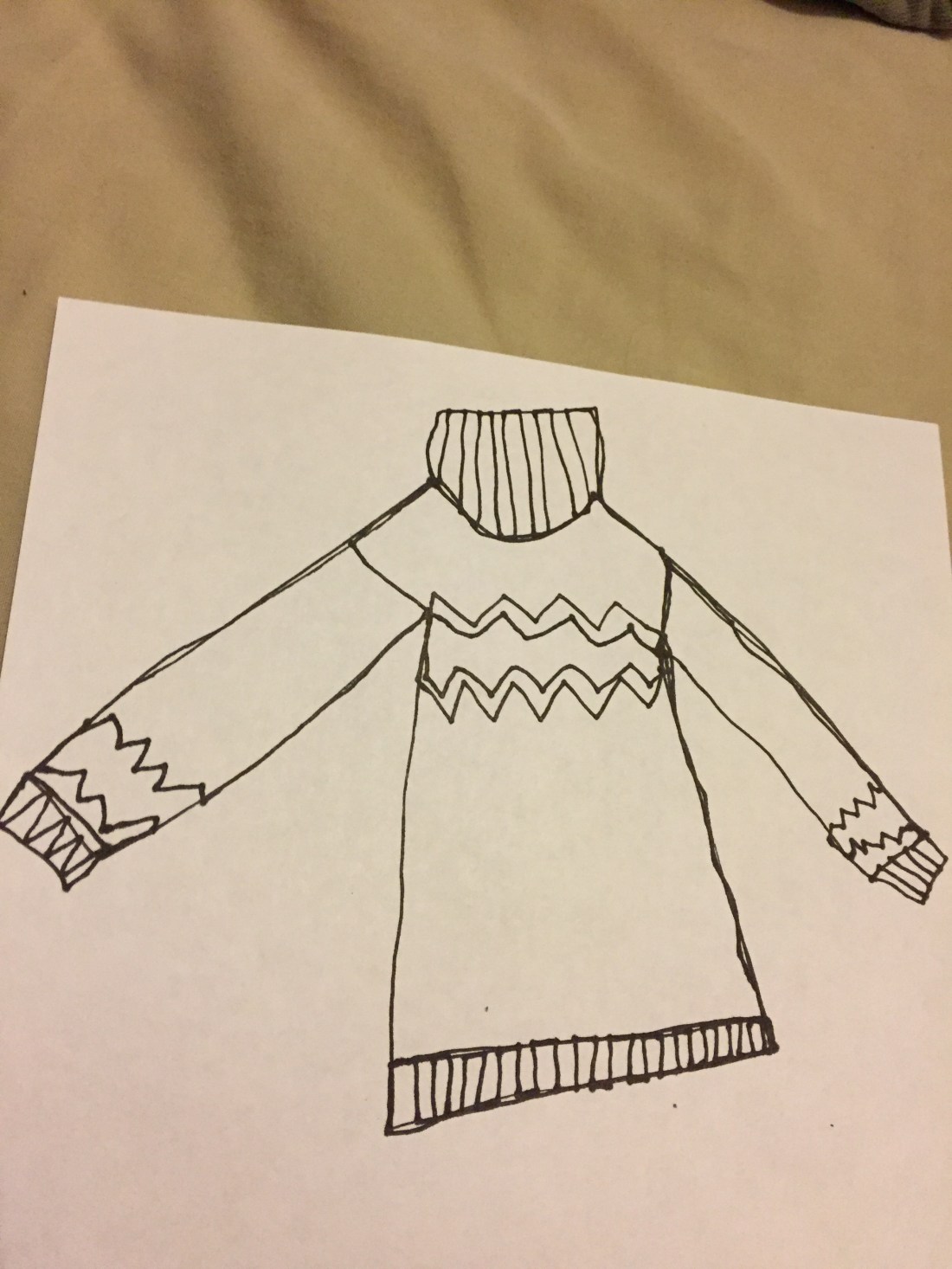
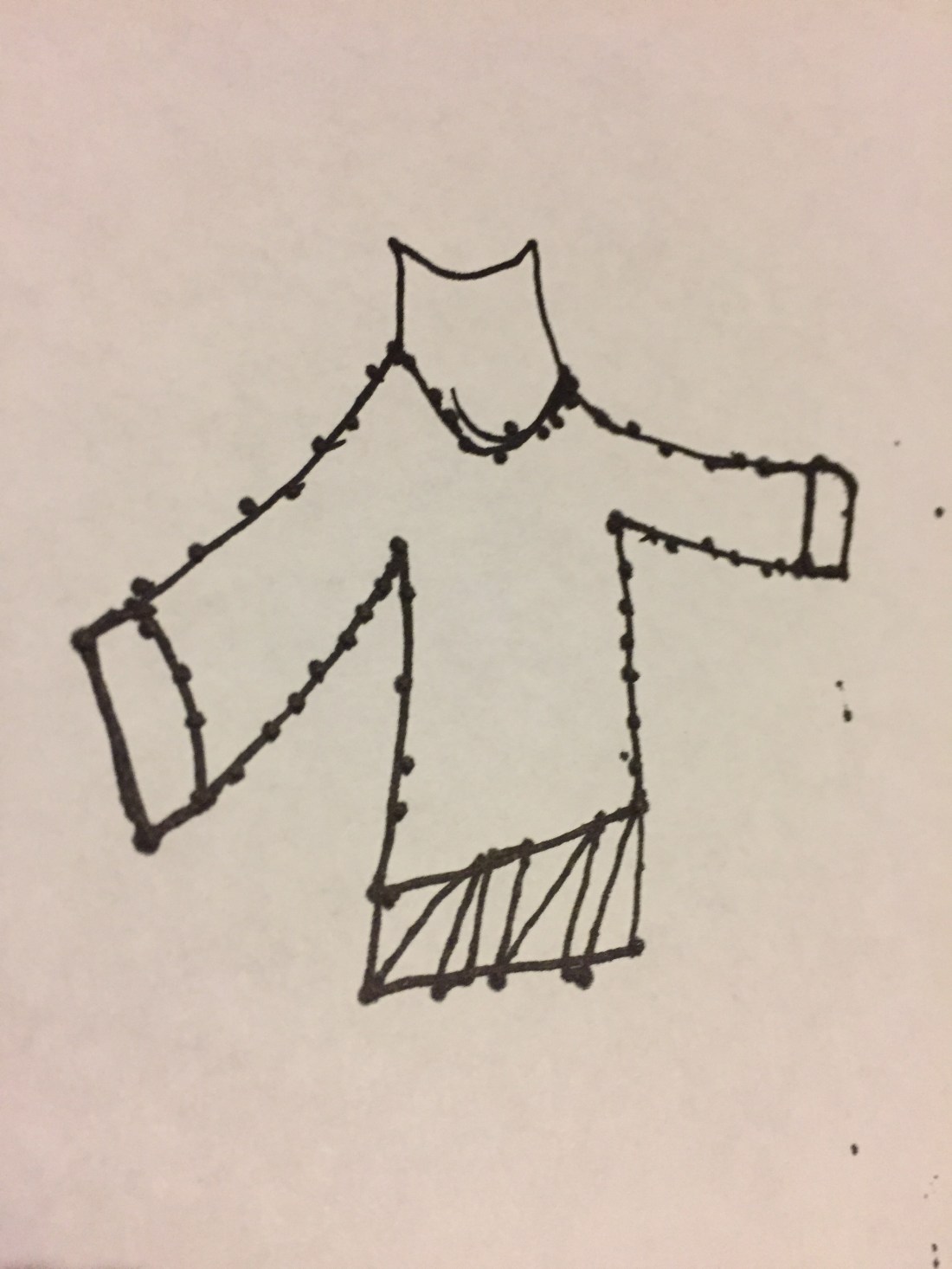
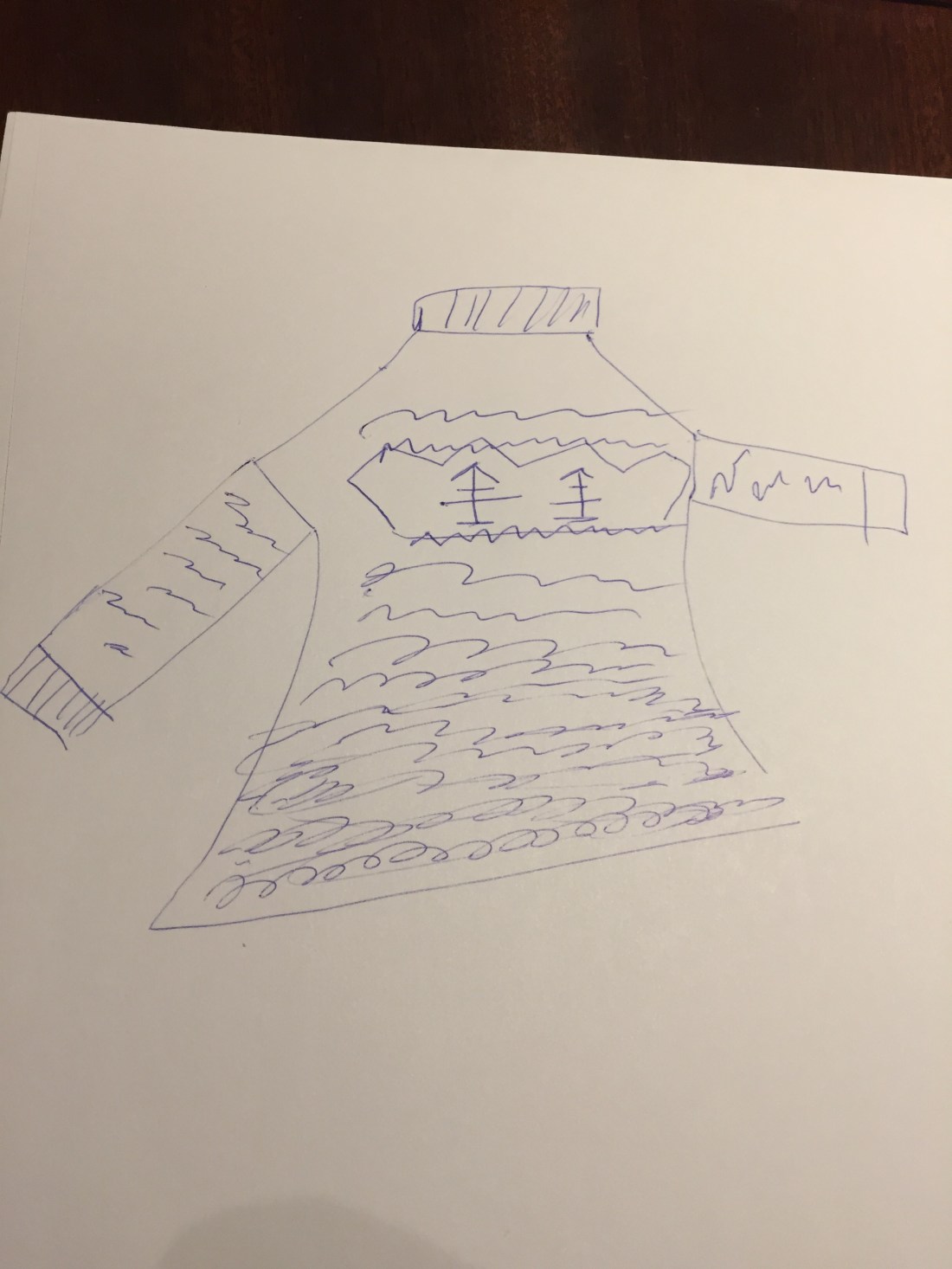
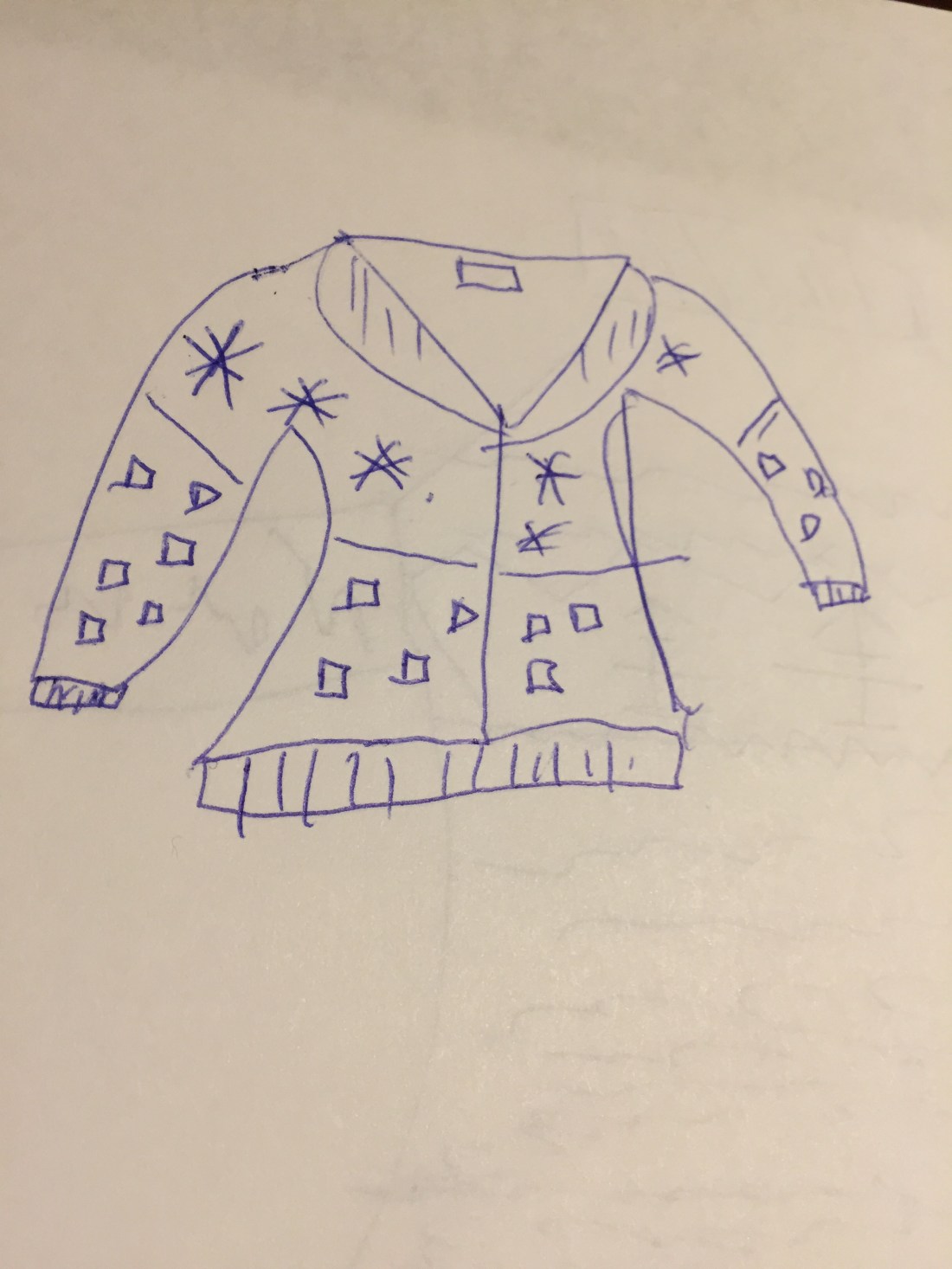
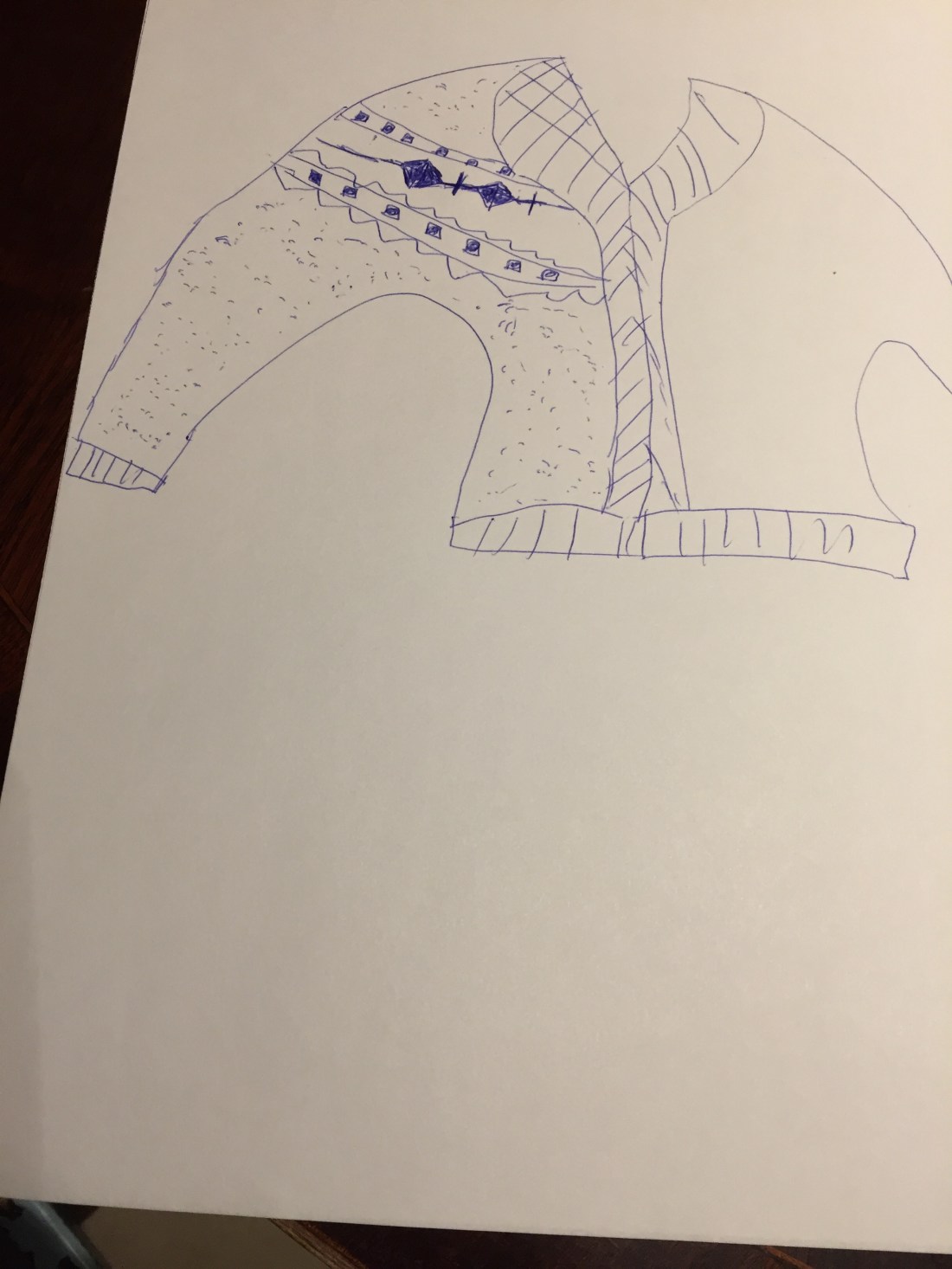
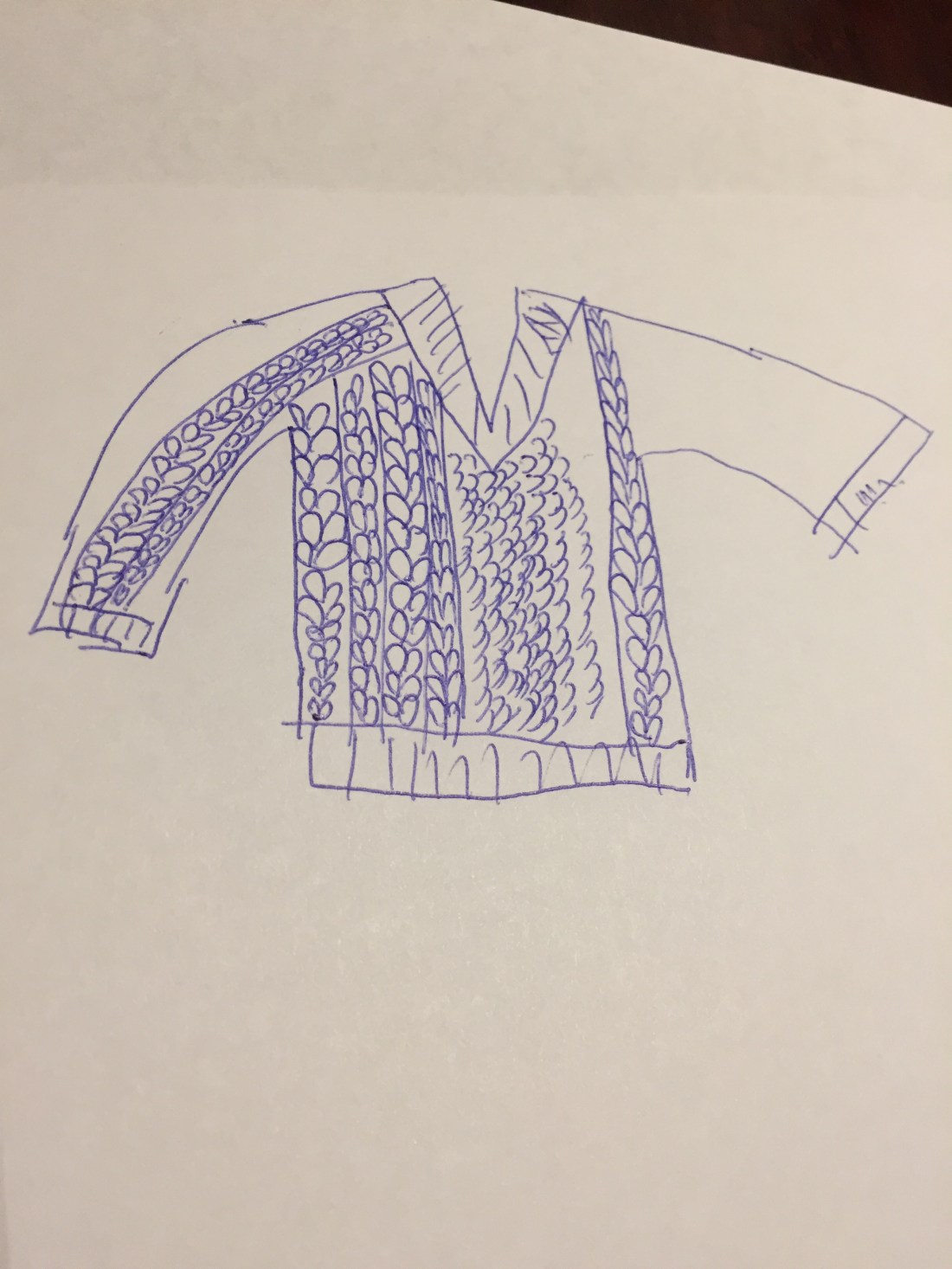
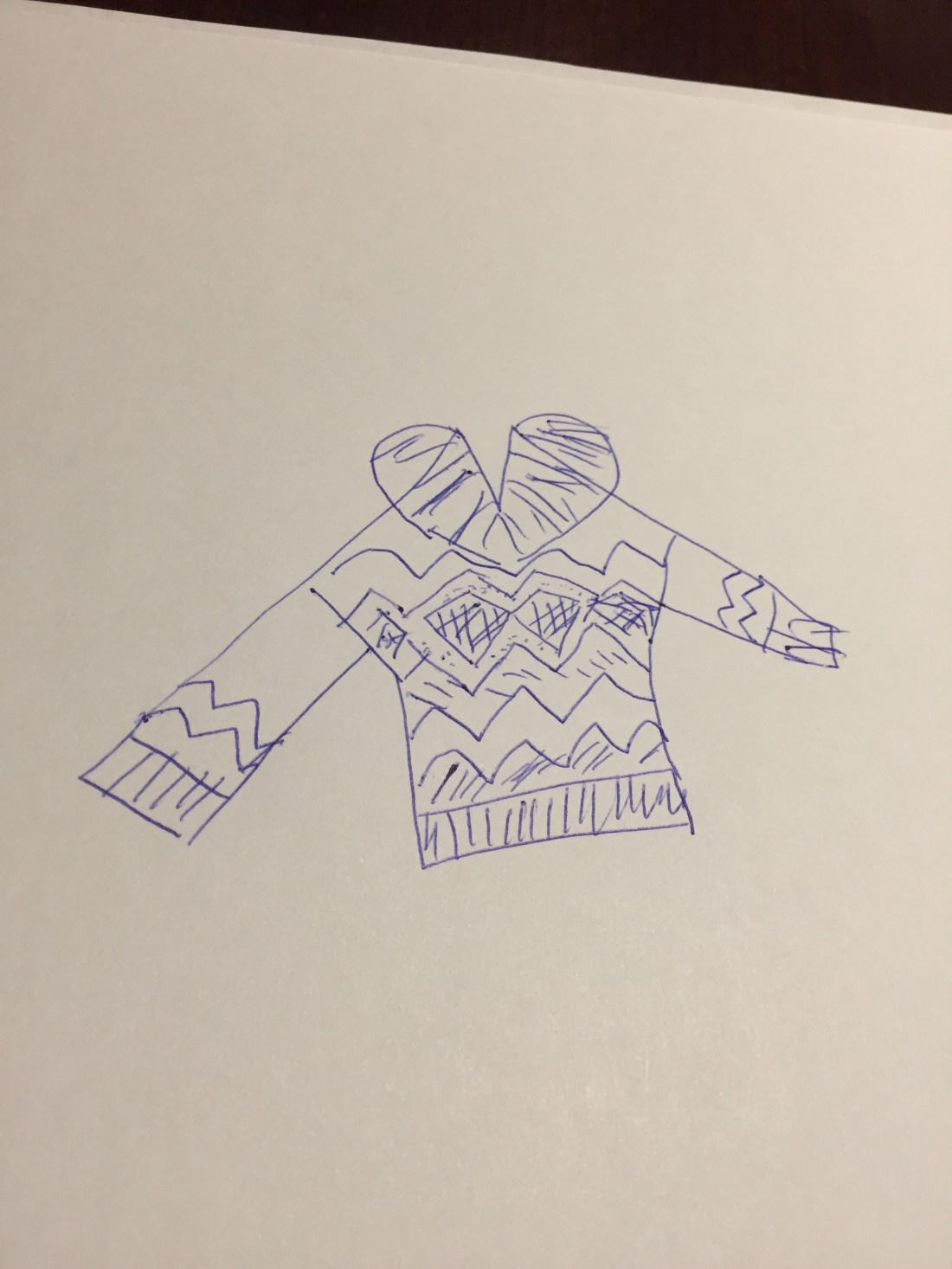
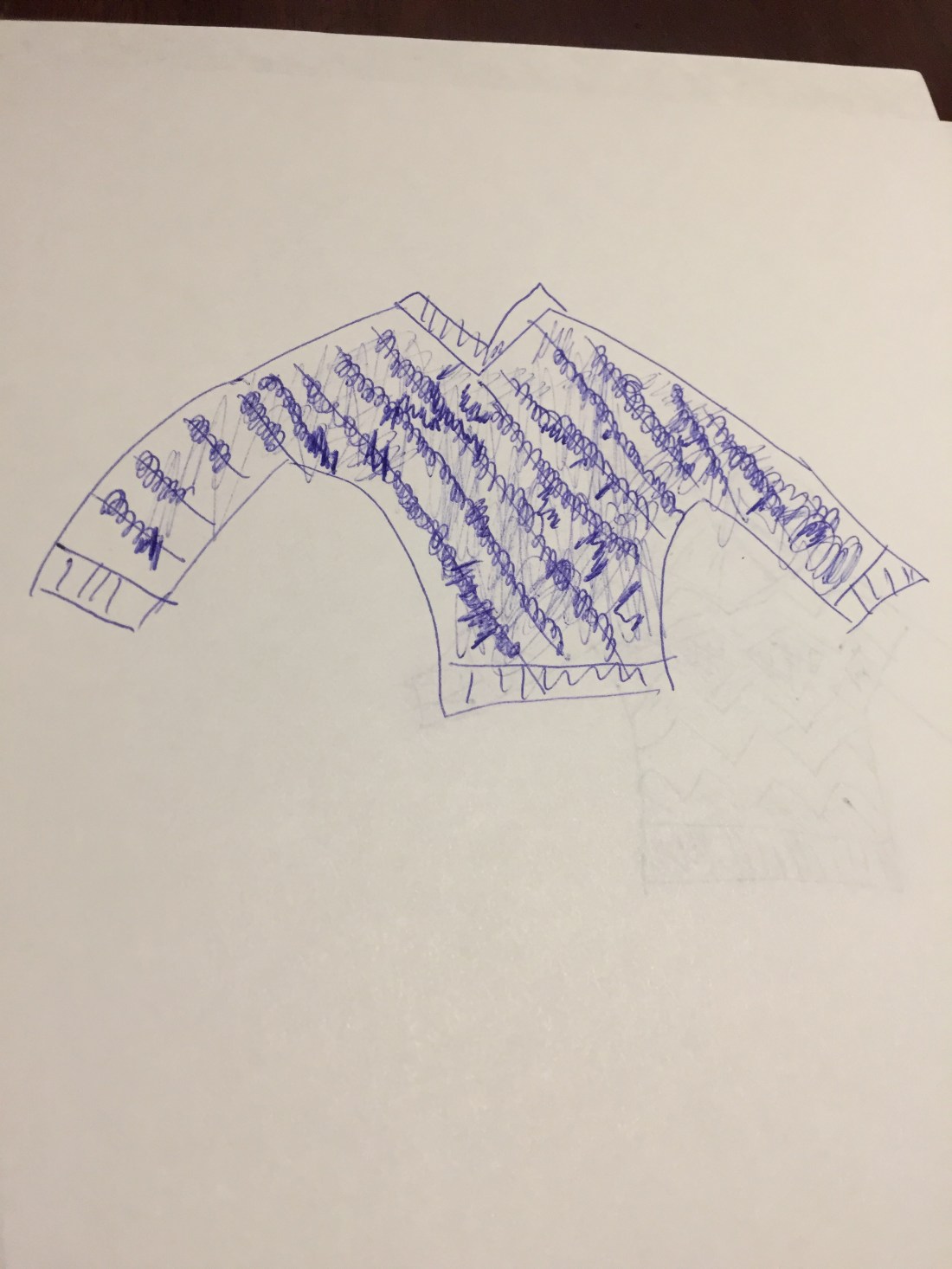
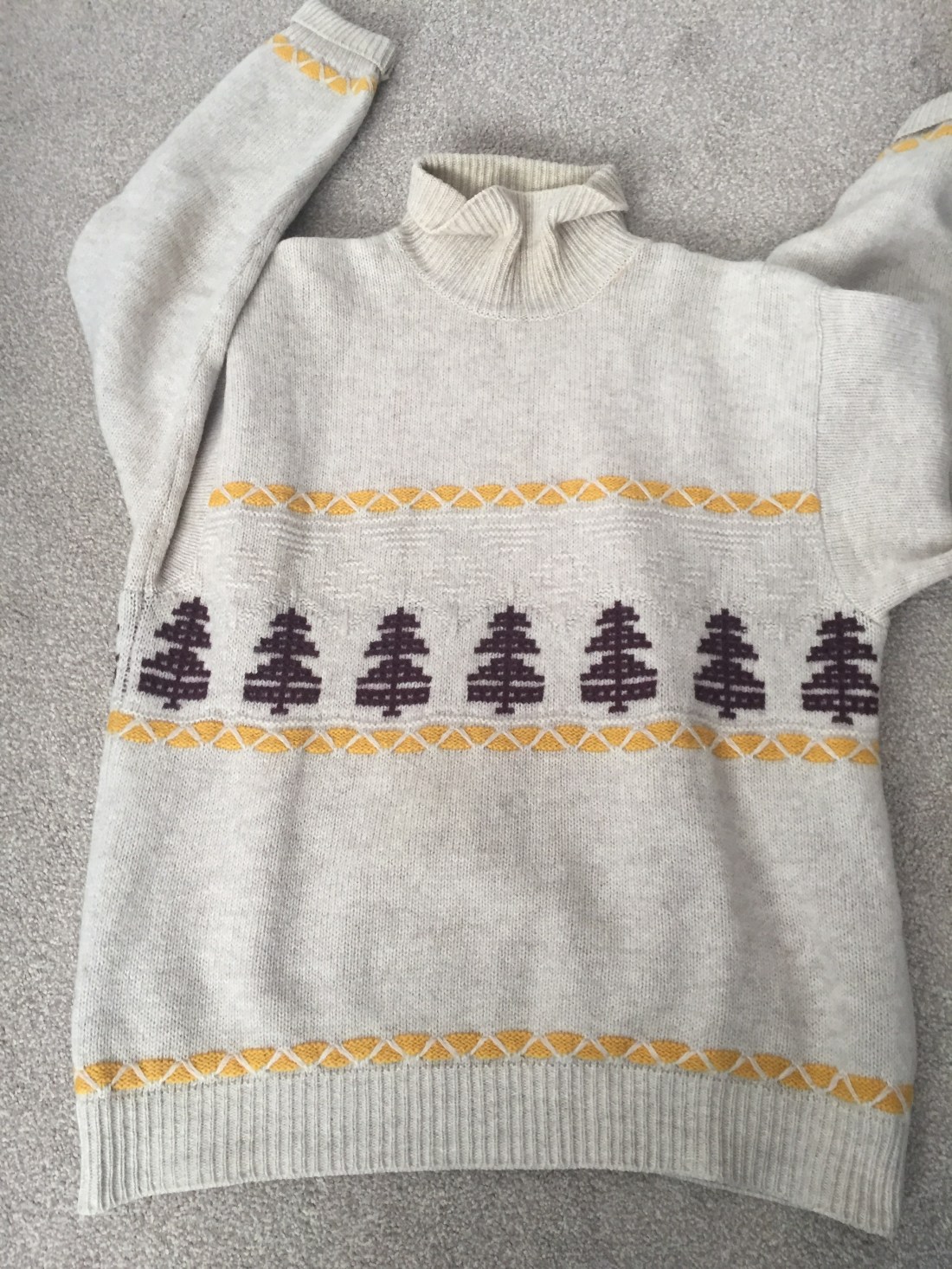
Drawing helps you to plan prior you make and also to understand and learn more of what you have created after your making. You submitted some drawings from your introductory project, most of them are quick and poor quality drawings of jumpers but it starts becoming more interesting when you use collage adding some unusual papers. You should be spending a lot more time on it.
You have developed some drawings digitally using a pixel programme to develop jacquards, all those drawings are inspired on images of flowers found online. I would like you to start drawing life and draw and paint directly from your own sources, spending a lot more time on each painting. Think about engaging with different techniques and mix techniques, Watercolour, different pencils, rottings, Gouache, Acrylics, Chalk, Pastel colours… At the moment all your drawings are either digitally created or developed on A4 thin paper, I would like to encourage you to use different papers and surfaces to paint on, think about papers specific to the technique you are using, Watercolour paper, Drawing paper… Think about the thickness of the paper, opacities, textures, recycled paper. You can also reuse card or paper from waste, newspapers, magazines, plastics… and use it to create collages or to paint on them.
Like I mentioned in your tutorial, I would like to recommend you a book, “How to draw with the right side of your brain”. Betty Edwards. This will give you ideas and help you improve your Drawing and Painting skills. Another interesting book is “How to Draw What You See” by Rudy De Reyna.
Well done Alexander, Looking forward to your next Assignment.
| Tutor name | Pere Bruach |
| Date | 9th March 2019 |
| Next assignment due | 15/04/2019 |



















 Alexander's blog