- “Tell your own story, and you will be interesting.”Louise Bourgeois. This is a self-directed assignment requiring you to identify and communicate connections between practical and theoretical interests. The projects that you’ve been working on during this unit have enabled you to develop your ideas and understanding of the expanding relationships between your practice and research in relation to the wider world. This assignment is an opportunity to consolidate what you’ve learned so far and create a body of work that develops and explores your motivations and interests, further building on your manifesto, expanding your practice processes and methods, and broadening your contextual understanding and awareness. Your decision-making and reflection on your learning will inform the nature of what you produce in this final assignment. Look at the previous work you have made that you can build on in order to explore ideas that have emerged in the previous projects more extensively.
- Student Community: Research and Practice SeminarDuring this seminar, you will present your progress to your tutor and peers, receive feedback on your work so far and discuss ideas for the future. Before the discussion, share your learning log and any other materials you have made during this project. You will also have the opportunity to look at your peers’ research and practice outcomes and offer constructive feedback to the group. Creative Arts tutors will also be commenting and asking questions for you to respond to.
- FORUM
Student Community: Research and Practice SeminarUse this forum to share your learning log and any other materials you have made during this project. You’ll also have the opportunity to look at your peers’ research and practice outcomes and offer constructive feedback to the group.
- Reflection How are you getting on? Did you receive constructive feedback during the seminar? What issues or challenges have you encountered? Looking back at your manifesto from Project 3, are you achieving the goals that you set? Do you need to amend this now you have made progress? Use these questions and more of your own, to form a brief self-appraisal of your studies so far.
The Terrible Deathless Beauty: Helen of Troy.
One of the oldest poets whose name survived through the centuries is Homer. In his epic poem, Iliad (a chronicle of the 10-year war between the Greeks and the Trojans) introduces Helen to the world. According to the myth, she was the most beautiful woman in the world. Her abduction from Paris-Alexander was the reason for one of the most famous wars known with tragic fate for most of the participants.
Since the time of Homer and in the centuries to follow until our time, Helen has become the epitome of beauty-Kallos, as said by the ancient Greeks. Following that idea, I use that argument as an accepted truth to start my quest for grace and ”kalesthaisia” (sense of Kallos) and see how my point of view will guide me to understand my Helen of Troy, the ”terrible deathless beauty” as referred in Homer’s Iliad.
The Trojan seniors, lined up on the city walls waiting to witness yet another battle before the fortification, saw Helen walking around the ramparts and murmured to each other:
<<Who on earth could blame them? Ah, no wonder
the men of Troy and Argives under arms have suffered
years of agony all for her, for such a woman.
Beauty, terrible beauty!
Deathless Goddess – so she strikes our eyes!>>
– Homer
The Iliad, Book 3, lines 187-191
They were mature, meaning they didn’t have the youthful drive to be perfunctory. Their opinion mattered; They had lost many loved ones in a vicious war running its tenth year of hostilities. But even under these circumstances, the elders of Troy said it was well worth the sacrifice to obtain such a remarkable beauty.
The Iliad and the Odyssey were the bases of ancient Greek pedagogy(ago-paidas=I guide the children): Generations after generations of Greeks were taught virtues and values from these epics. Many historians agree that Alexander the Great developed a passion for the Homeric epic. According to the legend, being a great admirer of Achilles, he visited his tomb in the ruins of Troy before he started his campaign against the Persian empire.
One of the moralities thought was for them to appreciate and pursue beauty. Helen was the personification of it.
But there was a paradox. Helen was against the moral and divine rules of her time. She escaped Menelaus, her despotic husband, betrayed her country and ran away with a young charming prince. Goddess Helen was a sinner. Paris, from his side, got Helen as a prize from Aphrodite. He kidnapped Helen (with her consent)but still committed a blasphemous hybris to Gods and humans. Paris-Alexander had to pay for it. And he did in a superlative degree not only by losing his life but even his homeland: Troy perished, burned down to ashes, never to be the same glorious city again.
About 400 years after Homer, Euripides (c. 480- c. 406 BC)played the role of Deus ex machina in the story of Helen. According to his romantic drama HELEN(412 BC), Paris-Alexander had abducted an eidolon, a phantom and the real one, pure and loyal, whisked by the Gods to King Proteus of Egypt. She stayed there for ten years, until the end of the Trojan War, only to be rescued by Menelaus, who everybody believed to be dead by this time.
Euripides play adds a different curve to the story of Helen’s embodiment of beauty. He released her from all her sins, purifying her persona and making her the archetype of ”Kallos” for the next generations.
Later, another great Greek poet, winner of The 1963 Nobel Prize in Literature, George Seferis, in his poem Helen Inspired by Euripides, writes:
<<…so much pain, so much life
They went into the abyss
for an empty shirt for Helen.>>
George Seferis. [1972] 1985. Poems. Vol 15. Athens: Icarus.
This poem is to show deceit. So many lives perished for a ghost: Extraordinary pain for something that does not exist. A broken idol that stigmatised and traumatised a whole army. Translating Seferis’s poem’s last verse, everlasting beauty’s chase can create greed and vanity but can also blind and eventually destroy the person.
On the other hand, there is another inconsistency to all this argument: In contradiction to Helen’s everlasting beauty, ”Kallos” is ephemeral. There is a perpetual change in the world around us, constantly embodying different forms and values. Nothing stays the same. Natural beauty perishes. The colourful flowers and the sea disappear from our eyes even when we focus somewhere else. In addition, the way we look at and understand things changes over time.
And there comes art. Art becomes a magnifying glass, a camera, a recorder of moments of beauty. It captures the magical moment of a genius outcome in the past. In other words, art is the amalgamation of moments that are gone forever. So, when we admire an artwork, we dive deeply into the creator’s soul and feel manner and purpose.
Helen is a symbol of great significance. It gave me a lot of inspiration through the course and guided me in my search for beauty. So, following my intuition, I have created pieces of work that include poetry, photography and drawing. I wanted to capture the aspects of beauty analysed above. Moments that passed and lost. The outcome of this research is some work under my filters and my point of view.
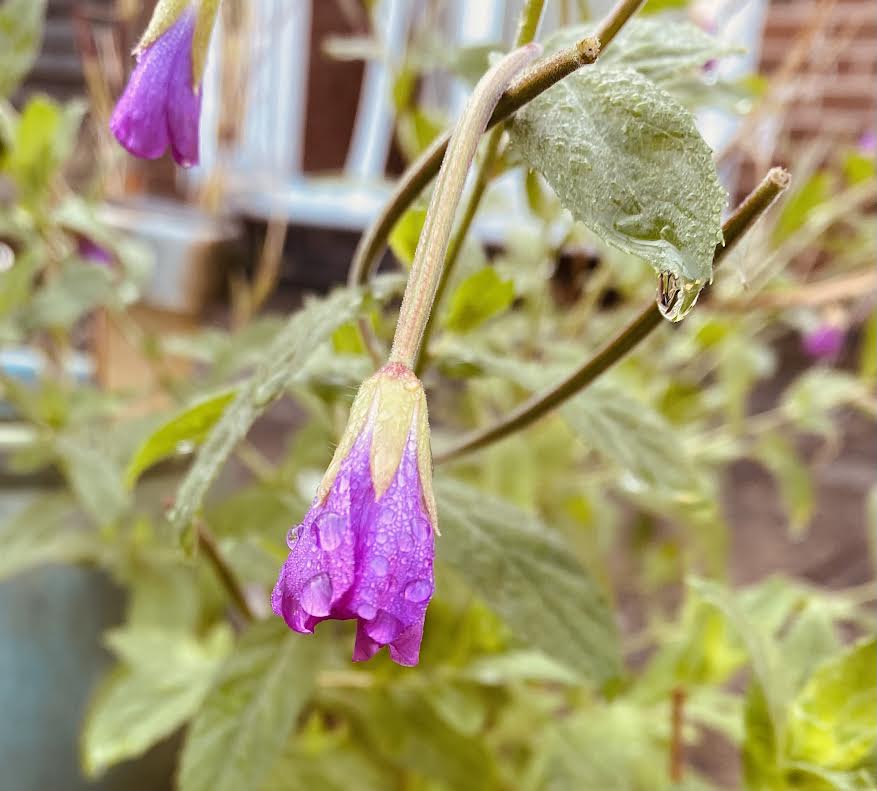
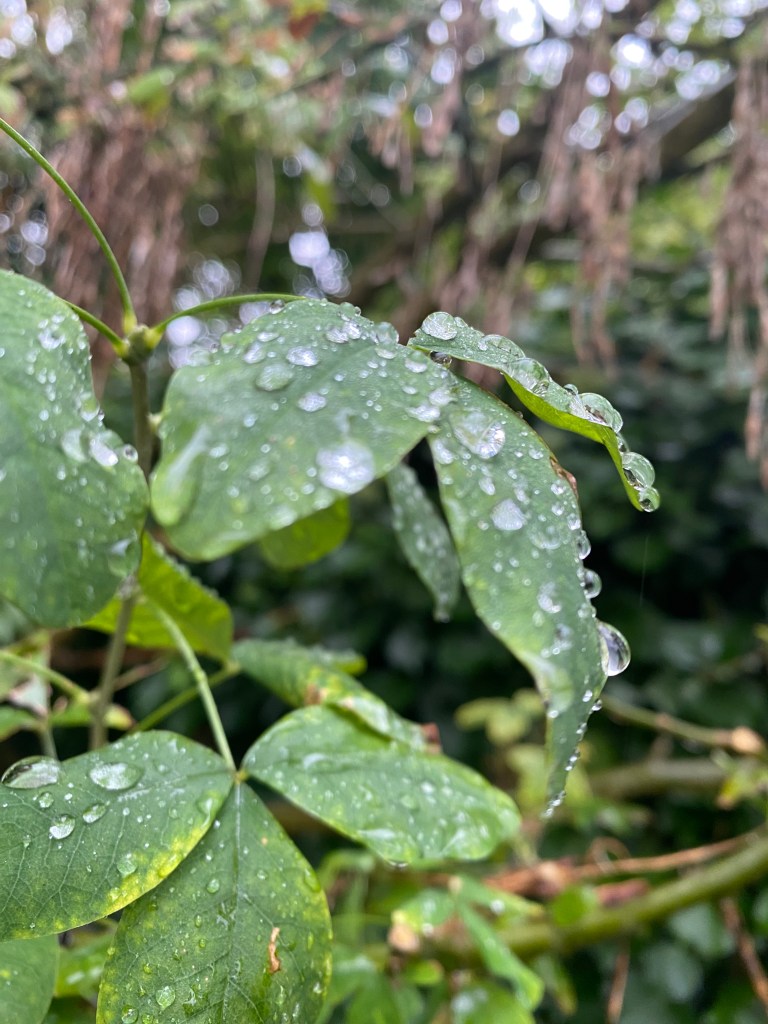
I have captured many photos by focusing on the tiny instead of the big and pompous. My goal was to spot the beauty of the ephemeral everyday ordinary sights: a drop of water on a leaf, a rose, a spider web with the morning dew on. I have shown my purpose using black-and-white filters.
Then, considering the incident between the senior people of Troy and Helen, I created a sketch: it was all about the terrible beauty.
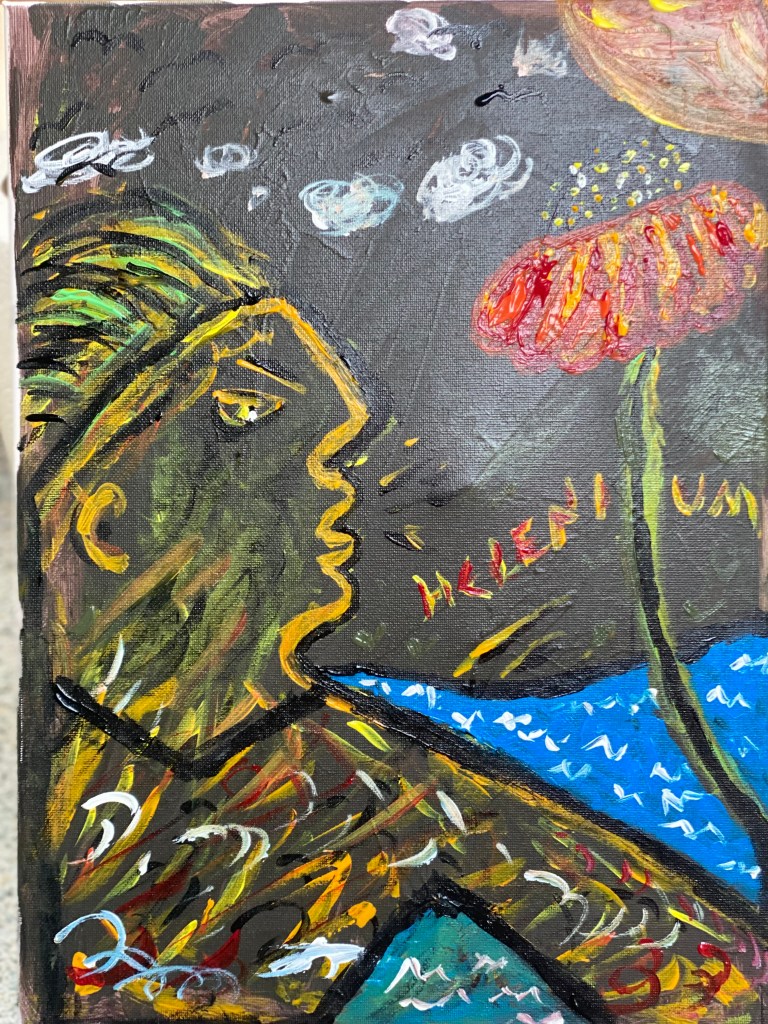
Later, I made a drawing of someone looking for Helen. It could be Eurypides’s Menelaus who went to Egypt after the Trojan War. It could also be someone like me represented in the painting on the quest of Helen. Like Homer, I did not give any shape to my Helen. I looked online and, to my surprise, there is a flower named after her: Helenium. Heleni-um is what the hero of my drawing shouts out when he sees it, having many seas under his sleeve.
My last one was the trickiest. Considering the abstract drawings of Pablo Picasso, I have created a face mask of Helen, divided into three different sections: the black fate Helen, the pink feminine and beautiful Helen and the yellow for hope, happiness and spontaneity that took her away with all the consequences mentioned above.
My final painting represents all the qualities I feel about art. Since I am an art lover, I consider art the ultimate female, as the ultimate beauty, like Helen; her enchanting beauty and lures are dragging me into a world of passion.
Helen of Troy is a woman who has inspired artists and kings since Homer first depicted her name in the Iliad. And even if she had never existed, even if she had never been a person that ever stepped on the soil of Troy, I believe we needed to invent one. Beauty needs to have her Goddess. Unlike the Olympian Venus, the Goddess is one with flesh and bones so we can identify with it—a person like us with a terrible, deathless beauty.

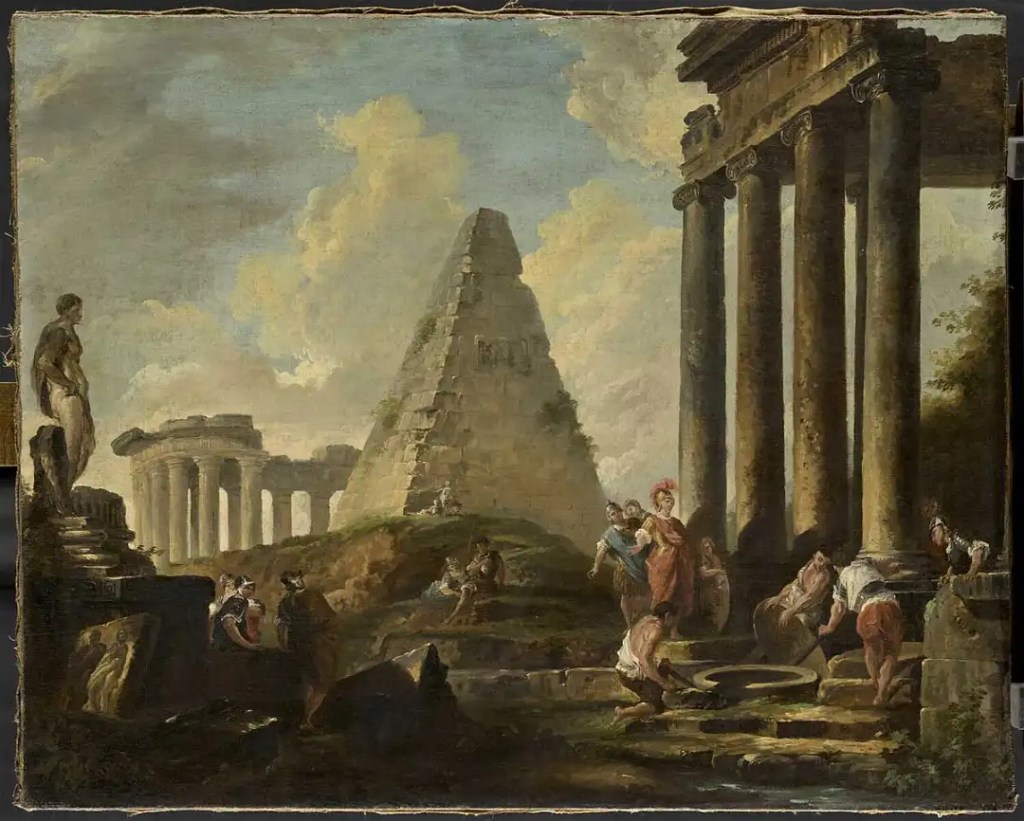
Alexander the Great at the Tomb of Achilles, by Robert Hubert, 1750-1775, via The Louvre

Referencing
Wikipedia contributors. “Homer.” Wikipedia, The Free Encyclopedia. Wikipedia, The Free Encyclopedia, 22 Sep. 2023. Web. 24 Sep. 2023.
Wikipedia contributors. “Helen of Troy.” Wikipedia, The Free Encyclopedia. Wikipedia, The Free Encyclopedia, 20 Sep. 2023. Web. 24 Sep. 2023.
Alexander the Great. (2023, September 30). In Wikipedia. https://en.wikipedia.org/wiki/Alexander_the_Great
Wikipedia contributors. “Euripides.” Wikipedia, The Free Encyclopedia. Wikipedia, The Free Encyclopedia, 30 Aug. 2023. Web. 24 Sep. 2023.
Wikipedia contributors. “Helen (play).” Wikipedia, The Free Encyclopedia. Wikipedia, The Free Encyclopedia, 11 Jul. 2023. Web. 24 Sep. 2023.
Wikipedia contributors. “Paris (mythology).” Wikipedia, The Free Encyclopedia. Wikipedia, The Free Encyclopedia, 25 Aug. 2023. Web. 24 Sep. 2023.
Wikipedia contributors. “Giorgos Seferis.” Wikipedia, The Free Encyclopedia. Wikipedia, The Free Encyclopedia, 13 Aug. 2023. Web. 24 Sep. 2023.
Wikipedia contributors. “Menelaus.” Wikipedia, The Free Encyclopedia. Wikipedia, The Free Encyclopedia, 18 Sep. 2023. Web. 24 Sep. 2023.
 Alexander's blog