With reference to the areas of your practice explored within the past projects, produce a body of work that explores the relation your practice has to the wider world.
You’re free to develop your work as you see fit, although you should be able to contextualise the project in relation to the themes of the unit and combine practice and research activities.
Discuss the subject, as well as your research, technical and practical strategies, with your tutor before you start work.
The depth of your research, the scope of the development of the project and its resolution should reflect a substantial effort of independent study, as expected of students at Stage 2 (HE5).
Things to Consider
Write a plan and introduction to your project, setting out a clear narrative of the stages from idea to execution.
Good questions to ask yourself when starting the assignment could be:
- What is the starting point for this work and where can it end up?
- What are the main areas of research?
- What does it explore?
- What does it ask the viewer to bring?
- Who is my audience?
- What is my message?
- How is my specific practice situated within wider philosophical concerns?
- Was the technique of particular importance to the outcome?
Enjoy the Process
Being creative should be constructive, meaningful and engaging. The process should be one of inquisitive experimentation and purposeful activity to explore your creative voice and the potential it has to deliver meaning and significance, both for yourself and your audience.
Be ambitious and motivated by the possibilities of your practice, enjoy the process!
Completion
Knowing when you’ve completed your work is to do with assessing whether you’ve achieved your aims according to your plan and in response to how your thematic ideas are being received. It is important to make sure that your final work communicates your ideas, theme and working method in the way you wish.
Whatever your unique creative activity, you should be able to examine it and discern which parts are more successful than others. The task of self-assessing your work is about identifying the strengths in your work and bringing those things forward so that you can create a coherent voice for your work.
This self-assessment is also the culmination of your ongoing reflective commentary, demonstrating your ability to rationalise the decisions you’ve made and comment on future developments that can extend your creative practice beyond this course.
Presentation
At this point, you should feel confident in discussing your themes and your creative activity. As you work on completing your critical analysis alongside your creative practice, remember that all the work you’re doing here is to support your creative voice. Developing this with the support you gain from tutors and peers will help you to produce the most fully resolved outcomes you are capable of.
Final Decision
The final project of the course will prepare you to finish and present your work as the culmination of practice and research. Bear in mind that when you progress you’ll continue with this work in your next unit, so you are not creating your life work, but evidencing your developmental journey and the beginnings of a personal and independent creative voice.
Reflection
Review the assessment criteria for this unit and reflect on whether you have covered all aspects of the learning outcomes. Also, return to the first projects you undertook in the unit and consider how you now feel about them, has your view of your work changed from your initial understanding of it.
Create a 750-word or 6 min presentation, including research of artists and themes in relation to your personal interdisciplinary practice and its relation to the wider world.
1:1 Tutorial
This tutorial is an opportunity to present and discuss your assignment work. What has gone well? What do you need to improve? Have you identified new skills you’d like to develop? What questions do you have for your tutor?
Alongside the tutorial, your tutor will also read your Critical Analysis and give written feedback for you to action during project 10, the final part of the unit.
Critical Review
At this point, you should allocate time to complete your Critical Review. You should have enough material since beginning this in Project 5 and be able to refine and complete a draft to present to your tutor.
The formal requirements for your Critical Review are either 1250 words or 10-minute presentation.
PUT INSPO INTO ACTION
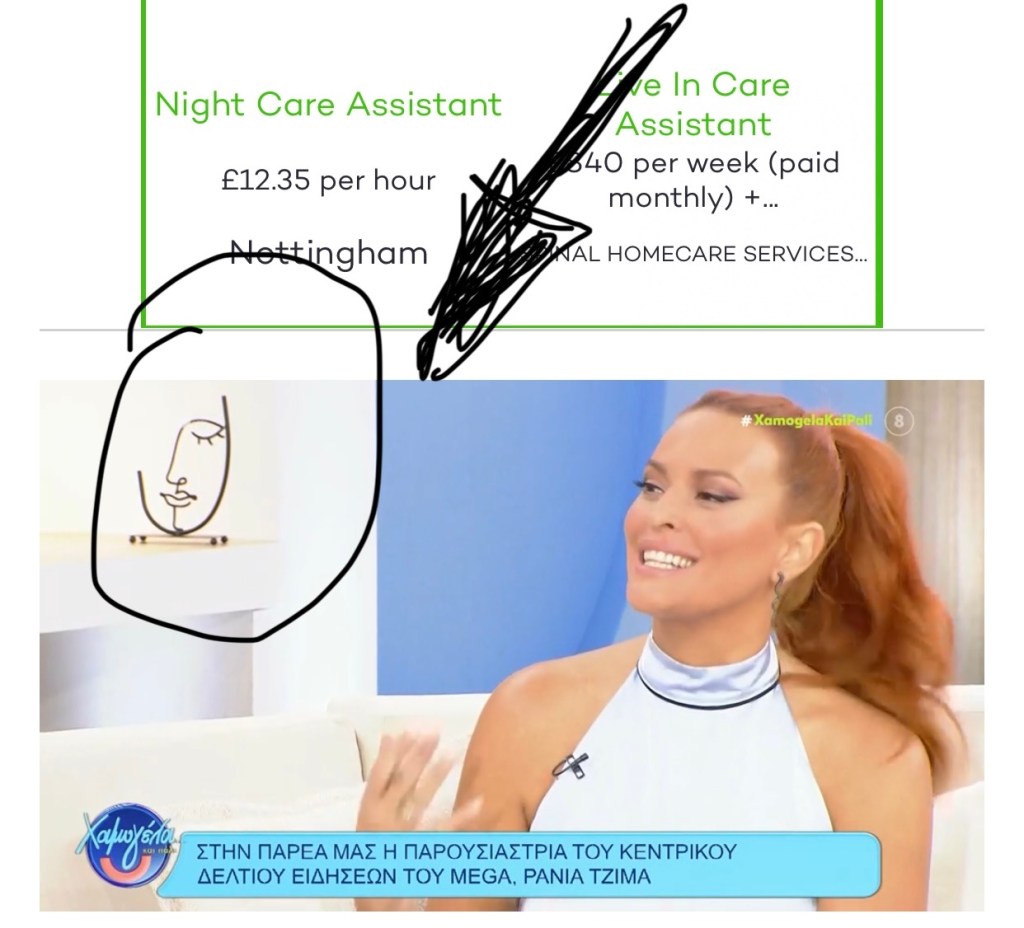
Getting inspiration from previous Picasso-inspired work, I want to explore more the potential of drawing a CAD from this picture. After that, using that particular CAD, I wish to produce knitted pieces and then a fusion of drawing and textiles on a white canvas from that computer-assisted drawing. I aim to explore the lines between textiles and traditional illustration, as I can support this argument with my textile background. Discovering the relation between the two disciplines would be a valuable lesson.
The reason I’m using Picasso’s drawing style is because I like the simplicity of his lines. I love his point of view: creating an icon with life and meaning with a few lines on a canvas. I am linking my work to my study of Helen of Troy, which has turned out to be my main inspiration during this study. Picasso’s vision is close to my perception of beauty: it should be simple, raw, and unpretentious.
There is also a practical reason behind it. Because I aim to use a ripple stitch to create texture and a three-dimensional effect on my fabric, a monochrome CAD is the perfect jacquard to achieve that result, as it is a lot easier for a knitting machine to process it.
My audience is firstly my tutor, who will guide me to find myself through my work, as well as my fellow students who might get inspiration for their own pieces of work. My message is that although there is a theme that has been exploited by various artisans through the years, there is always room to be inspired and to create and express yourself: the myth of Helen is one of the oldest.
As I was processing the previous drawing
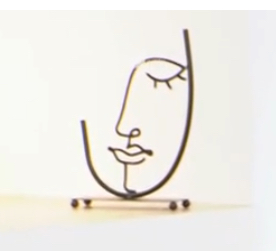
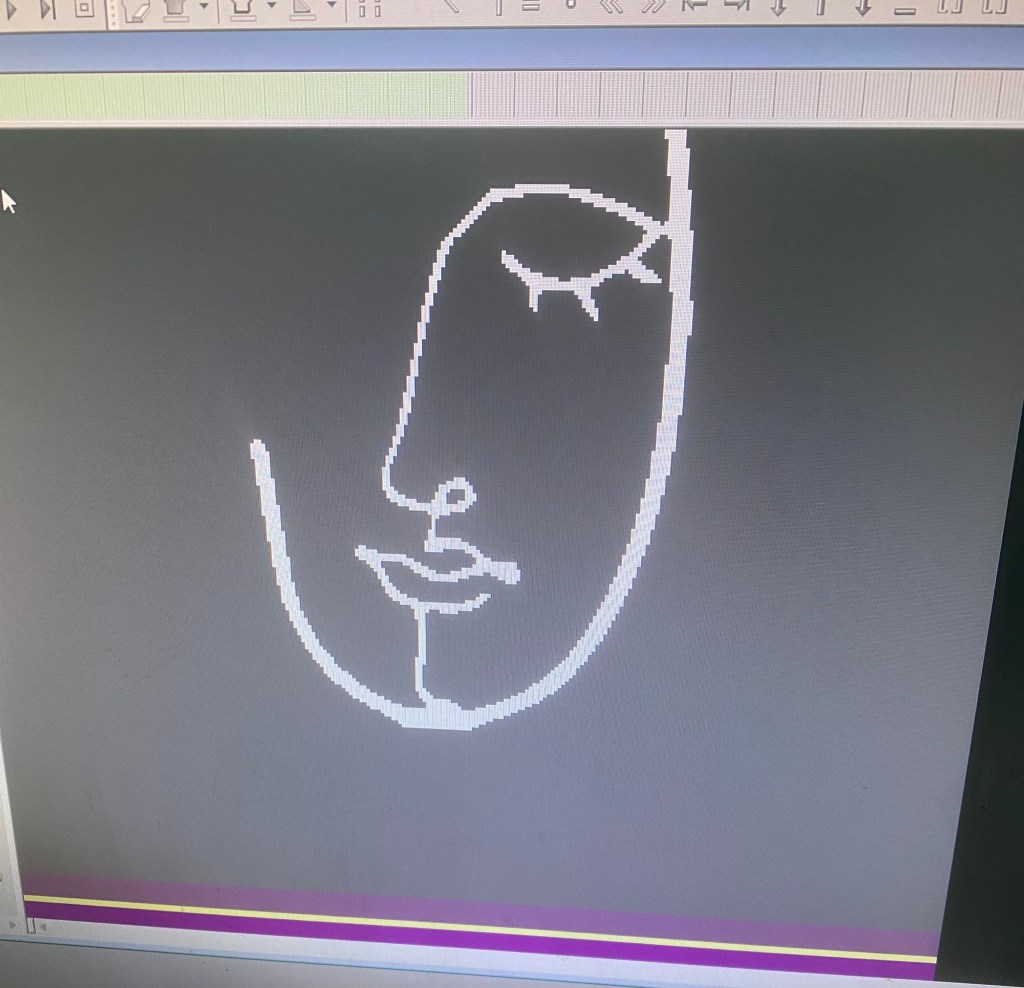
And was looking at the front and back parts of the fabric,
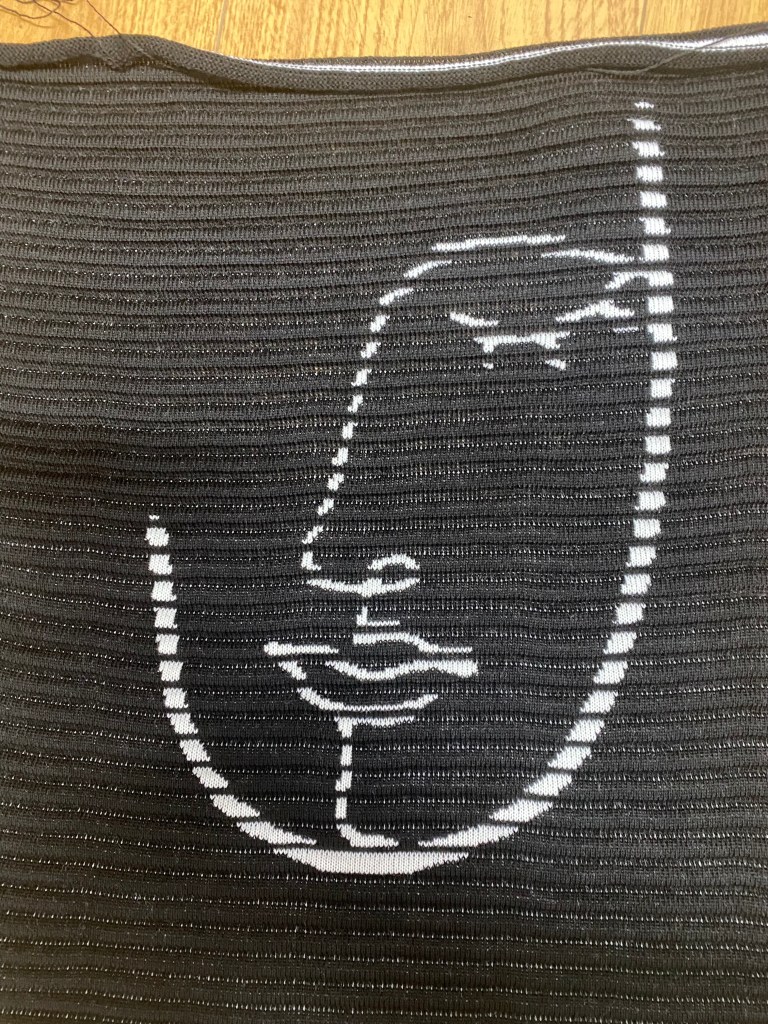
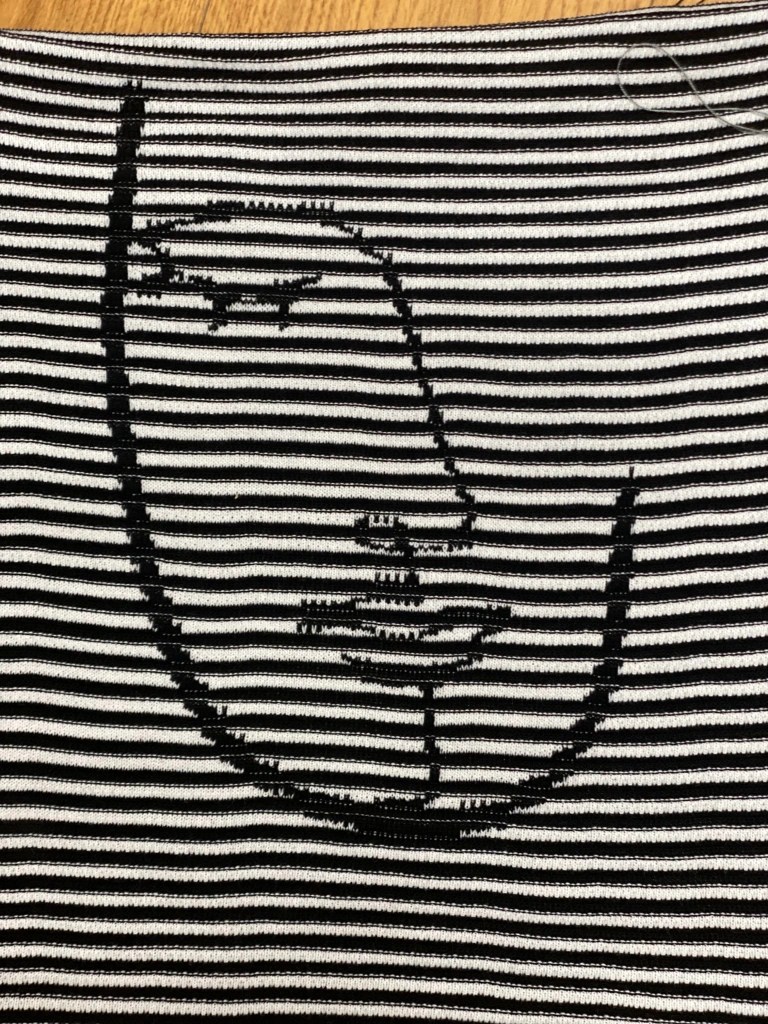
It gave me the impression of the yin and yang: opposite but interconnected, mutually perpetuating forces.

Helen of Troy was considered a beauty to die for, but simultaneously, she was the absolute evil who betrayed her country to fly for a new one. She was also the cause of her new homeland to perish. The personification of the good-bad bad-good.
Therefore, I created a mirror image of the original CAD on the same lines as the previous one, using the opposite colours and a triangle motive to institute an inter-bonding motif.

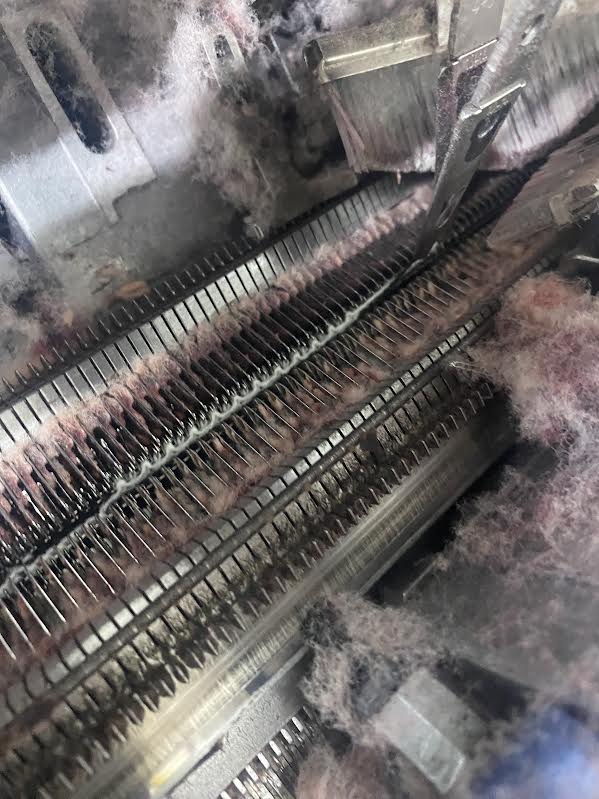
Knitting process.
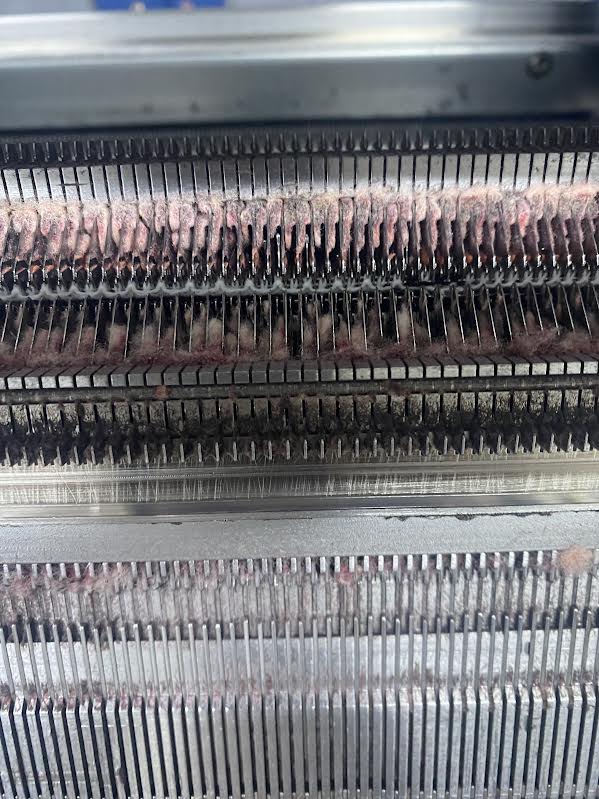
The fabric is almost ready.

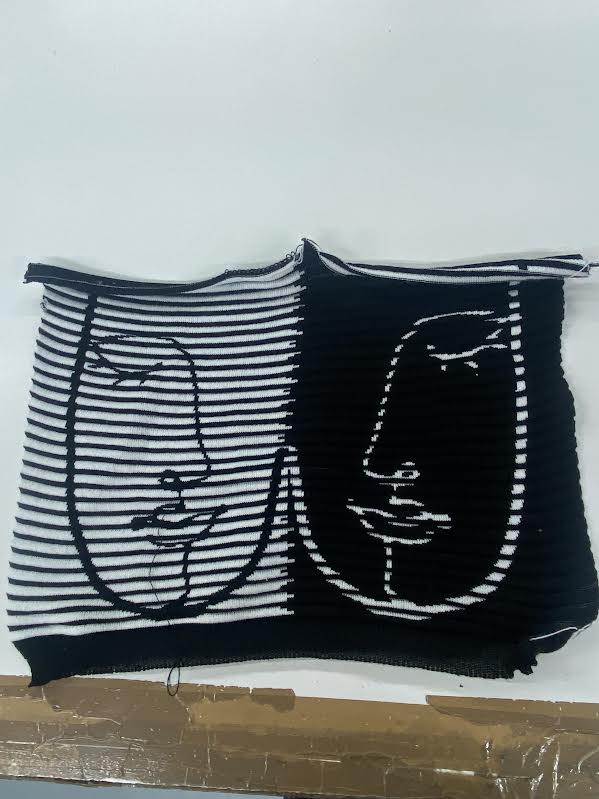
Yin and Yang. Faces interconnected.

…And as expected, the front panel view mirrors the rear!
Then I asked myself, what if I use more colours?
Red is a very strong colour, signifying passion and desire.


After knitting and steaming my fabric, I left it on the side.
I aim to explore new ideas and find ways to produce new artwork.
My tutor encouraged me to use my own work as a starting point in my textile exploration.
Original sketch
Helen of Troy is often depicted as a terrible beauty, with her face launching a thousand ships and causing a war that lasted for years. Her beauty was said to be unparalleled, but it also brought destruction and chaos to those around her. Many artists and writers have been inspired by her tragic story, and her legend continues to fascinate people to this day.
A tribute to modern Greek painting.
Greek modern painting boasts a splendid legacy of exceptional artists. Among these, Alekos Fassianos stands out with his unique style of dreamlike and vibrant paintings. Fassianos’ art is a striking representation of the beauty and charm of Greek culture. His colourful paintings have the power to transport viewers into a world of fantasy and imagination, making him one of the most celebrated painters of modern Greek art.
Alekos Fasianos style of painting


I have considered his point of view to create Helen’s story in the following sketch.
Pixelated CAD.

Knitting instructions.
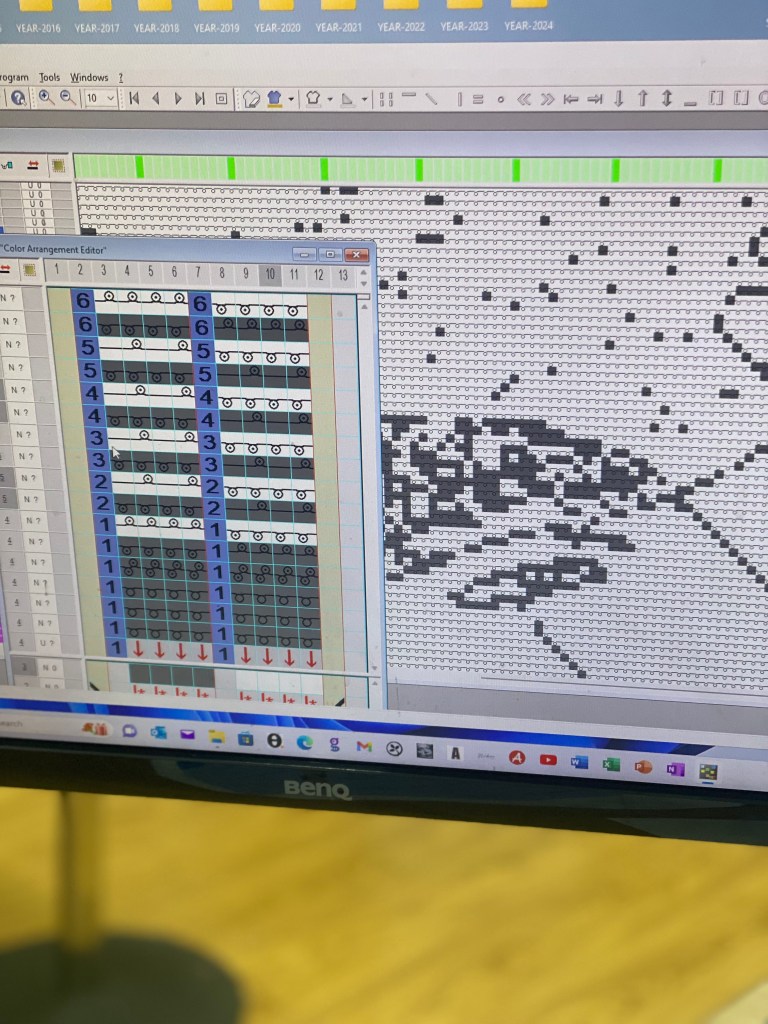
Knitting simulation.
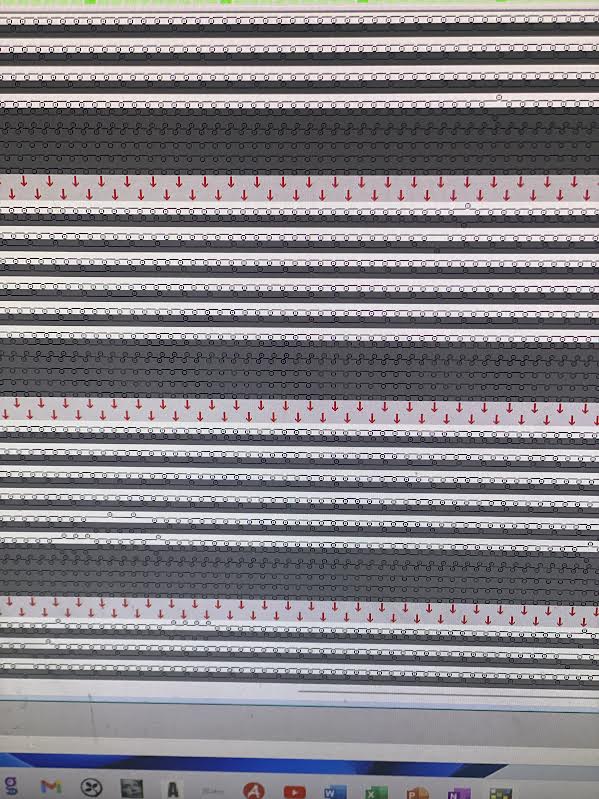
Knitting process.
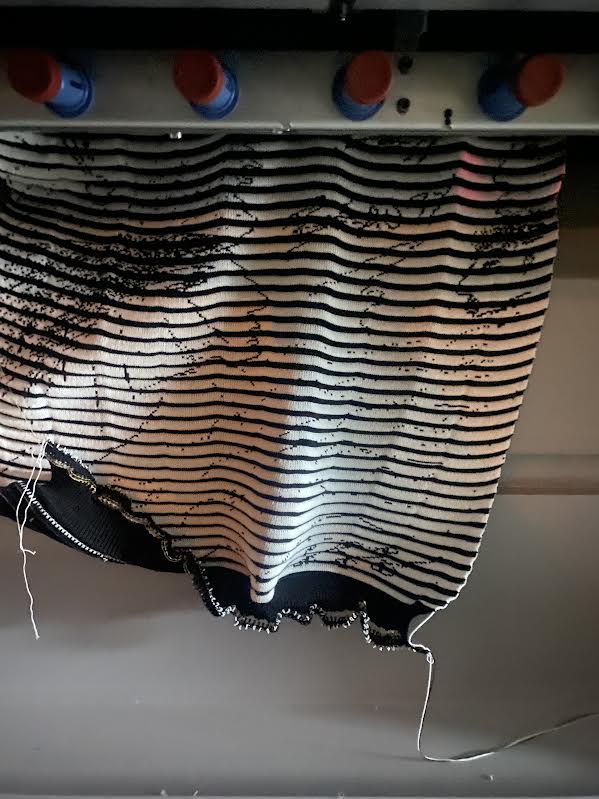
The outcome!
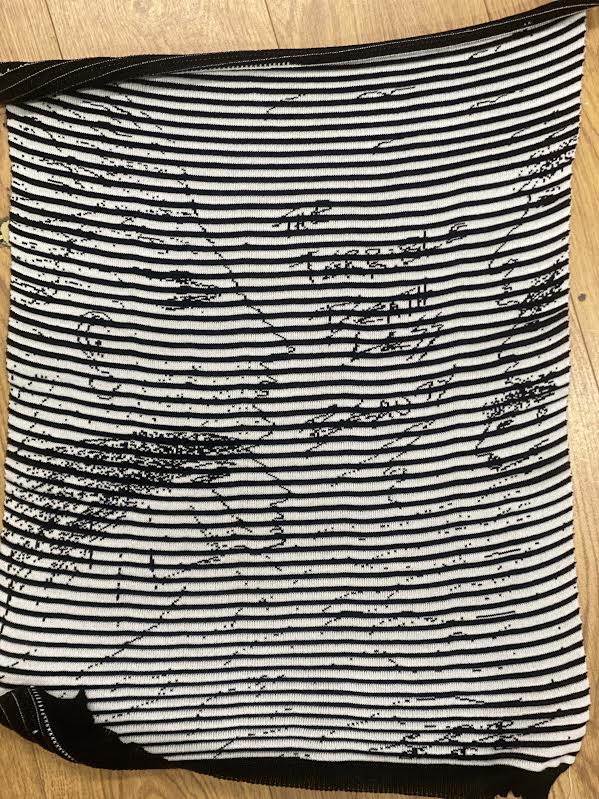
The reverse side of the knitted swatch.

Following the idea of using knitted pieces as parts of a drawing artwork I started working on my new experiment.
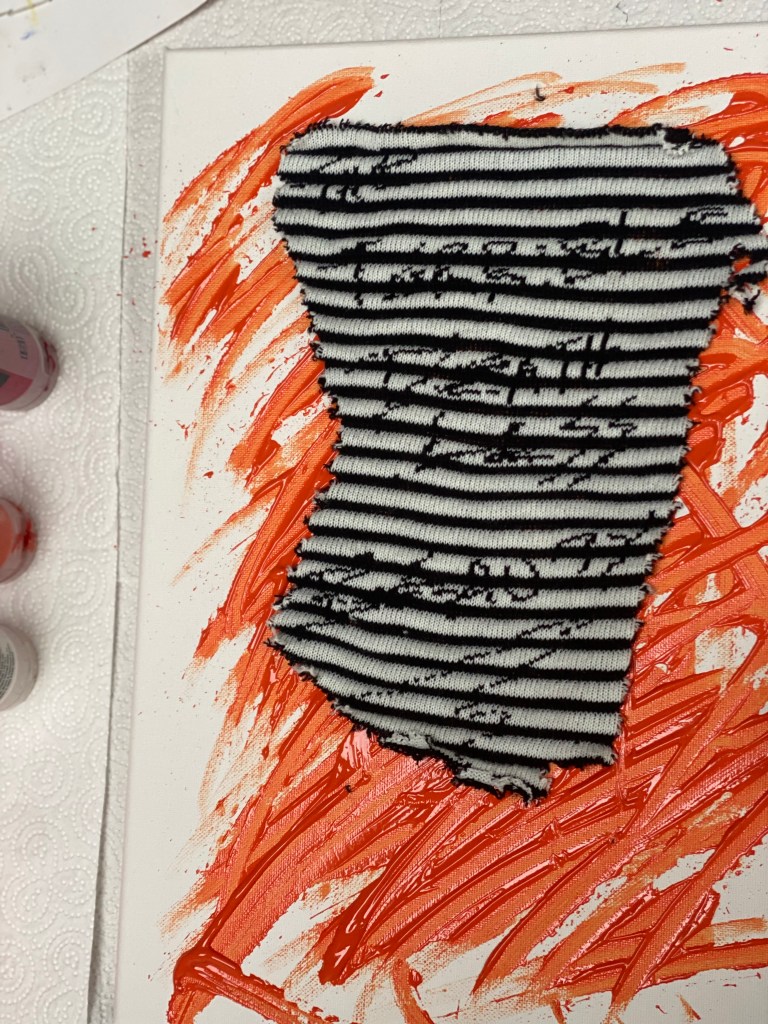
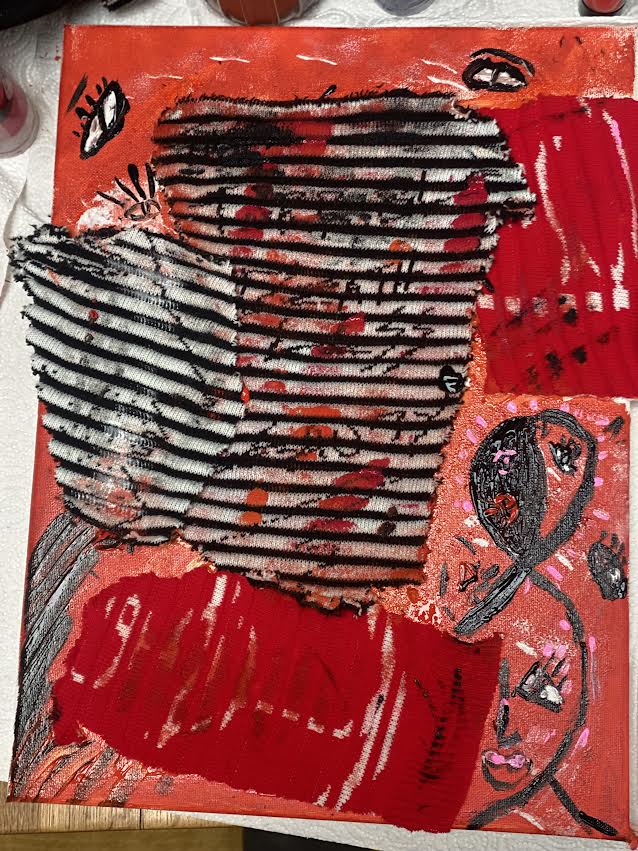
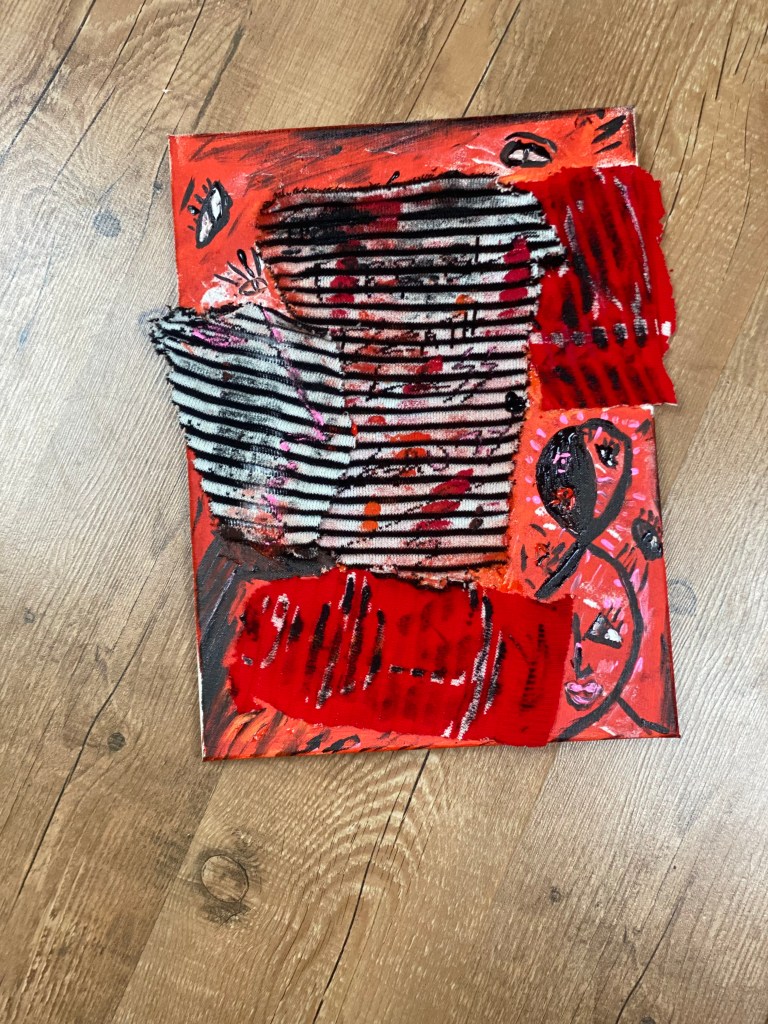
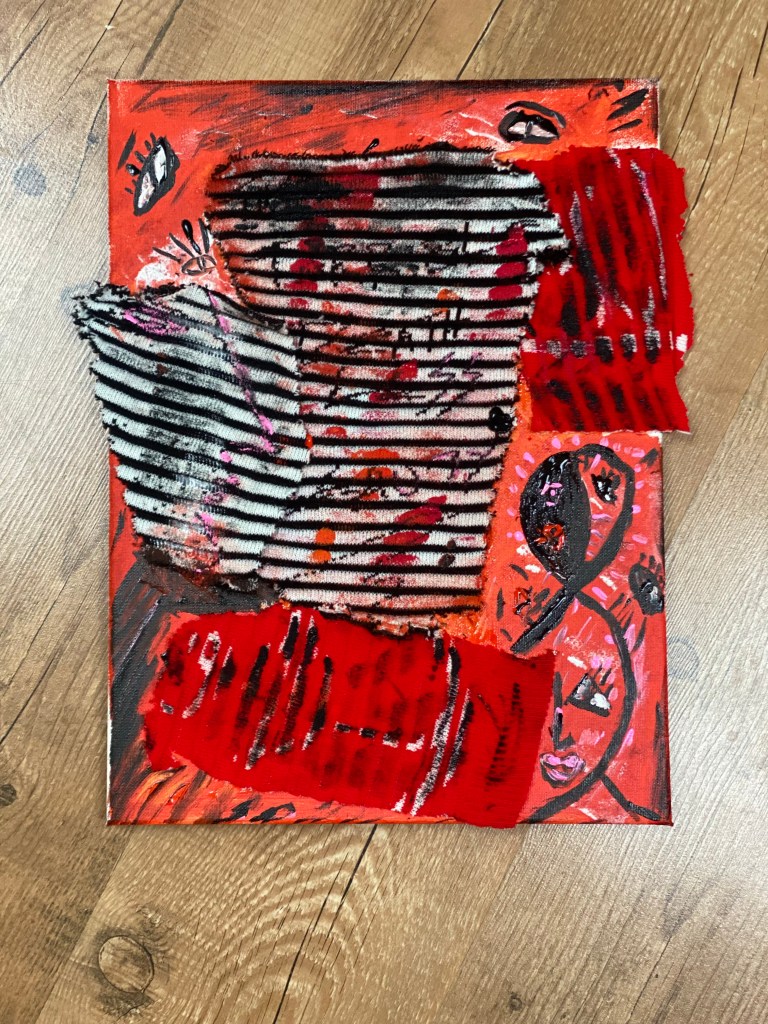

Using textiles as my main medium made me explore the principle even more. Textiles can be especially practical with fabrics with a unique texture or pattern, as they can add an exciting element to the final piece. Additionally, textiles can be used to create collages, where fabric pieces are cut and arranged into a design before being painted over.
I’m really excited with the outcome as it made me explore and rethink the use of knitted pieces as a medium that can be manipulated in many ways.
References:
Rivera, Michael L., et al. “Stretching the Bounds of 3D Printing with Embedded Textiles.” 2017, https://doi.org/10.1145/3025453.3025460.
Picasso 2013 Wall Calendar. http://www.allcalendars.net/calendar/31527095.htmlPicasso 2013 Wall Calendar. http://www.allcalendars.net/calendar/31527095.htmlPicasso 2013 Wall Calendar. http://www.allcalendars.net/calendar/31527095.html
Celebrating the Life and Work of Alekos Fasianos. https://www.alekosfassianos.gr/en/
REFLECTION
In this assignment, I have accomplished to put my thoughts into action. I have conceived some original ideas and managed to work vertically, meaning I have created artwork based on sketches and pictures I produced myself. I had the vision of a textile-drawing fusion in my mind, but I didn’t know the outcome of it. I wanted to put time and effort into seeing the result. The first draft I used (based on Picasso’s sculpture) was a simple line, and the conversion into a knitted swatch worked very well. The resolution was clean, and the colour experimentation was good: I liked the red base.
On the other hand, the high-resolution sketch could have worked better. The horizontal lines add texture to the garment, but the swatch becomes less pronounced (blurred)than the original. The writing could have looked crisper, which I understand. One pixel is one stitch: if the resolution is higher, the knitting machine can only produce so many, resulting in poor clarity and less graph-textile precision in conversion.
As my tutor highlighted, creating knitted pieces and trimming them to be a part of a collage was a bold decision. Cutting the fabric gave me a sense of pleasure and excitement. It was like using paper; I could manipulate and rework the whole piece by placing it onto the canvas. On top of that, I could add extra colours or draw on them following the garment’s texture. Finally, I was able to rewrite a story by creating a collage.
I loved the contrast of the knitted red pieces against the orange base and the black drawing. They looked more pronounced and could stand alone or as part of a whole.
I’m pleased with the painting in a strange way. It doesn’t look good, but I value the work and effort I have put into it. It has taught me valuable lessons and addressed things I need to improve:
- I need to focus more on finding a suitable theme to work on and process; not all pictures can be converted into a textile piece.
- I need to research and cite more to support my original idea.
- I need to improve my drawing techniques. Since I started my drawing journey only a few years ago, there is much to learn and improve on.
- Improve my academic writing skills.
My goal is to learn and produce as much work as I can. To do that, I must practice, research, fail and fail again.
My tutor helped me realise my strengths and my weaknesses.
I’m pleased with what I have achieved, mesmerised by the journey that brought me here, and excited for all that is about to come.
 Alexander's blog